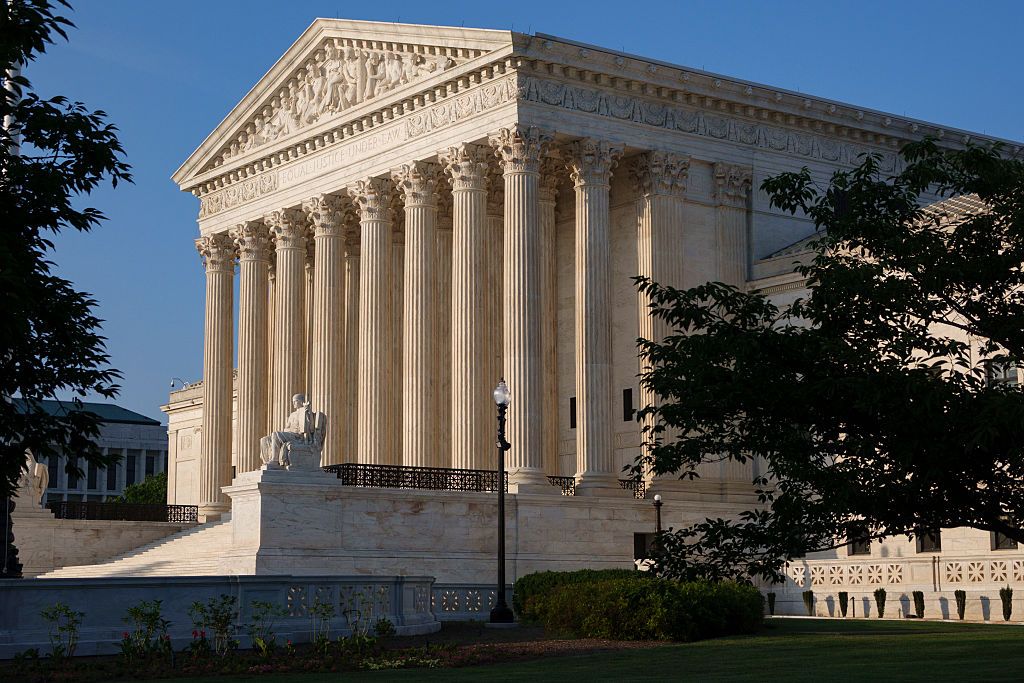
# Supreme Court Accepts Major Cases on Government Data, Prisoner Rights, and Terrorism Liability
The Supreme Court has granted certiorari in three consequential cases that will reshape law across national security, prisoner protections, and executive power. The decisions signal the Court's readiness to confront contested boundaries between government surveillance authority, constitutional detention standards, and the statutory definition of material support for terrorism.
The DOGE data dispute centers on the Department of Government Efficiency's access to federal employee records. The case tests whether executive agencies can unilaterally compile and weaponize personnel data without statutory authorization or due process constraints. Lower courts split on whether the DOGE initiative violates the Privacy Act of 1974 and the Administrative Procedure Act. The Supreme Court's acceptance suggests skepticism toward unbounded executive data collection. A ruling favoring privacy protections would constrain similar initiatives government-wide. Conversely, a decision permitting agency access could legitimate sweeping personnel surveillance under the guise of efficiency reforms. The stakes extend beyond employment records to any federal database containing sensitive information about citizens and public servants.
The prisoners' rights case examines conditions of confinement that may violate the Eighth Amendment's cruel and unusual punishment clause. Federal courts have adopted inconsistent standards for evaluating whether prison conditions reach constitutional thresholds. Some circuits demand proof of deliberate indifference by correctional officials; others apply objective severity tests independent of intent. The Supreme Court's docket entry indicates it will clarify the proper legal framework. A strict liability approach would expand prisoner remedies. A narrower intent-based standard would shield prisons and officials from liability despite demonstrable harm. This case carries immediate consequences for over two million incarcerated individuals and defines the scope of constitutional protections in custody.
The terrorism material support case addresses a statutory term that has proven resistant to clear definition. The Material Support to Designated Terrorist Organizations provision, codified at 18 U.S.C. Section 2339A, criminalizes knowingly providing material support or resources to groups the State Department designates as terrorist entities. Courts have wrestled with whether providing legal advice, humanitarian aid, or financial assistance to organizations with dual purposes (charitable and militant) triggers liability. Defense arguments emphasize First Amendment limits on prosecuting pure speech. Government positions stress national security imperatives and the breadth of statutory language. The Supreme Court's acceptance indicates serious doctrinal confusion warranting clarification. A narrow reading protects civil liberties and legitimate advocacy. A broad construction expands prosecutorial power and chills lawful association with politically disfavored groups.
These three cases reflect the Court's current preoccupation with power allocation across branches and between state and individual. The data dispute interrogates executive autonomy; the prisoner case examines judicial oversight of the carceral state; the terrorism provision tests the intersection of criminal law and national security deference. Oral arguments will likely occur in 2025, with decisions following by June 2026. Legal practitioners in government ethics, criminal defense, and constitutional law should monitor briefing schedules closely. Outcomes will reshape administrative law, carceral policy, and the scope of terrorism prosecution for decades.