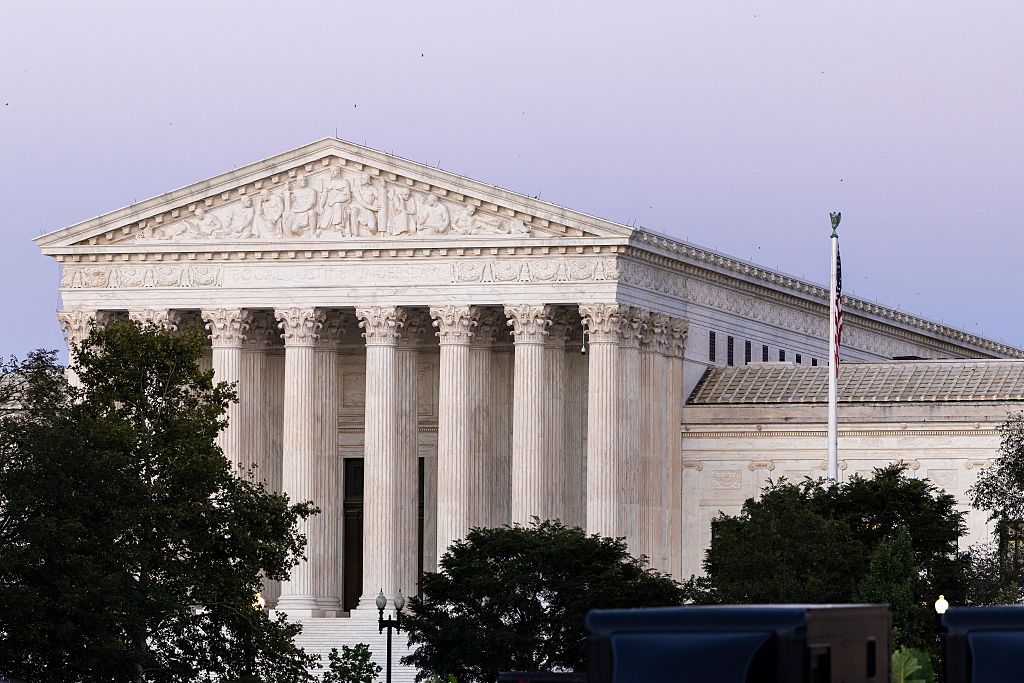
# Supreme Court Rejects Four Cases on Free Speech, Gun Rights, and Vaccine Mandates
The Supreme Court declined to hear petitions in cases involving "Let's Go Brandon" merchandise, Second Amendment rights for convicted felons, and COVID-19 vaccine mandates. The court's refusals to grant certiorari on these politically charged issues leave lower court rulings intact and reflect the justices' selectivity in the cases they accept for review.
The "Let's Go Brandon" sweatshirt case involved a dispute over merchandise featuring the political slogan, a coded reference critical of President Joe Biden that became popular among conservatives. The lower court had ruled on free speech grounds regarding the sale and promotion of such items. By declining to hear the appeal, the Supreme Court allowed that decision to stand without weighing in on whether the slogan receives First Amendment protection or analyzing the commercial speech implications of political merchandise.
The Second Amendment petition focused on whether convicted felons retain a constitutional right to possess firearms. Federal law, codified at 18 U.S.C. Section 922(g), bars felons from owning guns. The petitioner challenged this prohibition as unconstitutional under the Second Amendment as interpreted by the Supreme Court's 2022 decision in New York State Rifle and Pistol Association v. Bruen, which established that firearm regulations must be consistent with historical tradition. The court's refusal to hear the case leaves uncertain whether Bruen's framework extends to blanket felon gun bans or permits individualized assessments of whether specific felons pose public safety risks.
The COVID-19 vaccine mandate case presented questions about employer authority to require vaccines as a condition of employment. The lower courts had addressed whether such mandates violated constitutional rights or statutory protections under the Occupational Safety and Health Act (OSHA). The Supreme Court's inaction preserves the patchwork of circuit court rulings on this issue, meaning vaccine mandate law varies by jurisdiction.
The Supreme Court receives approximately 7,000 petitions for certiorari annually but grants review in only 70 to 80 cases. The court's Rule 10 governs this selection process, requiring petitioners to demonstrate that a case presents questions of national importance, involves conflicting decisions among lower courts, or concerns a constitutional issue requiring clarification. When the court denies certiorari, it provides no explanation of its reasoning. This practice generates ongoing debate about whether the court's silence amounts to implicit approval of lower court decisions or merely reflects a judgment that the issues lack sufficient ripeness or national consensus.
For litigants and advocates, these denials have concrete consequences. A gun rights organization challenging the felon bar must now pursue state-level legislative changes or seek review in different factual contexts. Employers operating across multiple circuits face continued uncertainty about vaccine mandate enforceability. Merchants selling political merchandise gain no Supreme Court validation of their free speech claims, though they also face no national prohibition.
The court's recent denials demonstrate its reluctance to wade into culture war disputes even when they present genuine constitutional questions. Whether this restraint reflects judicial prudence or abdication of the court's role in resolving fundamental rights remains contested among legal scholars and commentators.