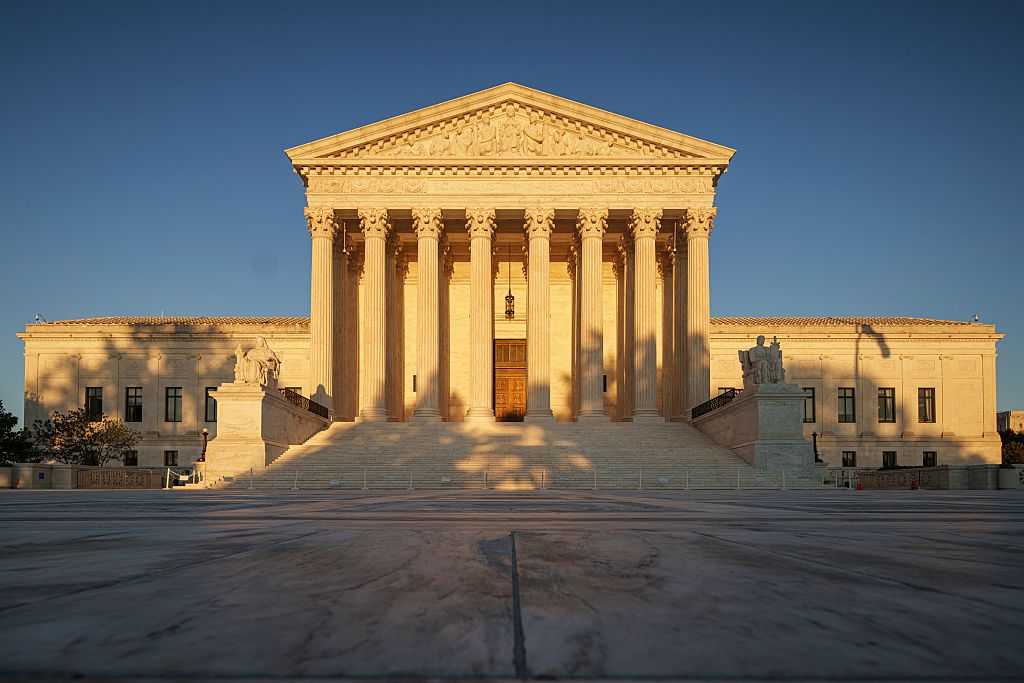
# Democratic Candidates Urge Supreme Court to Uphold Lower Court's Political Ad Rate Decision
Democratic political candidates filed an emergency motion with the U.S. Supreme Court asking justices to leave in place a recent appeals court ruling that favored their position in a dispute over political advertising rates. The filing represents the latest maneuver in an ongoing legal battle over how broadcast stations must price political advertisements under federal election law.
The candidates sought to block any Supreme Court review that could overturn the lower court's decision. Their motion came after the underlying case drew attention from conservative groups and media organizations who opposed the appellate ruling's reasoning.
The dispute centers on Section 315 of the Communications Act, the federal statute governing how television and radio stations must handle political advertising. That law requires broadcasters to offer candidates for federal office their lowest unit charge for advertising time during the 45 days before a primary election and the 60 days before a general election. Outside those windows, stations must offer rates that are "reasonable" but face fewer restrictions.
The appeals court had interpreted these requirements in a way that benefited the Democratic candidates' position on what rates stations could charge during off-season periods. The ruling constrained broadcasters' pricing flexibility during the so-called non-preemptible periods when Section 315's strictest requirements do not apply.
Broadcast stations and their industry representatives have long argued that Section 315 imposes problematic constraints on their business operations. They contend that the statute's rate requirements interfere with their ability to manage inventory and maximize revenue from their most valuable advertising slots. The stations' position carries weight in Republican-aligned media circles, which have supported industry arguments against expansive interpretations of the statute's candidate-protection provisions.
The Supreme Court receives thousands of petitions for certiorari each year. The justices grant review in only a small fraction of cases. The Democratic candidates' emergency motion attempted to persuade the Court not to accept the case at all, arguing that the lower court's reasoning deserved to remain the law of the land.
This case touches on broader debates about campaign finance regulation and media industry constraints. Federal law has long required broadcasters to give candidates special treatment for political advertising, reflecting Congress's view that broadcasters hold public interest obligations that justify these regulatory burdens.
The Democratic candidates' intervention in the Supreme Court process highlights how political groups now treat litigation strategy as part of their overall campaign infrastructure. Rather than waiting passively for litigation outcomes, candidates and their supporters actively participate in Supreme Court decision-making, filing motions and briefs that shape which cases justices consider.
The outcome of any potential Supreme Court review would affect how broadcasters nationwide price political advertisements going forward. If the Court rejected the appeals court's interpretation, stations would gain greater pricing latitude during off-peak periods. If justices declined to hear the case, the lower court's favorable ruling for the candidates would continue to govern broadcast rate practices across the country.