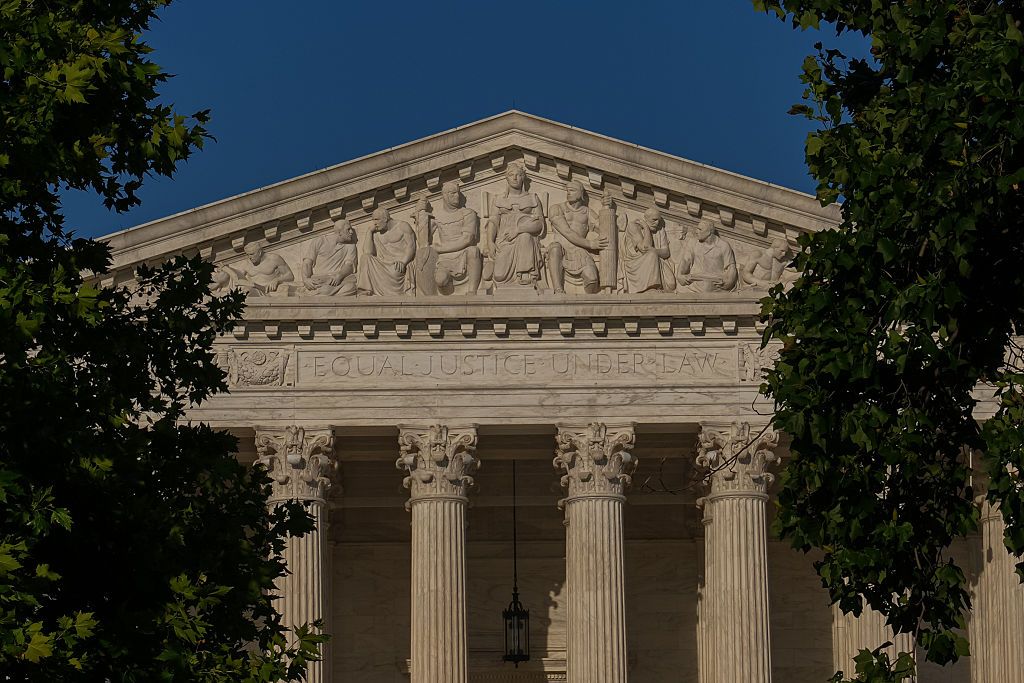
# Supreme Court Pauses Lower Court Ruling in Trump Administration Political Ad Rate Dispute
The U.S. Supreme Court has granted the Trump administration's emergency request to pause a lower court ruling that blocked enforcement of a new rule governing political advertising rates. The decision halts implementation pending further review by the justices, granting the administration a temporary reprieve in an ongoing dispute over broadcast television and radio political advertising rates.
The lower court had previously blocked the Federal Communications Commission's rule, which sought to modify how broadcasters price political advertisements. The Trump administration petitioned the Supreme Court for an emergency stay of that injunction, arguing the lower court's decision would cause irreparable harm and undermine the FCC's regulatory authority during a critical election cycle.
The Court's action does not constitute a decision on the merits. Rather, it represents a procedural pause that allows the Trump administration to continue operating under the FCC's new rule while litigation continues. This type of emergency relief typically indicates the justices believe the petitioner has raised serious legal questions warranting the Court's intervention before a final ruling emerges from the appeals process.
The dispute centers on how broadcasters must price political advertisements during election seasons. Federal law requires broadcasters to offer candidates running for federal office their "lowest unit charge," meaning they cannot charge political candidates more than their preferred commercial advertisers pay for similar airtime during the same periods. The exact mechanics of calculating and enforcing this requirement have generated persistent legal conflicts.
The FCC's rule at issue appears to adjust how broadcasters must calculate political ad rates or apply the lowest unit charge requirement. Broadcasters and the administration disagreed with the lower court's reasoning that the rule either exceeded the FCC's statutory authority or conflicted with existing law.
The practical implications extend beyond administrative procedure. Television and radio stations operate under FCC licenses and must comply with strict regulatory requirements around political advertising. The lower court's injunction would have forced broadcasters to revert to prior rules during an active election period, creating operational uncertainty for stations seeking to comply with federal law.
Environmental and consumer groups have previously challenged political ad rate rules, arguing transparency and competition issues. However, this dispute appears primarily centered on regulatory authority and statutory interpretation rather than First Amendment questions.
The stay preserves the status quo while the Court considers whether to take the case for full review. The justices will likely receive briefing on both the emergency motion and the underlying merits in coming weeks. A decision to accept the case would place the FCC's regulatory approach to political advertising rates before the Court for definitive interpretation.
This episode reflects broader tensions over FCC rulemaking authority. The agency operates within statutory boundaries set by Congress, and courts regularly review whether FCC rules stay within those limits. The Trump administration's successful emergency request suggests at least some justices view the lower court's reasoning as potentially erroneous.
The resolution of this dispute will affect how broadcasters handle political advertising in future election cycles and may reshape the FCC's enforcement approach going forward.