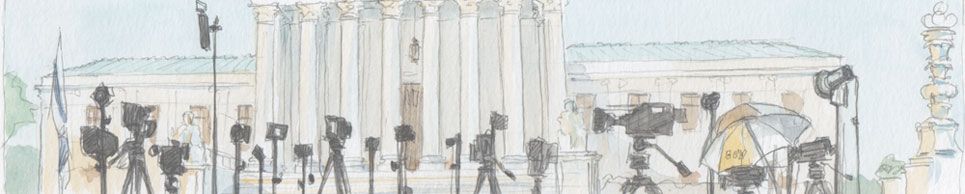
# Supreme Court Returns to Business After Recess, Halloween Politics Heat Up
The Supreme Court has resumed its docket following the October recess, with the nine justices preparing to hear oral arguments on a slate of cases spanning consumer protection, regulatory authority, and constitutional interpretation. The informal reference to "hooch, hardball, and Halloween" reflects the high-stakes nature of cases before the bench and the intense political environment surrounding the Court's work.
Several cases on the Court's schedule involve statutes and regulatory frameworks that touch ordinary Americans. These include disputes over alcohol regulation, competitive practices in business, and the scope of federal agency power. Each case presents competing visions of how courts should interpret congressional intent and police administrative overreach.
The timing proves consequential. With the November election approaching, Court decisions arriving before year-end will carry political weight. The justices remain acutely aware that their rulings shape debates far beyond the courtroom. Cases decided in October and November often dominate news cycles and influence public perception of the institution itself.
Chief Justice John Roberts and his colleagues face persistent questions about the Court's legitimacy and independence. Recent terms have produced decisions that energized conservative constituencies while alarming progressive groups. The abortion decision in Dobbs v. Jackson Women's Health Organization, the gun rights ruling in New York State Rifle and Pistol Association v. Bruen, and the affirmative action decision in Students for Fair Admissions v. Harvard have cemented the Court's conservative supermajority as a flashpoint in American politics.
The current docket reflects the types of cases likely to generate similar polarization. Consumer protection statutes, environmental regulations, and First Amendment claims routinely divide along ideological lines. Justice Clarence Thomas, Justice Samuel Alito, Justice Neil Gorsuch, Justice Brett Kavanaugh, and Justice Amy Coney Barrett hold the five-justice majority. Justices Sonia Sotomayor, Elena Kagan, and Ketanji Brown Jackson dissent frequently but find themselves outnumbered.
Oral arguments themselves have become public theater. The justices' questioning during arguments often signals their likely positions. Conservative justices probe the government's constitutional authority and the scope of agency power. Liberal justices defend statutory protections and regulatory safeguards. Legal practitioners know the score after hearing the bench's questions.
The stakes extend beyond individual cases. The Court's interpretation of federal statutes shapes how businesses operate, how consumers access remedies, and how agencies enforce the law. A narrowing interpretation of consumer protection statutes could shield companies from liability. A broad reading of agency authority could validate aggressive regulatory action. The Court's decisions ripple through boardrooms, administrative agencies, and courtrooms nationwide.
The current term will test whether the conservative majority sustains its ideological consistency or splinters on particular issues. Justice Gorsuch has surprised observers before, siding with liberal colleagues on statutory interpretation or constitutional questions. Justice Kavanaugh's voting patterns have sometimes defied predictable ideological sorting. The outcome remains uncertain, but the stakes remain clear.
The Court's autumn schedule arrives as Americans prepare for the final weeks of the presidential campaign. Decisions handed down in coming weeks will influence how voters perceive the judiciary and the political movements it represents. The combination of high-profile cases, ideological division, and electoral timing creates a uniquely charged moment for the Supreme Court.