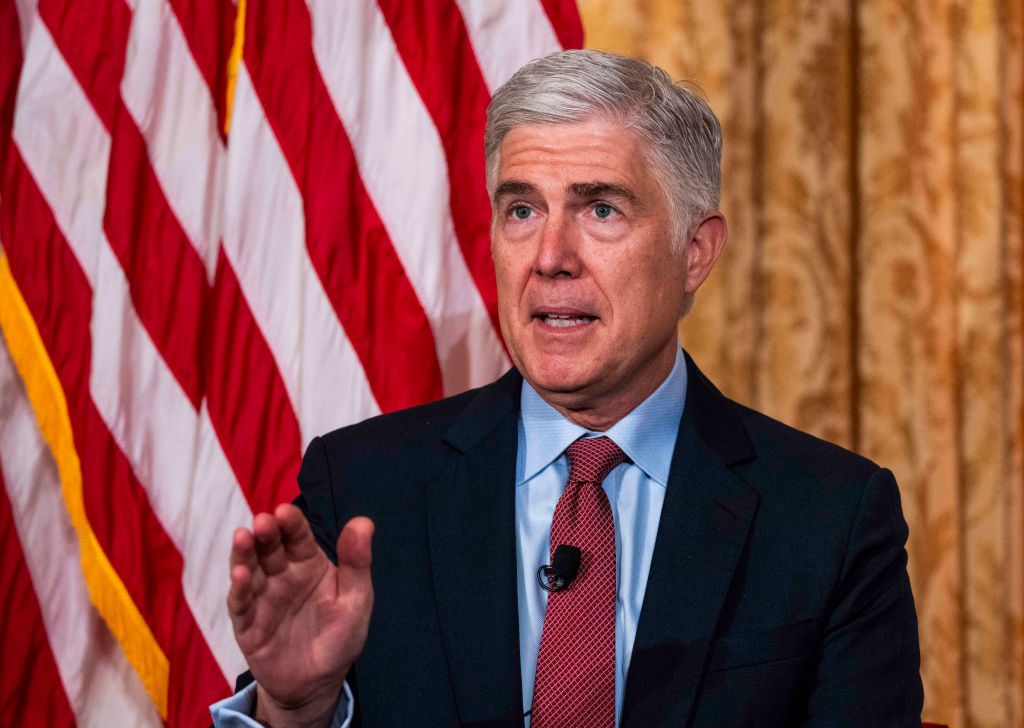
# Supreme Court's Humor Takes Center Stage in 2025-26 Term
The U.S. Supreme Court's 2025-26 term has showcased something beyond constitutional doctrine and statutory interpretation. One justice has distinguished himself through sharp wit and comedic timing during oral arguments, earning recognition as the term's wittiest member of the bench.
Supreme Court justices routinely deploy humor during oral arguments. These moments serve dual purposes: they break tension in high-stakes cases and signal judicial skepticism through sardonic questioning. The 2025-26 term has produced an unusually high concentration of memorable quips, with one justice emerging as the season's comedic standout.
Humor at the Supreme Court operates within established norms. Justices ask hypothetical questions designed to test the boundaries of legal arguments. When those hypotheticals become absurd or their framing becomes sharp, attorneys and observers alike recognize the underlying judicial message. A justice who peppers arguments with jokes and clever observations often signals deep engagement with a case's weaknesses. The laughter that follows creates memorable moments that dominate legal commentary and social media discussions among lawyers and court watchers.
The 2025-26 term presents particular opportunities for judicial humor. The docket includes matters spanning criminal procedure, administrative law, election law, and constitutional rights. Cases touching these domains often invite hypothetical scenarios that naturally lend themselves to comedic treatment. A justice asking about increasingly implausible fact patterns can highlight flaws in an attorney's reasoning while entertaining the courtroom.
Legal observers track humor patterns because they reveal judicial priorities and temperaments. A justice known for frequent quips during oral arguments often signals comfort with the case before the court and engagement with its nuances. Conversely, stoic questioning can indicate a justice wrestling with difficult doctrinal questions or approaching an issue with particular gravity.
The recognition of one justice as the term's funniest reflects broader shifts in how the public consumes Supreme Court information. SCOTUSblog and other legal commentary platforms now regularly highlight memorable moments from oral arguments. These platforms transcribe arguments, making witty exchanges instantly shareable. Legal Twitter and Reddit communities discuss and meme these moments within hours of their occurrence. This democratization of Supreme Court coverage has elevated humor from a fleeting courtroom moment into a lasting component of how the public understands the judicial process.
Observers note that humor can cut through polarization. When justices across ideological divides laugh together, it suggests underlying institutional cohesion despite public disagreements over outcomes. The 2025-26 term's humor has occasionally transcended the typical conservative-liberal divide, with justices from opposing philosophical camps laughing at the same observations.
The practical impact of judicial humor remains debatable. Some scholars argue witty questioning sharpens oral arguments by keeping attorneys attentive and forcing them to defend weak positions under pressure. Others contend humor can distract from serious constitutional questions or trivialize cases involving real human consequences. Regardless, the 2025-26 term demonstrates that humor remains embedded in the Supreme Court's institutional culture.
The justices will continue their term through June 2026, and court observers will continue cataloging memorable exchanges. The attention paid to judicial humor reflects evolving expectations about how the nation's highest court conducts itself in public view.