# Supreme Court Justices Deploy Vacancy Messaging to Mobilize Republican Voters
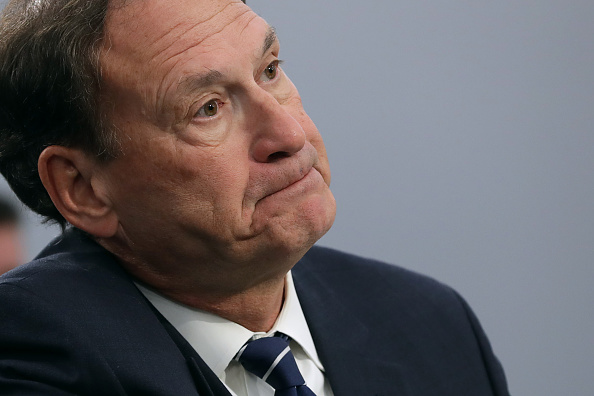
Justice Samuel Alito has not announced retirement plans, yet messaging suggesting his seat remains vulnerable has become central to Republican midterm turnout strategy. The tactic leverages uncertainty about potential Supreme Court vacancies to energize the conservative base without requiring an actual judicial departure.
The approach reflects broader judicial politics. Alito, 74, authored the majority opinion in Dobbs v. Jackson Women's Health Organization, which eliminated the federal constitutional right to abortion. That decision galvanized progressive opposition and elevated stakes around Court composition. Republican operatives now frame the coming elections as a battle to preserve conservative control of the bench.
This strategy operates on multiple levels. First, it drives voter mobilization by suggesting Democratic victories would enable new appointments. Second, it allows conservative justices to remain in office while benefiting from "protect the Court" rhetoric aimed at their seats. Third, it creates political cover for justices perceived as "auditioning" for advancement.
Fifth Circuit Judge James Ho exemplifies the second dynamic. Ho filed an opinion complaining that observers accuse federal judges of seeking promotions through high-profile rulings. The complaint itself functions as meta-commentary, drawing attention to audition-like behavior while simultaneously denying it occurs. Ho's statement reflects sensitivity within conservative legal circles about the appearance of judicial selection driven by career advancement rather than jurisprudence.
The Dobbs decision crystallized these tensions. Alito crafted an opinion eliminating recognized constitutional protection, triggering demands for his recusal from abortion cases and his removal from office. That polarization now fuels campaign messaging. Republicans argue that electing more conservatives protects the Court from "radical" transformation. Democrats counter that the Court itself has become politicized.
Justice Brett Kavanaugh faced similar dynamics during his confirmation. His subsequent opinions on abortion, voting rights, and presidential immunity drew criticism that he was performing for an audience. His concurrence in Dobbs, which attempted a narrower rationale than Alito's complete reversal, sparked debate over whether he was positioning himself as a moderate pivot.
The vacancy-messaging strategy exploits structural realities. Presidents nominate Supreme Court justices only upon death or retirement. Conservative voters cannot directly elect justices but can vote for presidents and senators who control nominations. Messaging about threatened seats creates urgency around those elections without requiring justices to announce intentions they may hold private.
This creates perverse incentives. Justices writing controversial opinions may attract negative attention, yet messaging around their "threatened" seats generates fundraising and voter turnout. The system rewards polarizing decisions with political mobilization. Justices invested in Court control have reason to produce decisions energizing their base.
The ethical dimensions remain contested. Judicial canons prohibit judges from considering their selection or retention prospects. Yet explicit vacancy-messaging tied to specific justices arguably violates that principle. When Republican operatives tell voters "Alito's seat is on the ballot," they invite voters to consider the justice's fate, potentially influencing judicial decision-making.
Federal judges occupy a unique position. They retain office during good behavior, meaning they theoretically operate without reelection pressure. Yet midterm campaigns and presidential elections profoundly affect Court composition. Justices cannot escape political context, though they can attempt to ignore it.
The 2026 midterms will test whether vacancy-messaging sustains voter enthusiasm absent an actual retirement announcement. If successful, the tactic becomes permanent feature of Court politics. Justices' seats effectively become perpetual campaign issues, collapsing distinctions between judicial independence and electoral calculation.