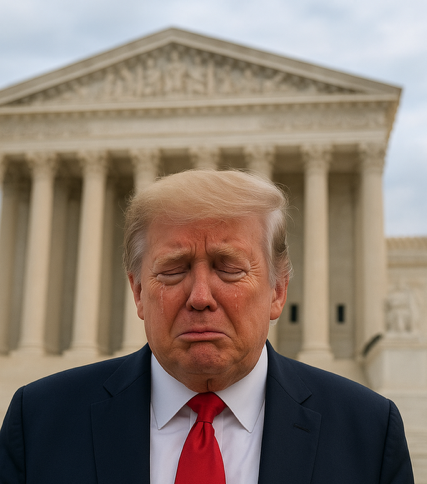
Former President Donald Trump has expressed regret over his three Supreme Court appointments, asserting that Justices Neil Gorsuch, Brett Kavanaugh, and Amy Coney Barrett have voted against his interests in key cases. Trump made his frustration public by stating that he gave these justices "the position of a lifetime," implying a sense of betrayal when their judicial decisions diverged from his expectations or policy preferences.
This statement reflects a broader tension between judicial independence and executive expectation. When a president appoints Supreme Court justices, the constitutional structure mandates that those justices rule according to law, not loyalty to the appointing president. Trump's comments suggest a misunderstanding of or dissatisfaction with this fundamental principle of judicial separation of powers.
Gorsuch, Kavanaugh, and Barrett have each rendered decisions that disappointed conservative political actors or the Trump administration. Gorsuch authored the majority opinion in Bostock v. Clayton County (2020), which expanded civil rights protections to LGBTQ employees under Title VII of the Civil Rights Act of 1964. Kavanaugh declined to join efforts to overturn the 2020 presidential election results in various state-level litigation. Barrett participated in decisions that disappointed Trump, including votes on election-related matters and other cases.
The pattern reflects the institutional reality of the Supreme Court. Justices take an oath to support the Constitution, not to serve the political interests of their appointing presidents. Justices appointed by Republican presidents have voted with Democratic appointees when legal reasoning compelled such alignment. Conversely, justices appointed by Democratic presidents have sometimes sided with conservative jurisprudence when the law required it.
Trump's public dissatisfaction carries implications for future judicial recruitment. Presidents considering Supreme Court appointments must weigh the tension between nominating ideologically aligned jurists and acknowledging that justices will eventually encounter cases requiring independent judgment contrary to executive preferences. This dynamic has existed throughout American legal history but becomes acute when a president views the judiciary primarily through a lens of political loyalty rather than constitutional obligation.
The three justices in question have consistently emphasized their commitment to textualism, originalism, and other judicial philosophies. These methodologies can produce results that surprise political patrons when applied to novel facts or precedents. Gorsuch, for instance, has applied originalist principles to reach outcomes that cut across traditional political lines.
Trump's comments also underscore concerns about executive branch pressure on the judiciary. If presidents openly condition judicial appointments on guarantees of favorable rulings, the separation of powers erodes. The federal courts depend on public confidence that judges render decisions based on law rather than executive preference or personal loyalty.
Legal scholars and court observers note that Trump's statements, while rhetorically dismissive, do not affect the justices' tenure or authority. Supreme Court justices cannot be removed except through impeachment and conviction, a process requiring two-thirds of the Senate. The appointments remain permanent fixtures of the Court's composition.
The controversy highlights enduring questions about executive expectations and judicial independence. When a president explicitly regrets appointments because justices exercise independent judgment, it exposes assumptions about the judiciary that conflict with constitutional design.