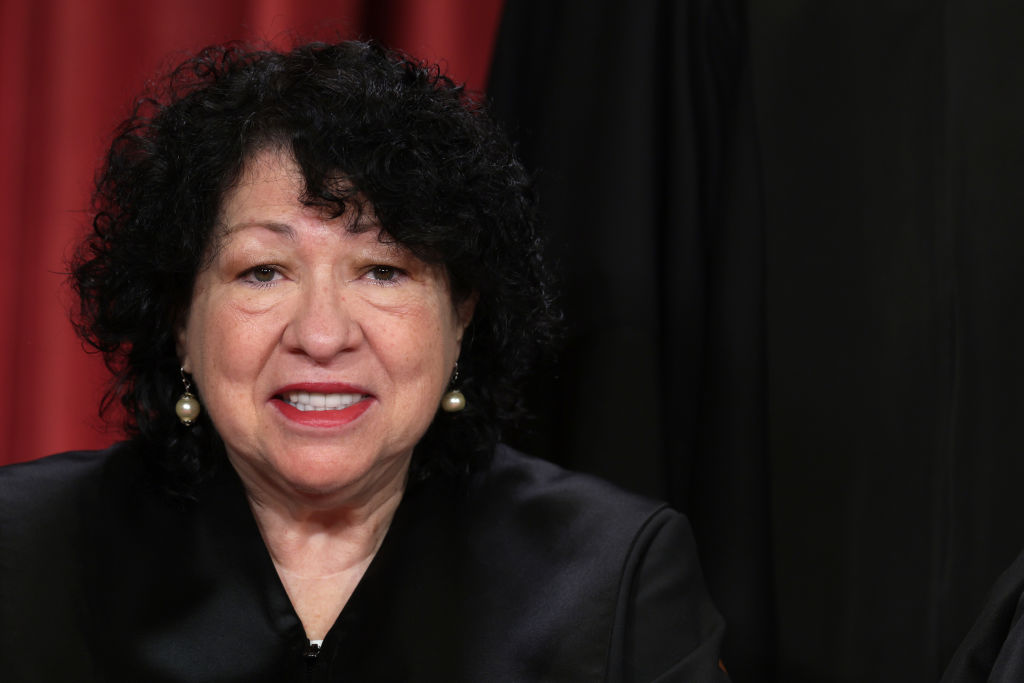
Justice Sonia Sotomayor has raised alarm about the erosion of constitutional checks and balances within the Supreme Court itself, suggesting her colleagues require remedial instruction in foundational civics principles to preserve the republic's democratic architecture.
The comments reflect deepening institutional tensions at the nation's highest court. Sotomayor, a consistent voice for judicial restraint and deference to coordinate branches, has watched the current conservative majority reshape constitutional doctrine in ways she views as destabilizing. Her critique targets not merely specific decisions but what she perceives as a wholesale abandonment of structural limits on judicial power.
The concern centers on the Court's recent trajectory toward expansive interpretations of executive authority and reduced deference to legislative judgments. Cases involving presidential immunity, regulatory power, and voting rights have prompted Sotomayor to file dissents emphasizing how majority opinions undermine the separation of powers framework enshrined in Articles I, II, and III of the Constitution.
Sotomayor's invocation of "civics lessons" carries particular weight coming from a justice appointed in 1990 and elevated to the Supreme Court in 2009 by President Barack Obama. She represents institutional memory of an earlier Court era when consensus existed across ideological lines about the basic structure of constitutional government. Her reference to saving "the republic" signals she views current trajectories as existentially threatening to democratic governance itself.
The practical implications extend beyond the bench. When a sitting Supreme Court justice suggests her colleagues lack basic constitutional understanding, it reflects a breakdown in collegial discourse at the institution designed to resolve the nation's most contested legal questions. The majority opinion pool has grown increasingly fractured, with justices issuing separate concurrences that sometimes contradict the legal reasoning underlying their votes. This fragmentation prevents the development of clear precedent and invites future litigation on the same issues.
Sotomayor's position aligns with broader criticisms from constitutional scholars and former judges. They argue the current majority, led by Chief Justice John Roberts and including Justices Clarence Thomas, Samuel Alito, Neil Gorsuch, Brett Kavanaugh, and Amy Coney Barrett, has abandoned traditional principles of judicial minimalism and restraint. Where earlier conservative jurisprudence emphasized deference to elected branches, this Court has intervened aggressively on questions from administrative power to voting regulation.
The specific mechanisms driving concern involve precedent erosion. The majority has overturned longstanding decisions, including Roe v. Wade (1973) and its successor Planned Parenthood v. Casey (1992), establishing a new framework for constitutional reexamination. This opened pathways to challenge established doctrine across multiple doctrinal domains. Combined with rulings curtailing agency deference and expanding executive prerogatives, the pattern suggests systematic recalibration of the constitutional order.
Sotomayor's diagnosis identifies the root problem. The majority operates from first principles rather than incremental adjustment. This represents departure from how previous Courts, even those executing major doctrinal shifts, maintained continuity. Her invocation of civics principles emphasizes that constitutional design itself assumes separated powers with mutual checking capacity. Without respect for those structural principles, courts become instruments of ideological preference rather than neutral arbiters.
Whether her colleagues view the critique as constructive remains unclear. The conservative majority has shown limited receptivity to institutional concerns raised by the liberal wing. Yet Sotomayor's public statements likely resonate with constitutional scholars and future generations of lawyers questioning whether the current Court remains bound by its own founding premises.