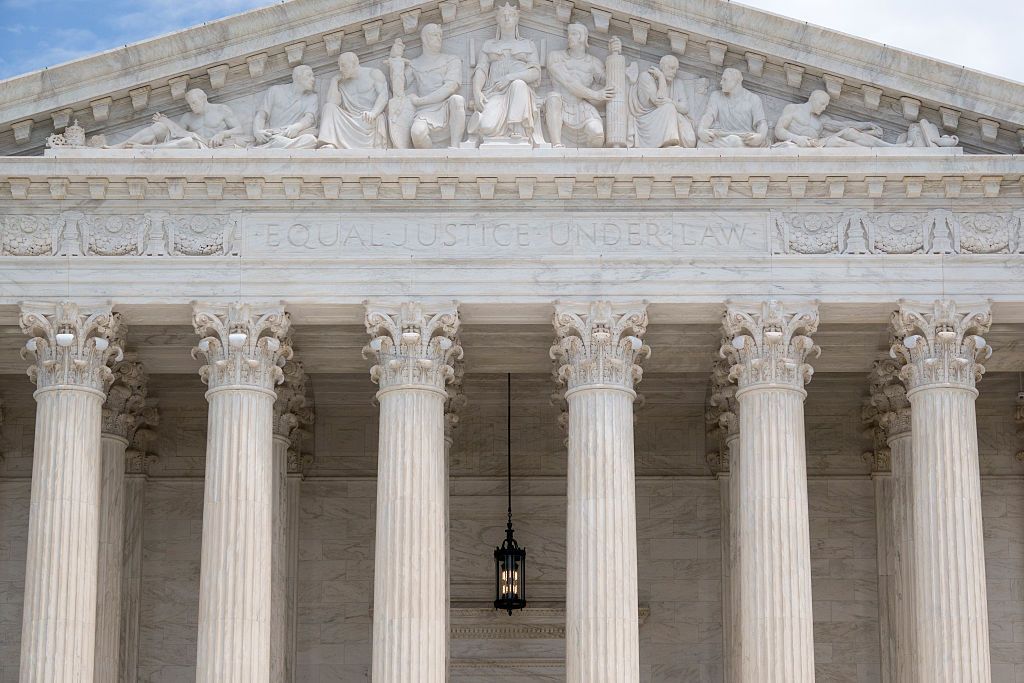
# Supreme Court Expands Authority Beyond Constitutional Text, Scholars Warn
The Supreme Court continues accumulating powers that the Constitution does not explicitly grant, according to analysis from constitutional scholars tracking the institution's expanding role in American governance. This pattern reveals how the Court has transformed itself into a co-equal branch wielding influence far beyond its original design.
The Constitution establishes three co-equal branches of government. Article III defines the judicial power narrowly: federal courts hear cases and controversies between specific parties. Yet the modern Supreme Court regularly exercises authority that extends well beyond adjudicating disputes between litigants. The Court now effectively vetoes legislative decisions through judicial review, shapes executive power through constitutional interpretation, and sets national policy through its case selection alone.
Take the Court's recent decisions on major questions doctrine. In West Virginia v. Environmental Protection Agency (2022), the six-justice conservative majority invalidated an EPA rule on the ground that major questions require explicit congressional authorization. This doctrine, however, exists nowhere in the Constitution's text. The Court created it through judicial precedent and now deploys it selectively to constrain agency action. Conservative justices apply it rigorously to Democratic-era regulations while giving Republican administrations considerable deference on identical issues.
The same phenomenon appears in the Court's approach to administrative law. The justices have progressively narrowed deference to agency interpretations of law. Chevron deference, long a fixture of administrative practice, fell to a 6-3 majority in Loper v. Raimondo (2024). Again, nothing in the Constitution mentions judicial deference standards. The Court invented them and now uninvents them based on ideological preference rather than constitutional text.
The shadow docket represents another unauthorized expansion. The Court issues emergency orders and opinions without full briefing or oral argument, increasingly deciding cases through this expedited process. These decisions carry no less authority than fully deliberated opinions despite their abbreviated treatment. The Constitution contains no authorization for this two-track system.
Originalist justices on the current Court claim fidelity to the Constitution's text. Yet they simultaneously embrace doctrines created whole cloth by judicial invention. This contradiction reveals that institutional power, not interpretive consistency, drives many decisions. When originalism supports limiting the executive or legislature, the Court applies it rigorously. When it constrains the Court itself, justices find exceptions.
The Court's power to select its own docket multiplies this effect. The justices control which cases reach full briefing and argument through the certiorari process. Only about 70 of nearly 7,000 petitions receive full review annually. This near-absolute gatekeeping power means the Court shapes national law through negative action as much as through decisions on the merits.
Congress and the President possess tools to check this expansion. Congress can modify jurisdictional statutes, alter the Court's size, or restrict shadow docket procedures through legislation. Presidents can appoint justices committed to constitutional restraint. States can develop independent constitutional doctrine on state constitutional grounds, reducing reliance on federal courts.
The trajectory remains clear: the Supreme Court has become a superlegislative body wielding powers no constitutional delegate authorized. Whether future political branches will restore equilibrium depends on their willingness to challenge judicial supremacy explicitly.