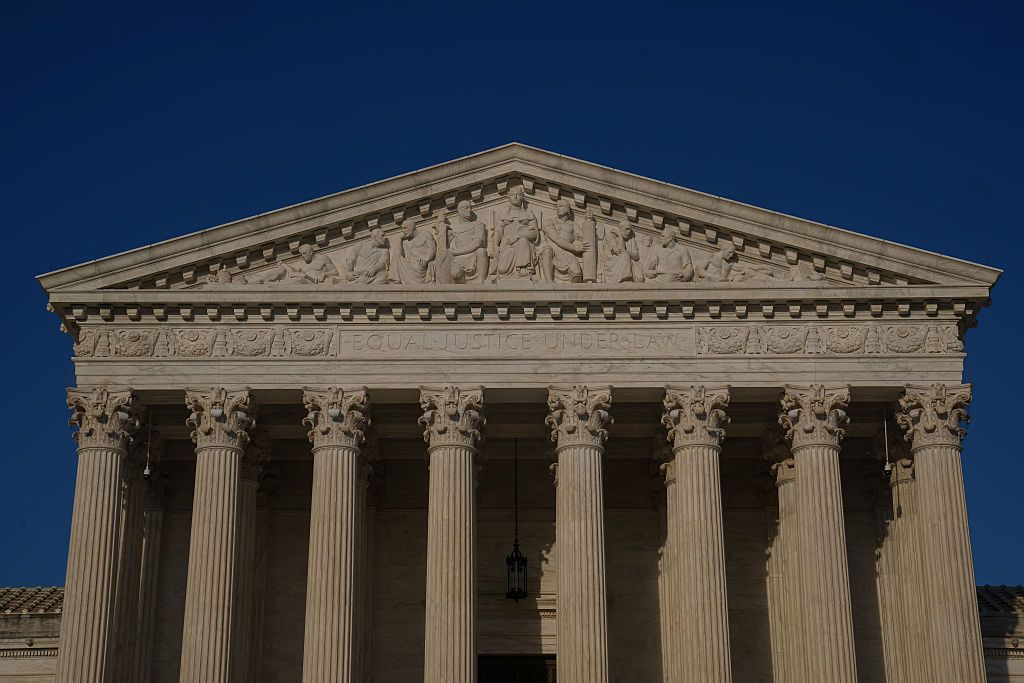
# Trump Administration Returns Immigration Deportation Authority Question to Supreme Court
The Trump administration has petitioned the Supreme Court to review a fundamental question about federal power to deport immigrants, reviving a legal battle over whether states can enforce immigration law independently.
The case centers on whether individual states possess constitutional authority to arrest and detain noncitizens for immigration violations, or whether that power rests exclusively with federal authorities under the Immigration and Nationality Act. This dispute directly implicates the boundaries between state and federal jurisdiction in immigration enforcement, a domain traditionally reserved for federal control.
The Supreme Court previously declined to hear arguments on this question during the Biden administration, but changing administrations often bring renewed petitions on contested constitutional questions. The Trump administration's filing signals its intent to expand state-level immigration enforcement capabilities, a policy priority of the current administration that differs substantially from Biden-era approaches favoring centralized federal control.
Lower courts have split on this issue. Some federal courts have suggested that state officers may arrest noncitizens for certain immigration violations under specific circumstances, while others have held that the INA grants exclusive arrest authority to federal immigration officers. This circuit split creates legal uncertainty for states attempting to bolster immigration enforcement and for noncitizens subject to detention across different jurisdictions.
The practical stakes are enormous. If the Court rules in favor of the states, cities and counties could deputize local police to enforce immigration law, expanding deportation capacity far beyond current federal resources. Conversely, a ruling for exclusive federal authority would constrain state involvement and require coordination through federal channels like the 287(g) program, which currently allows some state and local cooperation through memoranda of understanding with Immigration and Customs Enforcement.
The petition touches on the Supremacy Clause and the doctrine of preemption. Federal immigration law does not explicitly prohibit state participation in immigration enforcement, but it remains unclear whether the comprehensive federal scheme implicitly forecloses state action. The administration contends that nothing in the INA bars states from arresting noncitizens for violating federal immigration statutes. Immigration advocates argue that allowing state enforcement creates chaos, discriminatory enforcement, and liability for states and municipalities.
States themselves hold divided positions. Red states largely support expanded enforcement power, while blue states have moved toward sanctuary policies limiting cooperation with federal immigration authorities. The alignment between state interests and partisan politics makes this a particularly heated constitutional dispute.
The Court's decision whether to grant certiorari will likely come within months. If accepted, oral arguments could occur in the 2025-2026 term, with a decision following in 2026. This timeline positions the case among the most consequential immigration matters on the docket.
The outcome will reshape enforcement patterns nationwide, affecting both state budgets and immigrant communities. Federal agencies and state attorneys general will be watching closely as the administration presses its case.