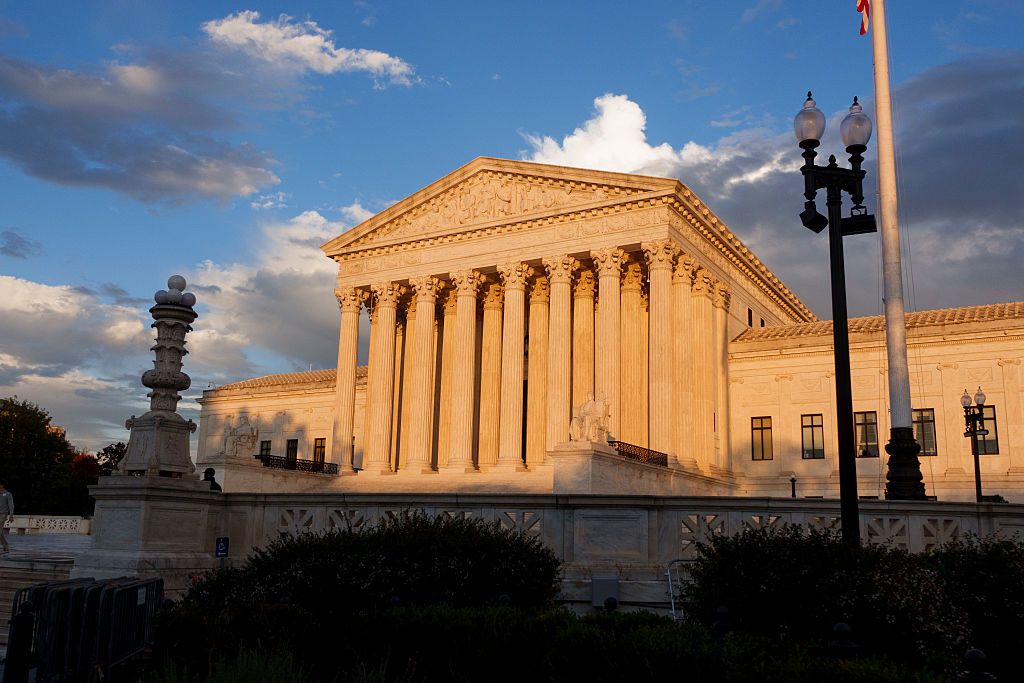
When Ken Jouppi, now 83 years old, flew a passenger from Fairbanks to Beaver, Alaska in April 2012—a flight of less than one hour—he could not have anticipated losing his $95,000 airplane over what amounts to a minor infraction. Yet that is precisely what happened. State troopers found beer that the passenger was carrying to her husband in Beaver, a village of 48 people where alcohol is prohibited. Jouppi was convicted and sentenced to three days in prison and a $1,500 fine. Then Alaska seized his plane. This week, the Supreme Court will hear arguments in his case, and the justices must recognize what should be obvious: the forfeiture is grossly disproportional to the offense.
Jouppi's argument rests on solid constitutional ground. The Eighth Amendment's Excessive Fines Clause exists precisely for cases like this. In United States v. Bajakajian, the Supreme Court held that forfeiting $357,144 from someone who failed to report carrying more than $10,000 out of the country violated that clause. How is forfeiting an $95,000 airplane for transporting beer fundamentally different? Alaska's own legal framework suggests the problem: it grouped this offense with crimes like bestiality, domestic violence in a child's presence, and 'misconduct involving a corpse'—all Class A misdemeanors carrying a maximum fine of $10,000. Jouppi's punishment is nine-and-a-half times that maximum. The disproportion is staggering.
Alaska's counterargument deserves serious consideration but ultimately fails. The state correctly notes that Beaver has no roads, no emergency medical services, and that alcohol causes real destruction in isolated communities. These are legitimate concerns. However, the state's solution conflates Jouppi's actual culpability with the broader problem of alcohol in remote villages. The state claims Jouppi 'loaded' the beer, but Jouppi denies knowing about it. Even accepting the state's version—that he knew about beer transported by his passenger—the magnitude of the offense remains trivial: one six-pack visible in a grocery bag, according to trooper testimony, plus two additional cases. This is not a commercial smuggling operation.
The danger of Alaska's approach extends far beyond this case. If courts can justify forfeiting a $95,000 airplane for transporting nine gallons of beer by looking at 'societal harm' in the abstract rather than the defendant's actual conduct, the Excessive Fines Clause becomes meaningless. Jouppi makes an apt point: seatbelt violations caused 2,000 deaths and $11 billion in costs; speeding-related accidents cost $46 billion. Yet no one would argue that forfeiting a car for these infractions is proportional. When courts evaluate offenses 'at a stratospheric level of abstraction,' even minor violations appear catastrophic.
The Supreme Court should reverse the Alaska Supreme Court's decision and remind lower courts that proportionality analysis must consider the defendant's actual wrongdoing, not abstract societal harms. The Excessive Fines Clause was built for cases exactly like this—where government overreach threatens fundamental fairness. An 83-year-old bush pilot should not lose his livelihood and plane over a passenger's beer.