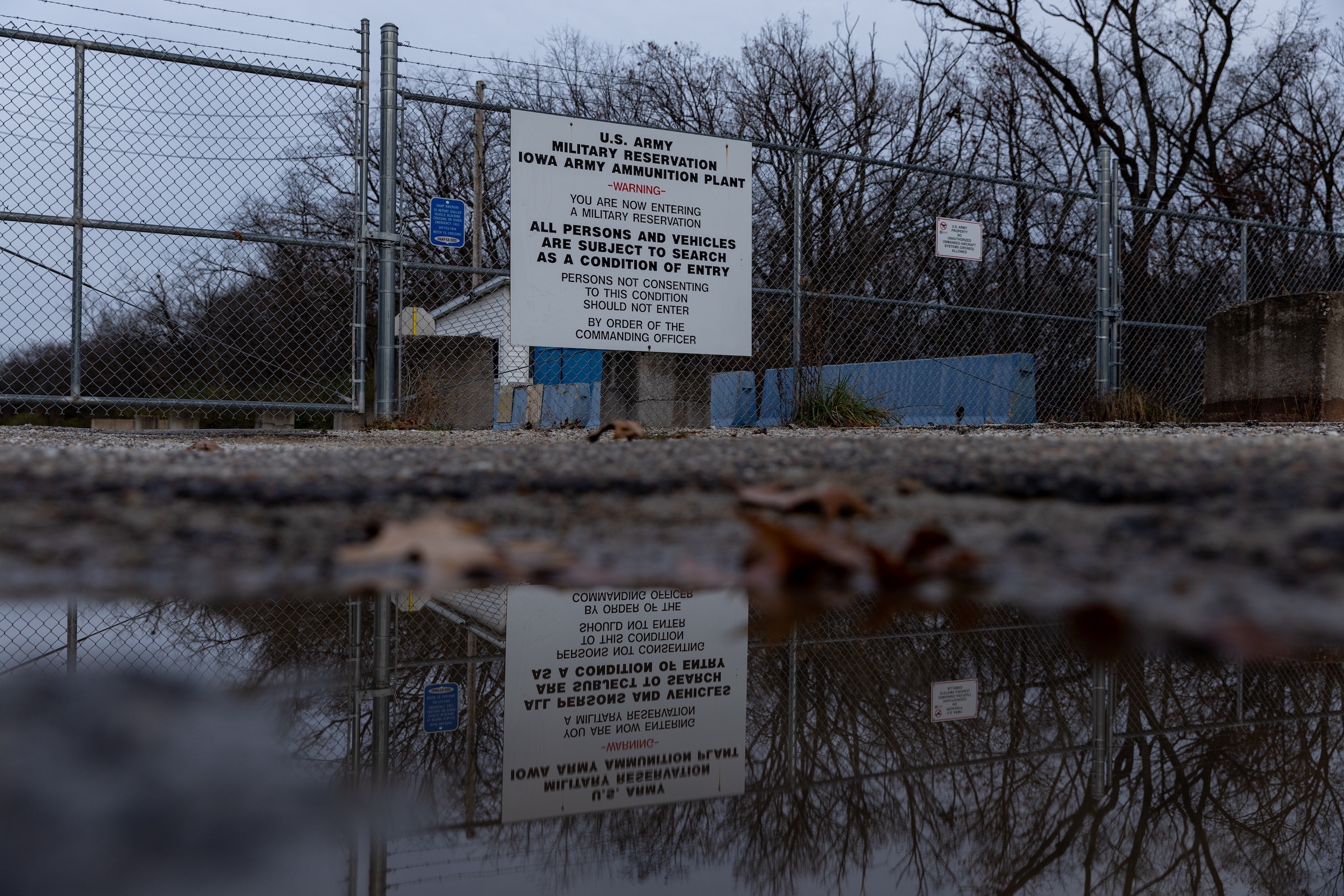
The U.S. Army's decision to intentionally detonate the nation's entire stockpile of lead azide—five tons of a chemical used to make explosives—at the Iowa Army Ammunition Plant in Middletown on Wednesday may have technically succeeded in destroying the material, but the operation exposed troubling gaps in government transparency and risk communication that shouldn't be glossed over by declarations of success from Maj. Gen. Eric Shirley and others in charge.
The facts alone justify concern. During an inspection in March, staff discovered the chemicals had partially crystallized, making them sensitive to friction and cold temperatures and creating a risk of spontaneous detonation. The Army assembled experts to evaluate alternatives like thermal treatment and neutralizing the drums' contents but concluded a controlled detonation was safest. Yet the exact detonation plan was announced just days in advance, as the report notes, setting off legitimate concerns about potential health and environmental impacts from toxic dust laced with lead. The blast was originally scheduled for the Friday before but was postponed three times, according to court documents—a clear acknowledgment that rushing such an operation carries unacceptable risks.
Even more troubling is what happened at ground level. Bystanders positioned less than a mile away and upwind from the site watched without masks or eye protection as the detonation occurred around 9 a.m. on Wednesday. While Burlington resident Tim Brandt dismissed the blast as underwhelming—comparing it to noisemakers that crack when thrown on the ground—the absence of proper protective equipment among civilians near a lead dispersal event is indefensible. Lead is a heavy metal unsafe at any level and especially dangerous to children and pregnant women, yet people were laughing and joking without basic precautions.
The government's post-hoc environmental monitoring plan compounds these concerns. Lead is a heavy metal that poses documented health risks, yet officials relied on EPA air monitors immediately after the detonation to declare success rather than waiting for comprehensive testing. Colin Wellenkamp, executive director of the Mississippi River Cities and Towns Initiative, confirmed that water treatment facilities down the Mississippi River would begin testing 'starting in a few hours'—meaning results come after the fact, not before.
It's unclear whether the plume carried toxic lead toward homes and farms in its path, though wind patterns on Wednesday were expected to carry it southwest toward Missouri and away from Burlington. Lucy Giehl, who lives nearby in West Burlington, captured the legitimate frustration many residents feel: 'I don't think lead danger goes away any time soon. It seems someone might have thought about all of this a little sooner before it came to this.' She's right. The real measure of success isn't that the Army executed a detonation without immediate visible catastrophe—it's whether this operation should have been necessary at all, and whether it was conducted with the transparency and precaution it demanded.