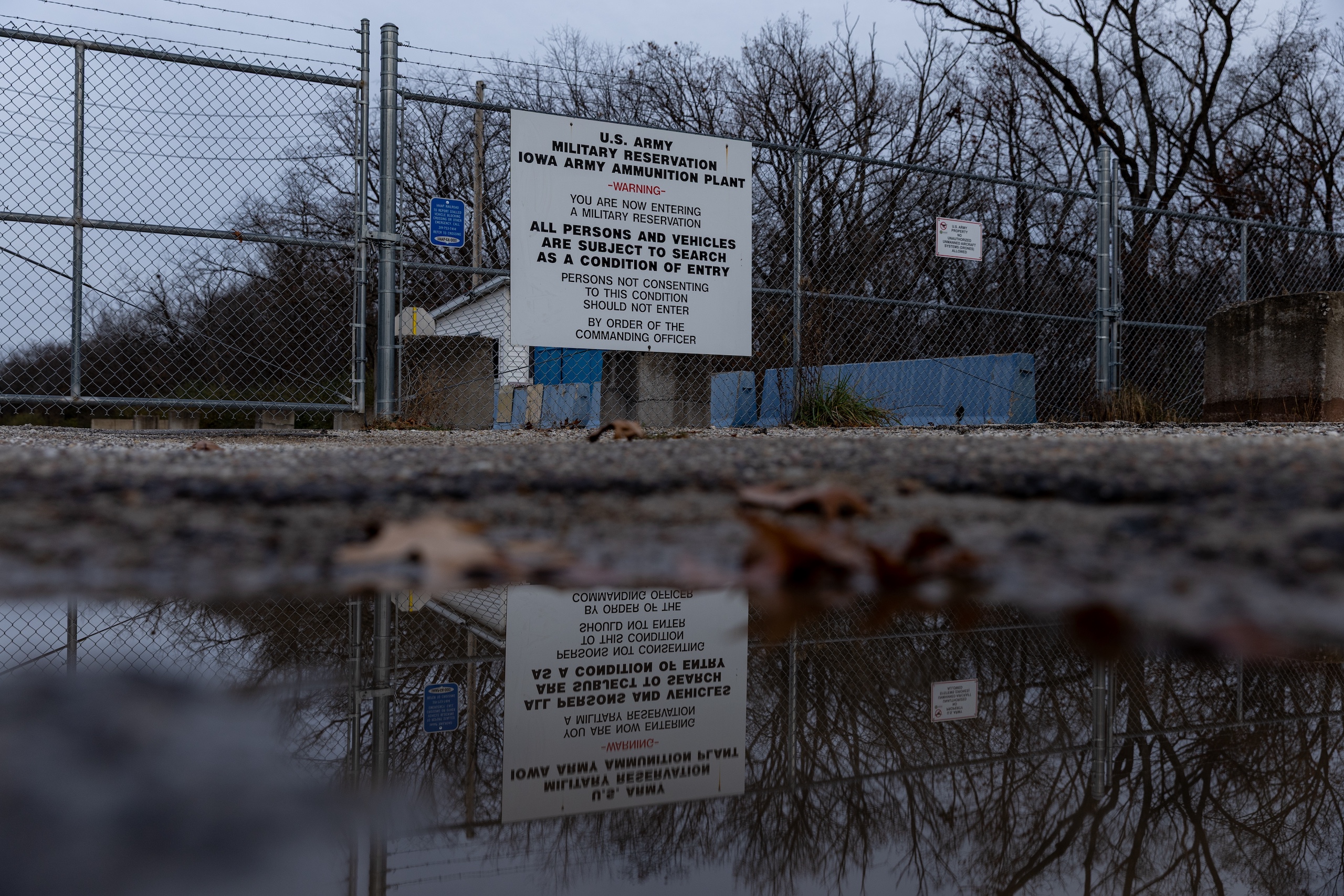
The U.S. Army detonated the nation's entire stockpile of lead azide, a chemical used to make explosives, at the Iowa Army Ammunition Plant in Middletown on Wednesday. The five tons of material had degraded and risked exploding uncontrollably as temperatures cooled, according to officials.
Maj. Gen. Eric Shirley, who led the operation, said at a news conference two hours after the blast that all lead azide was successfully destroyed. U.S. Environmental Protection Agency air monitors reported no lead in the air around the site immediately following the detonation.
The blast occurred around 9 a.m. local time and produced two loud booms followed by wispy white plumes that quickly dissipated. An Associated Press reporter watched from less than a mile away, upwind from the site.
The stockpile was brought to Iowa from bases around the country in 2009, according to Robert Cekada, director of the Bureau of Alcohol, Tobacco, Firearms and Explosives. During an inspection in March, staff found the chemicals had partially crystallized, making them sensitive to friction and cold temperatures and creating risk of spontaneous detonation.
The Army set up blast barriers around two bunkers containing 68 barrels of lead azide. The materials were surrounded by concrete and sand barriers two stories high. Ballistic gels and foams were intended to absorb lead dust, and the Army planned to use more than 100,000 gallons of water to control the plume.
Environmental groups filed a lawsuit to halt the plan, but a federal appeals court ruled on Monday that the EPA adequately incorporated safeguards to minimize lead dust dispersal. The court decision put the detonation back on track.
The Army changed the detonation date three times before Wednesday amid public backlash and to allow more time for safety measures and favorable wind conditions. Schools canceled classes, and government officials encouraged residents within 5 miles of the site to evacuate.