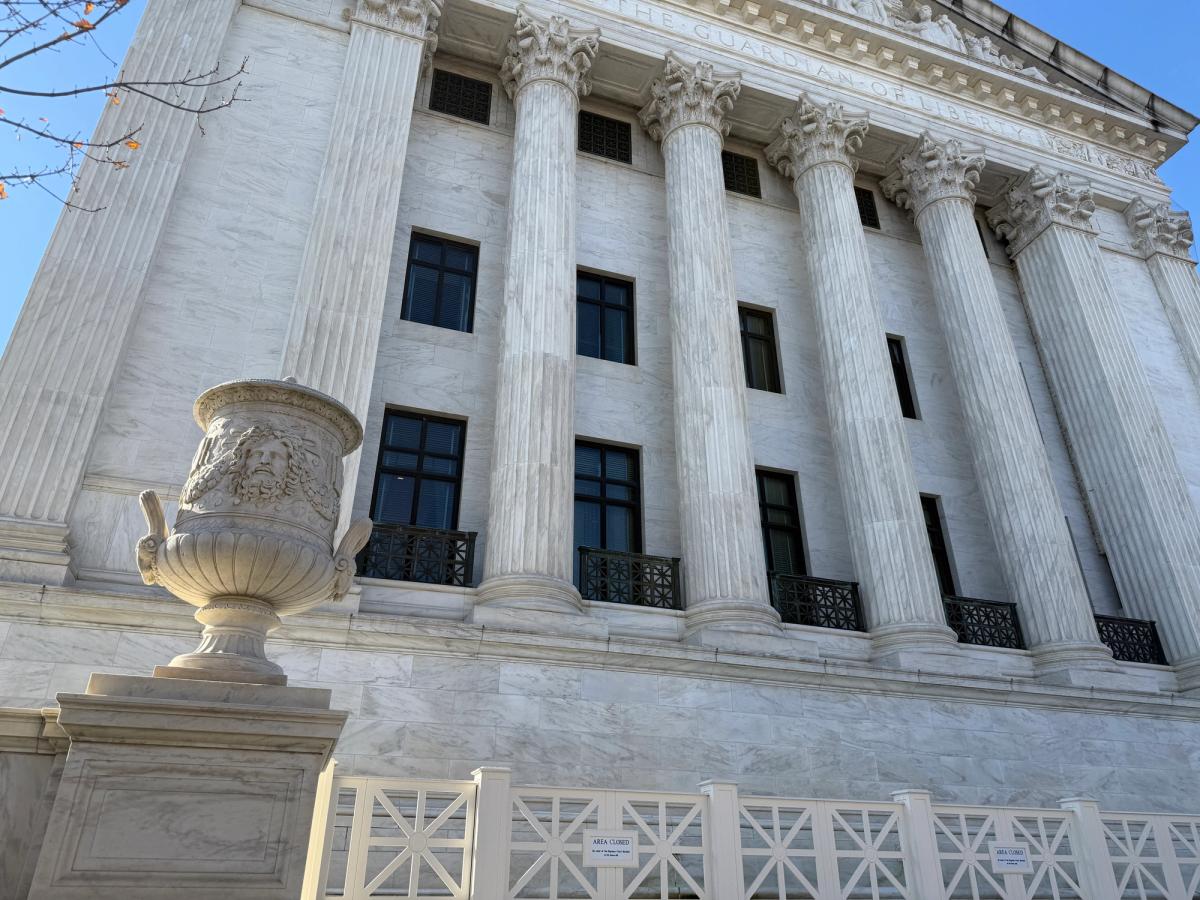
The Supreme Court accepted a case on Oct. 1 that will decide whether the Trump administration may detain noncitizens without a bond hearing under federal immigration law.
The case, Rhoney v. Barbosa da Cunha, challenges a policy Immigration and Customs Enforcement began in July 2025. ICE then started requiring that noncitizens who entered the United States without inspection, regardless of when they arrived, be detained under Section 1225(b)(2)(A) for the duration of removal proceedings. Unlike the previous standard under Section 1226(a), immigration judges lack power to grant bond to these detainees. Under the new policy, release is available only through discretionary case-by-case parole granted for urgent humanitarian reasons or significant public benefit.
The 2nd U.S. Circuit Court of Appeals ruled unanimously that Section 1225(b)(2)(A) does not apply to a Brazilian man who has lived in the United States for more than 20 years and was detained under this policy in 2025. Nine of the 12 federal circuit courts agree that Section 1226(a) governs people arrested in the interior, while the 5th and 8th Circuits read the statute as the government does.
A related constitutional question is also pending. The full 5th Circuit held on Oct. 23 in Sosnava Rodriguez v. Vergara that noncitizens subject to mandatory detention have no due process right to a bond hearing. Seven judges dissented. By contrast, the 3rd and 6th Circuits have held that detaining long-term residents without a bond hearing violates due process.
The geographical split means detainees' access to bond hearings depends on their circuit. No argument date is set in Rhoney. The proposed merits briefing runs into February, pointing to argument in late winter or spring and a decision by term's end.