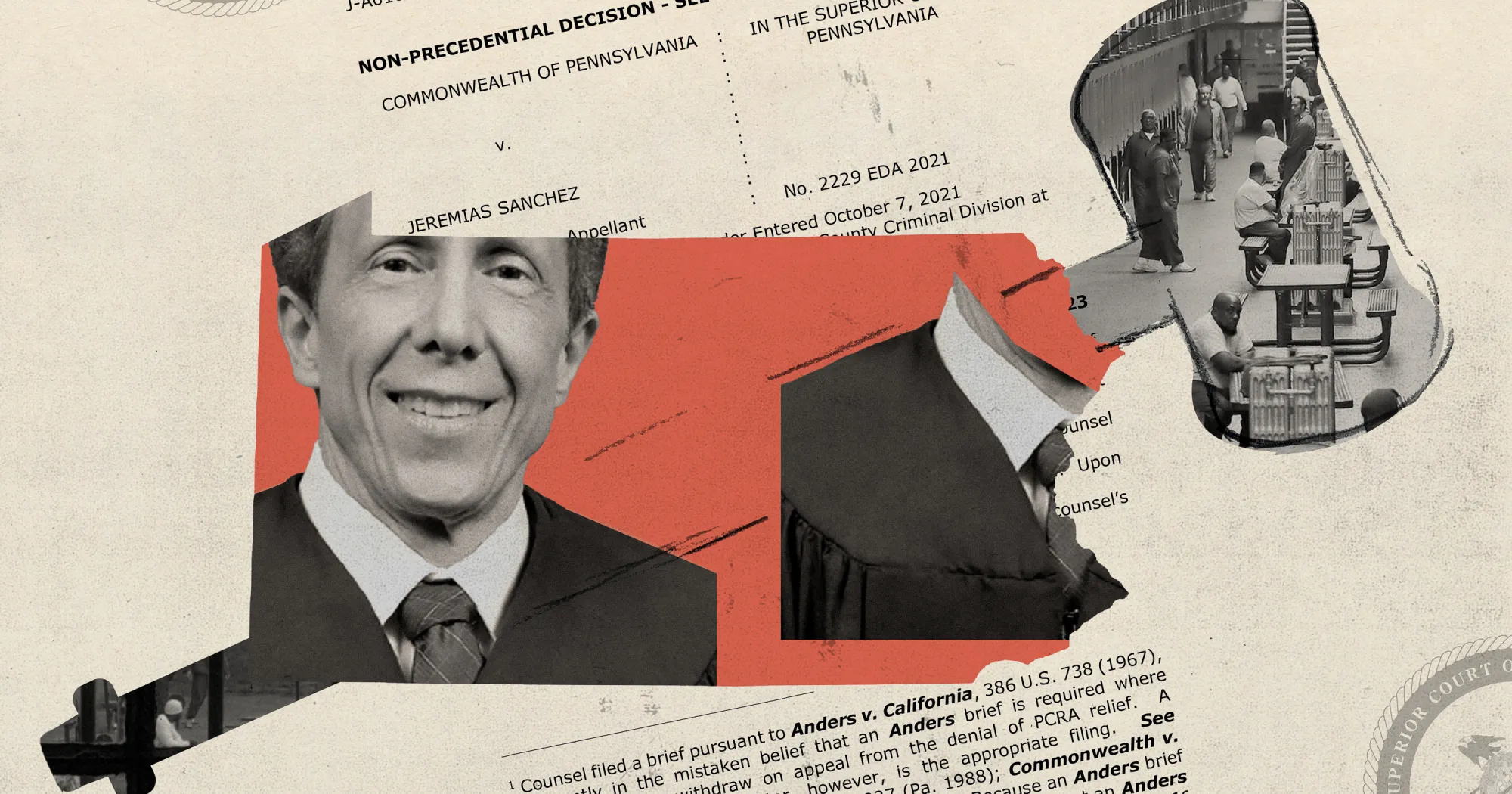
A yearlong investigation uncovered a troubling reality in Pennsylvania's post-conviction system: lawyers routinely argue against their own clients in so-called Finley letters, often without ever speaking to them. In three quarters of Philadelphia cases examined, lawyers who filed these no-merit briefs had never contacted their clients, reached out to trial lawyers, or obtained police files before declaring the claims worthless. Yet judges—the very officials responsible for overseeing these appointed attorneys—continue to rubber-stamp these letters almost without question, despite obvious gaps in investigation and even factual errors.
The Pennsylvania Superior Court has been remarkably vocal about the problem. Over 14 years, the appeals court flagged more than 250 cases in which lower-court judges failed to intervene as lawyers provided what the court labeled ineffective representation. The court's language has been scathing: one opinion called an 'embarrassing saga' of deficient lawyering in a Berks County case; another invoked Casey Stengel's famous quip about the 1962 New York Mets: 'Can't anybody here play this game?' In one case, the Superior Court resorted to boldface to highlight the absurd reality: 'The PCRA court did nothing in this case for 20 years.' Yet even after such reversals, more than 100 cases bounced back between the appeals court and county judges multiple times, with judges repeating the same errors or reappointing incompetent lawyers.
What's striking is not the absence of judicial power, but its non-use. Under state rules, judges have both the authority and obligation to make disciplinary referrals against negligent attorneys. Yet only six lawyers have faced public sanctions for post-conviction work in the last decade—despite the Superior Court identifying systemic failures affecting hundreds of cases. Judicial discipline is even rarer, with no lower-court judge publicly disciplined in at least a decade for mishandling post-trial matters, even judges whom the Superior Court found exhibited bias or imposed vindictive sentences.
Consider Jefferson County's John Foradora, who repeatedly imposed lengthy sentences despite the Superior Court finding them 'unduly harsh and clearly unreasonable.' After three reversals, the woman he sentenced to up to 22 years for passing two narcotics pills ended up serving more than eight years. Foradora declined comment through a spokesperson. This pattern—judges ignoring appellate warnings and reappointing failed lawyers—persists unchecked.
Judge Frank Palumbo exemplifies the problem. When observed in July 2025, he guided an appointed lawyer toward filing a Finley letter by providing a template from another case, essentially instructing: 'I'm not saying plagiarize,' but here's the path. The lawyer's resulting brief was nearly identical to the template and contained a missed deadline argument—mirroring the template exactly. Palumbo accepted it and dismissed the claim without response to reporting inquiries.
Pennsylvania's judges possess the tools to prevent these injustices. As Marissa Boyers Bluestine of the University of Pennsylvania law school noted: 'Judges are in a terrific position to be able to prevent these kinds of injustices.' The question is no longer whether they can act—it's why they haven't. Until judges use their authority to sanction negligent lawyers and ensure meaningful investigation before dismissing claims, the state's promise of effective legal representation remains hollow.