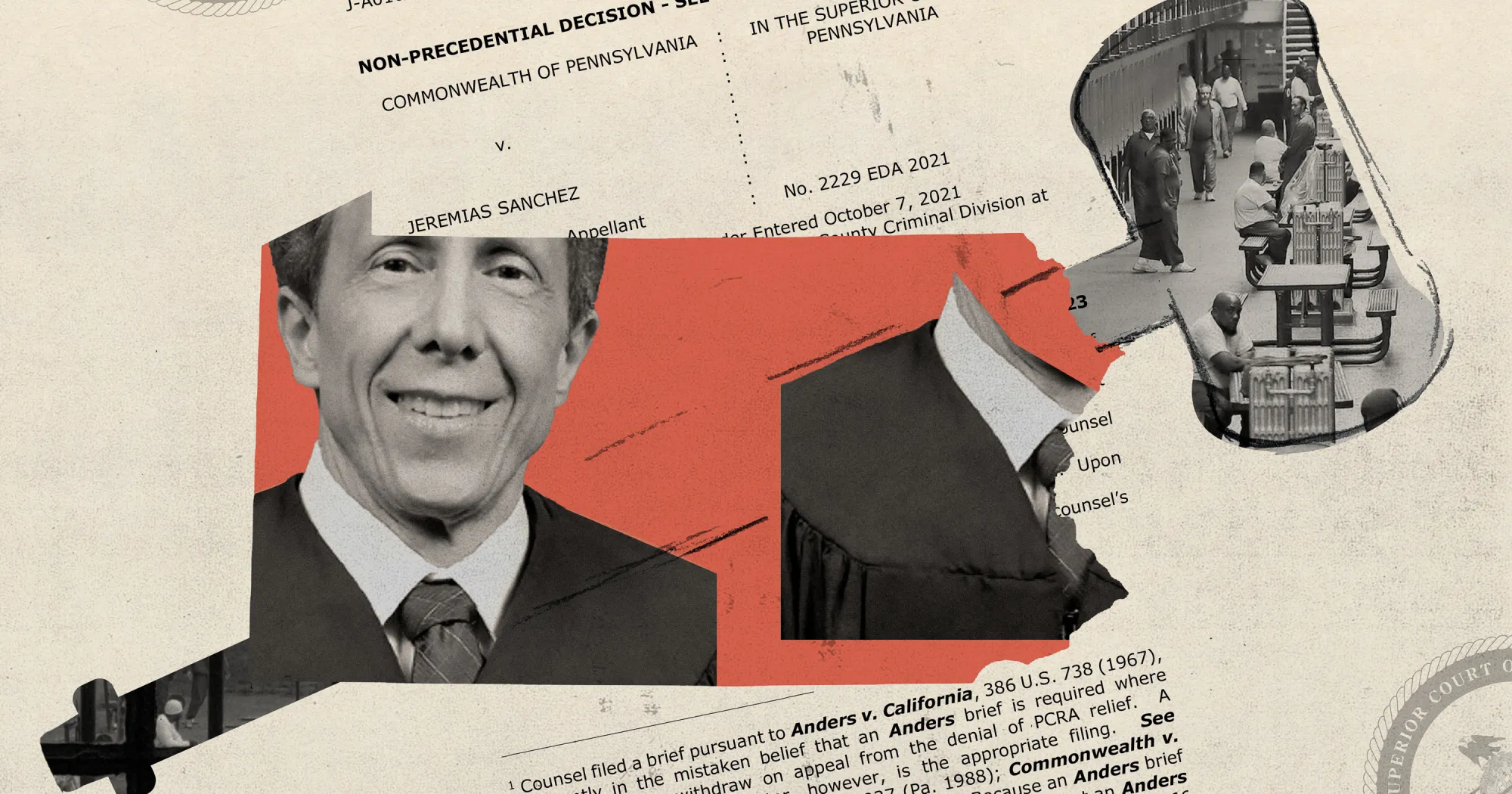
A yearlong investigation found that Pennsylvania judges rarely enforce accountability against court-appointed lawyers in post-conviction cases, despite widespread failures in legal representation.
The reporter reviewed hundreds of "Finley letters," court financial records from all 67 Pennsylvania counties, and thousands of court dockets. Finley letters are briefs in which an attorney argues against their own client's claims and requests to withdraw from the case.
The investigation found that court-appointed lawyers often work under fee structures banned in other states, fall years behind on cases, and frequently file Finley letters without basic investigative steps. In Philadelphia, three-quarters of lawyers who wrote Finley letters had never spoken with their clients, contacted the trial lawyer, or obtained police files before deciding claims had no merit. None of these steps is required by law.
The Pennsylvania Superior Court, the state's appeals court, flagged more than 250 cases over 14 years in which judges failed to intervene as lawyers provided ineffective representation. The court's opinions documented delays lasting years, clients abandoned without representation, and boilerplate appeals so vague they doomed clients' cases. The Superior Court affirmed about 80 percent of lower-court rulings in post-conviction matters.
Despite these reversals, judges rarely face consequences. Only six lawyers in the last decade have been publicly sanctioned for work on court-appointed post-conviction cases. No lower-court judge has been publicly disciplined for mishandling a post-trial matter in at least a decade.
After Superior Court reversals, more than 100 cases bounced between appeals and county judges two, three, four or more times, with judges repeating errors or reappointing the same lawyers to cases they had already mishandled.