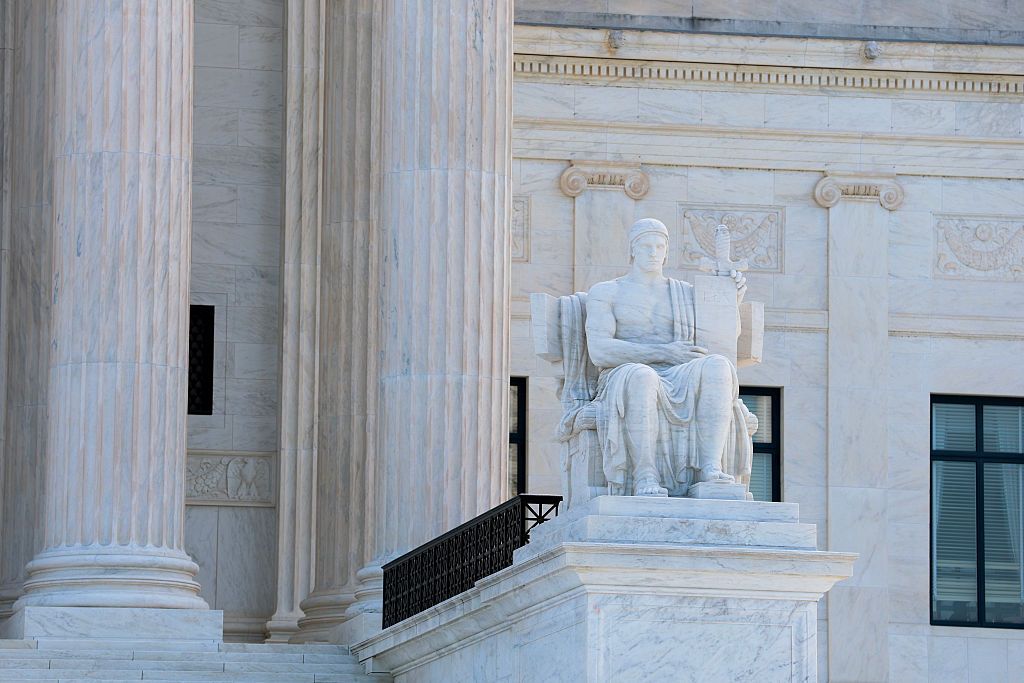
The Supreme Court agreed on October 19 to hear Association for Education Fairness v. Montgomery County Board of Education, a case challenging a magnet school admissions policy that is facially neutral on race but may have altered the racial composition of admitted students.
Montgomery County, Maryland adopted the "Pandemic Plan" during the pandemic. Under this policy, all students who meet minimum grade requirements and whose state assessment scores exceed a cutoff are placed in a lottery for magnet school admission. Because schools in the region differ in racial composition, basing admissions decisions on how students score relative to peers in their own school ultimately affects the demographics of admitted students.
The plaintiff organization claims the Pandemic Plan violates the 14th Amendment's equal protection clause because Montgomery County adopted it to change the racial demographics of magnet schools and because it decreased the share of Asian-American and white students admitted. The district court dismissed the case, and the U.S. Court of Appeals for the 4th Circuit affirmed.
The Supreme Court limited its review to one question: "Whether a plaintiff challenging a facially neutral admissions policy as racially discriminatory must establish that the targeted racial group suffered an aggregate disparate impact relative to its share of the applicant pool."
This question reflects a split in the federal circuits over how to measure discriminatory effect in facially neutral policies. The 4th and 1st Circuits compare the percentage of a racial group admitted to their percentage in the applicant pool. The 3rd Circuit instead compares admissions percentages under the new policy to those under the prior policy. The Supreme Court's decision will resolve this disagreement among the circuits.