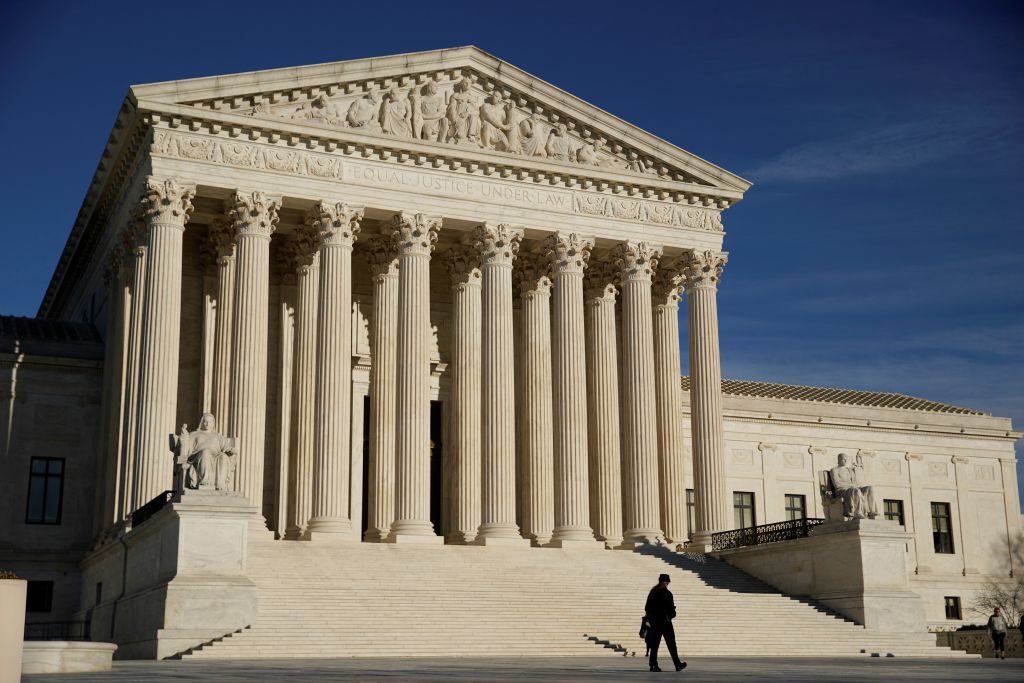
# Supreme Court to Decide Future of Race-Based School Admissions
The Supreme Court accepted a petition to review affirmative action policies in college admissions, setting up what experts predict will be the most consequential education case in decades. The case, Students for Fair Admissions v. Harvard University and Students for Fair Admissions v. University of North Carolina, directly challenges whether universities may consider race as one factor among many in undergraduate enrollment decisions.
The plaintiffs, represented by Students for Fair Admissions, argue that race-conscious admissions violate Title VI of the Civil Rights Act of 1964 and the Equal Protection Clause of the Fourteenth Amendment. The organization contends that considering applicants' race inherently discriminates against white and Asian American students.
Harvard University and the University of North Carolina defend their admissions frameworks as narrowly tailored to achieve educational benefits that flow from diverse student bodies. Both institutions maintain they use race as a modest factor within holistic review processes designed to identify accomplished students from varied backgrounds. University officials argue that eliminating race-based considerations would substantially reduce diversity among their student populations.
This Supreme Court review overturns decades of precedent. In Gratz v. Bollinger (2003), the Court upheld consideration of race in admissions at the University of Michigan Law School, holding that diversity serves a compelling institutional interest. Justice Sandra Day O'Connor wrote that race-conscious admissions would likely remain constitutional for another 25 years. The 2003 framework has governed university admissions practices across the nation.
The Justices' composition has shifted dramatically since 2003. Conservative justices now hold a 6-3 majority. Several have signaled skepticism toward race-based classifications. During oral arguments in comparable cases, Justice Clarence Thomas questioned whether the Constitution ever permits race-conscious decision-making. Chief Justice John Roberts suggested that the solution to discrimination based on race is to stop discriminating based on race.
The practical implications ripple across American higher education. If the Court invalidates race-conscious admissions, universities would need to devise alternative approaches to recruit and enroll diverse student populations. Some institutions might increase consideration of socioeconomic status or geographic origin. Others might expand recruitment in underserved communities. Many predict overall campus diversity would decline substantially at elite institutions.
Professional schools face similar pressures. Law schools, medical schools, and business schools rely on race-conscious admissions to maintain diverse cohorts of future lawyers, physicians, and business leaders. A Supreme Court ruling against race-based admissions would require systemic restructuring of enrollment processes nationwide.
The Court's decision carries implications beyond campus walls. Corporate diversity initiatives and government contracting programs that consider race in decision-making face legal vulnerability if the Court rules against educational affirmative action. Employment discrimination law, federal contracting, and small business lending programs designed to remedy historical disparities would face constitutional challenges.
Oral arguments are scheduled for October 2022, with a decision expected by June 2023. The ruling will determine whether universities can continue using race as an admissions factor or whether such practices violate constitutional equal protection guarantees.