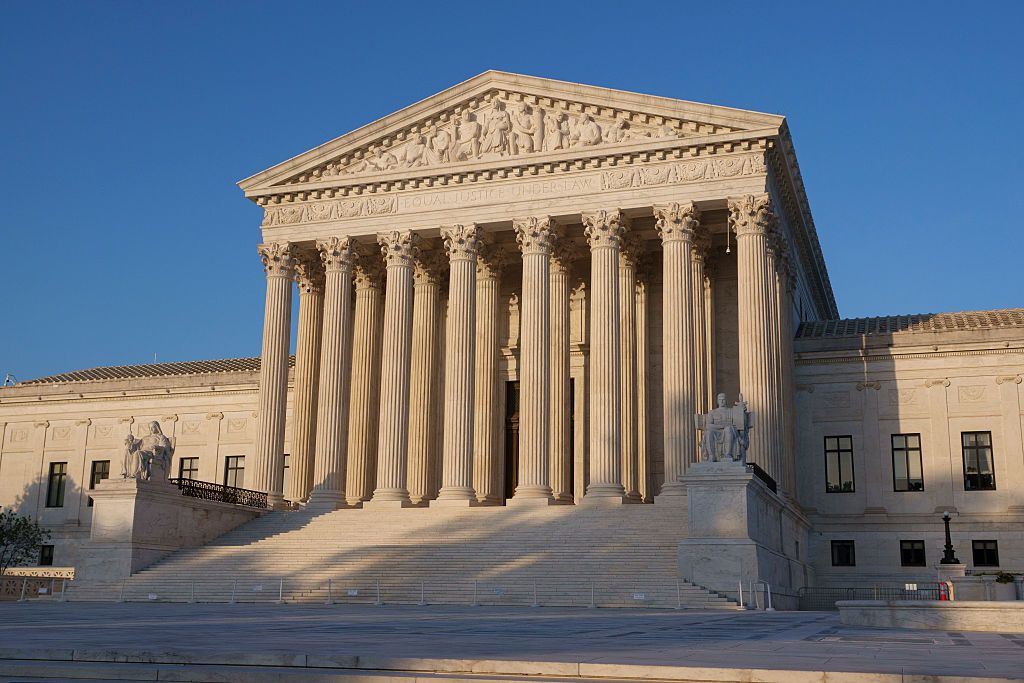
The Supreme Court agreed Friday to hear Goldman Sachs Bank USA v. Brown, a case examining whether bankruptcy courts can override the Federal Arbitration Act and refuse to enforce arbitration agreements.
The dispute began when Rhea Brown and Gregory Maze filed for bankruptcy and listed credit card debts owed to Goldman Sachs Bank. The Bankruptcy Code imposes an automatic stay that bars creditors from collecting debts from those who have filed for bankruptcy. Brown and Maze filed an adversary proceeding against Goldman Sachs, claiming the bank willfully violated the automatic stay by continuing to seek payment on their credit card debts.
Goldman Sachs invoked an arbitration clause in the credit card agreements and asked the bankruptcy court to halt the adversary proceeding and require arbitration. The bankruptcy court denied the request. Both the federal district court and the U.S. Court of Appeals for the 4th Circuit upheld that denial. A divided 4th Circuit panel concluded that requiring arbitration "would interfere and conflict with the strong and established policies and purposes of the Bankruptcy Code."
Goldman Sachs petitioned the Supreme Court in June. The bank argued the 4th Circuit's ruling conflicted with a decision by the U.S. Court of Appeals for the 2nd Circuit. Goldman Sachs stated that "[t]he practical stakes of these issues are enormous" because arbitration clauses appear widely in consumer credit agreements, and the 4th Circuit's decision "imperils the enforceability of arbitration agreements in many of them."
Oral arguments likely will occur next year, with a decision expected by late June or early July.