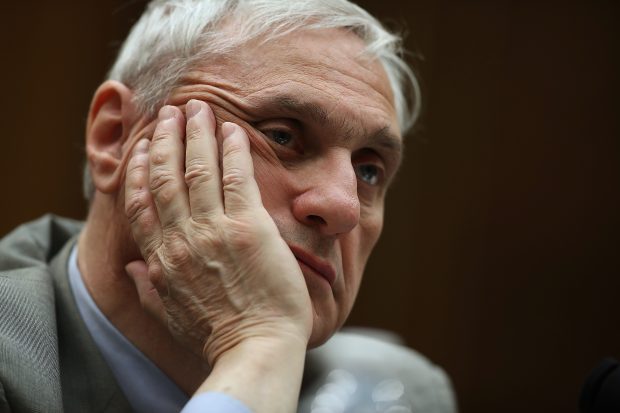
# Disgraced Former Judge Alex Kozinski Returns to Public View With Op-Ed Advocating Execution Method
Alex Kozinski, the former U.S. Court of Appeals judge for the Ninth Circuit who resigned in 2017 following sexual harassment allegations, has published an op-ed in The Wall Street Journal arguing for firing squads as a method of capital punishment. The piece marks Kozinski's return to prominent media commentary on legal policy after years of relative public absence following his departure from the bench.
Kozinski stepped down from his judgeship in December 2017 after multiple women accused him of sexual harassment and inappropriate conduct spanning decades. An investigation by the Ninth Circuit Judicial Council substantiated the allegations, finding patterns of unwelcome conduct. Since then, Kozinski has largely retreated from public legal discourse, though he has maintained a presence in some legal circles.
The Journal op-ed represents a significant re-entry into mainstream legal commentary. In the piece, Kozinski presents arguments favoring execution by firing squad, positioning it within broader debates about capital punishment methods and their constitutionality under the Eighth Amendment's prohibition on cruel and unusual punishment. The essay has drawn attention partly because it omits substantial discussion of what critics characterize as deeply troubling aspects of the Trump administration's apparent capital punishment agenda.
Observers have flagged that Kozinski's column fails to adequately address what they view as the most alarming dimensions of the administration's execution-related policies. The selective framing has prompted questions about editorial choices at the Journal and the propriety of providing Kozinski a platform for policy advocacy without fuller accounting of the concerns surrounding his proposals.
Kozinski's academic and judicial credentials remain intact despite the sexual harassment findings. He served on the Ninth Circuit bench since 1985 and authored numerous influential opinions on constitutional law, intellectual property, and administrative law. His judicial philosophy emphasized originalism and skepticism toward government power. Before his resignation, he had occasionally written op-eds and appeared in media discussing legal policy matters.
The Journal's decision to publish Kozinski reflects continuing debate within legal and media communities about whether individuals who have faced serious misconduct allegations should retain platforms for public commentary. Some argue that separation from judicial office provides appropriate distance and accountability. Others contend that credible allegations of harassment undermine an individual's authority to shape public policy discourse, particularly when the individual has not made public statements meaningfully addressing the conduct at issue.
The op-ed's publication arrives amid intensified national conversation about capital punishment methods, the legality of various execution protocols, and constitutional limits on state authority to impose death sentences. Multiple states have recently renewed interest in alternative execution methods, citing difficulties obtaining lethal injection drugs and litigation challenging injection protocols as cruel and unusual punishment under the Eighth Amendment.
Kozinski's return to public legal writing does not signal any formal reinstatement to judicial authority or restoration of his former bench position. Federal judges who resign following ethical investigations do not regain judicial status. His appearance in the Journal represents private speech and opinion writing rather than official judicial pronouncement.
The reaction to Kozinski's column underscores broader tensions about redemption, accountability, and platform access within legal institutions. His reappearance in major publications raises questions about whether sufficient time or action has passed to restore his credibility as a public intellectual on legal matters.