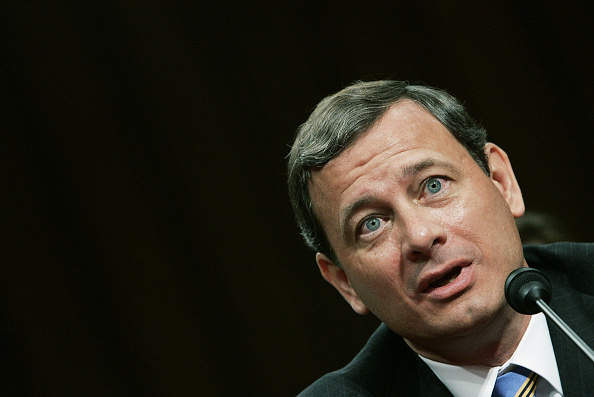
# Chief Justice Roberts Faces Social Backlash in Maine; Federal Prosecutor Reinstated After Illegal Dismissal
Chief Justice John Roberts faces social ostracism from neighbors at his Maine vacation home following public criticism that he has undermined constitutional law and civil rights protections through recent Supreme Court decisions. The personal blowback reflects mounting tension between the judicial branch and the public as the Court's ideological trajectory generates heated debate over institutional legitimacy.
Separately, a federal judge invalidated the dismissal of the U.S. Attorney for Seattle, ordering reinstatement of the prosecutor after finding the firing violated applicable law. The decision temporarily blocks what the court found to be an unlawful termination, though the administration may appeal or pursue other remedies.
In Tennessee, death row inmate Christa Pike received medical attention following two failed execution attempts, raising fresh questions about lethal injection protocols and Eighth Amendment protections against cruel and unusual punishment.
The Roberts neighborhood controversy carries symbolic weight. Public figures rarely face direct community consequences for their professional conduct, yet the Chief Justice's presence at his vacation property has become a flashpoint for neighbors who view his recent opinions as departures from constitutional principle. While informal social pressure differs from legal sanction, it underscores eroding public confidence in the Court's leadership during a period when polarization over judicial ideology has intensified.
The Seattle U.S. Attorney case presents more concrete legal stakes. Federal prosecutors hold office subject to statutory protections, and their removal typically requires adherence to established procedures. The judge's finding of illegality suggests the termination bypassed required safeguards, whether through inadequate notice, lack of cause documentation, or violation of tenure protections. This ruling preserves the prosecutorial independence of at least one regional office, though the Trump administration can contest the decision through appeal. The outcome affects not only the reinstated prosecutor but the broader question of executive authority over the federal law enforcement apparatus.
Pike's case touches constitutional bedrock. The Eighth Amendment prohibition on cruel and unusual punishment applies with particular force to capital punishment. When execution protocols produce multiple botched attempts, courts face questions about whether continuing the procedure constitutes unconstitutional punishment. States bear the burden of demonstrating that execution methods do not create substantial risk of severe pain. Tennessee's protocols face renewed scrutiny following Pike's failed executions, and similar litigation has produced stays and injunctions in other jurisdictions where injection procedures malfunctioned.
These three stories converge on institutional authority and legitimacy. Roberts' social isolation reflects public perception that the judiciary has abandoned restraint. The Seattle U.S. Attorney's reinstatement asserts judicial review over executive action. Pike's execution complications show courts enforcing constitutional limits on state power even in capital cases.
The Chief Justice's Maine situation involves no legal violation, yet it illustrates how institutional standing erodes when public perception shifts. Judicial power rests partly on legitimacy grounded in perceived fidelity to law rather than politics. The U.S. Attorney case demonstrates that courts retain tools to police executive overreach. Pike's case shows death penalty jurisprudence remains contested terrain where constitutional protections constrain state authority.
Together, these October 2026 developments sketch a judiciary grappling with its own institutional authority amid polarized politics and public skepticism about whether courts serve constitutional principle or partisan interest.