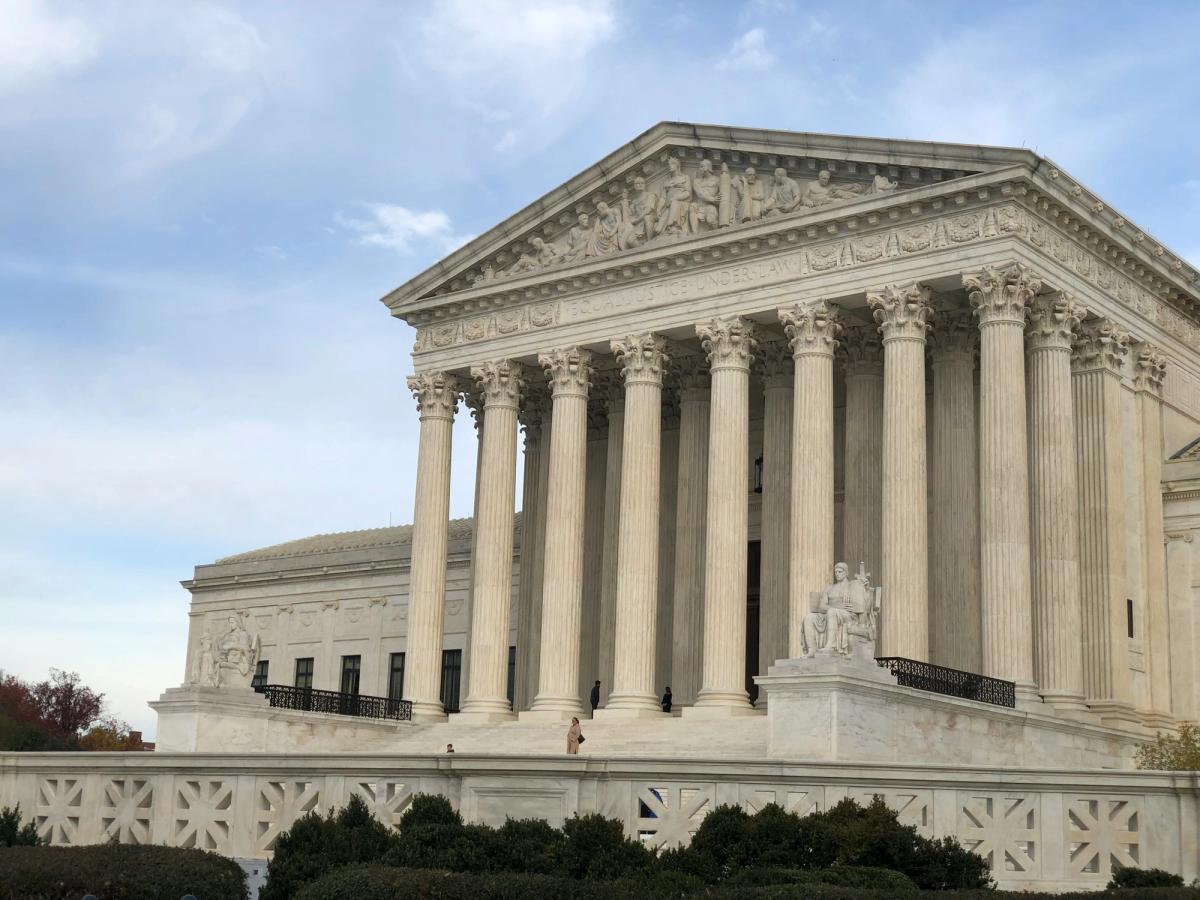
# Courts Grapple With Evolving Standards for Judging Constitutional Decency
The Supreme Court faces renewed pressure to clarify how judges should interpret the Eighth Amendment's prohibition on cruel and unusual punishment as society's values shift across generations. The tension between fixed constitutional text and evolving moral standards has become the defining challenge in criminal sentencing cases reaching the nation's highest court.
The core question before the Court centers on a doctrine established in Trop v. Dulles (1958), which held that the Eighth Amendment draws its meaning from evolving standards of decency that mark the progress of a maturing society. This framework has guided courts for decades in evaluating whether specific punishments violate constitutional protections. Yet disagreement persists about who decides what counts as "evolving standards" and whether those standards should shift based on public opinion, legislative action, or judicial interpretation.
Recent cases have exposed deep fractures among the justices. Conservative members argue for restraint, contending that courts should defer to legislatures when states set criminal penalties. Liberal justices counter that the Eighth Amendment imposes substantive limits on punishment that courts must enforce, independent of democratic majorities. These competing approaches produce wildly different outcomes for defendants challenging sentences as disproportionate or inhumane.
The practical stakes extend far beyond abstract constitutional theory. When courts apply the evolving standards doctrine, they determine whether juveniles can receive life sentences without parole, whether certain crimes merit execution, and how long sentences must be to constitute cruel punishment. Prisoners seeking sentence reductions, state lawmakers designing criminal codes, and prosecutors calculating plea offers all depend on clarity from the Supreme Court.
Lower courts have struggled to apply Trop's framework consistently. The Fourth, Sixth, and Eleventh Circuits have reached different conclusions about identical factual scenarios, creating a patchwork of Eighth Amendment protections that varies by geography. Some courts examine legislative action across states, others look to jury verdicts, and still others rely on judge-made law evolving through case decisions. This unpredictability undermines the rule of law and produces arbitrary results.
The current conservative majority has signaled skepticism toward expansive readings of the Eighth Amendment. In recent decisions, the Court has narrowed Trop's application, emphasizing that evolving standards require objective evidence of changed societal values, not mere judicial policy preferences. This approach limits successful Eighth Amendment challenges and returns greater sentencing authority to legislatures.
Meanwhile, dissenting justices argue that deferring entirely to legislatures abandons the Eighth Amendment's core function as a constitutional check on state power. They contend that decency standards evolve regardless of formal legislative action, and courts must detect those shifts through careful analysis of penal practices, public opinion data, and international norms.
The Supreme Court will likely confront this question repeatedly as cases involving juvenile offenders, mandatory minimums, and excessive sentences work through the docket. The outcome will determine whether the Eighth Amendment remains a living restraint on state punishment or becomes largely ceremonial, with real power vested in elected officials. Legal practitioners and criminal justice reformers watch closely as the Court resolves whether constitutional decency evolves with society or remains fixed at adoption.