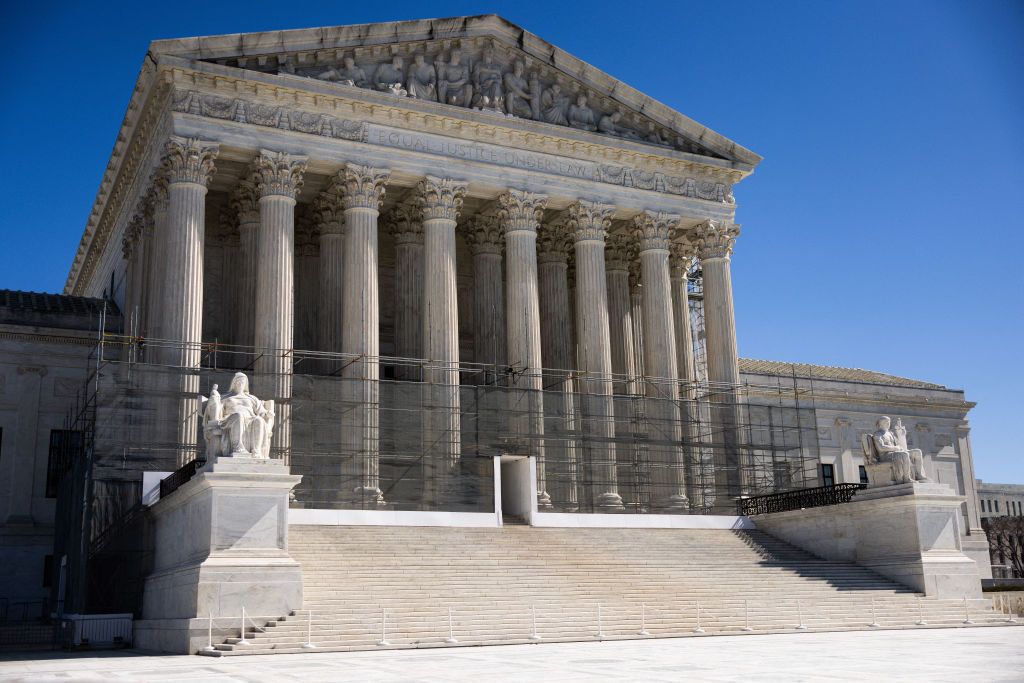
The Supreme Court will hear oral argument on November 30 in a case examining whether Title IX allows school employees to sue for sex discrimination or whether they must instead use Title VII of the Civil Rights Act of 1964.
The plaintiffs are Thomas Crowther, a former art professor at Augusta University, and Machelle Joseph, the former women's basketball coach at Georgia Tech. Crowther was suspended for one semester and had his contract declined after students accused him of sexual harassment. He sued the university for sex discrimination and retaliation. Joseph was fired in 2019 after an investigation raised concerns about mistreatment of players. Before her termination, she had repeatedly complained that her team received fewer resources than the men's team. She also sued for sex discrimination and retaliation.
The U.S. Court of Appeals for the 11th Circuit ruled that Title IX does not provide a right, explicit or implied, for employees to sue for sex discrimination. Crowther and Joseph petitioned the Supreme Court, which agreed in May to hear the case.
Crowther and Joseph argue that Title IX's text, which bars discrimination "on the basis of sex" at schools receiving federal funding, creates a broad prohibition applying to both employees and students. They point to North Haven Board of Education v. Bell, a 1982 Supreme Court decision that upheld regulations barring sex-based discrimination against employees under Title IX. They also note that the Court has allowed employment discrimination lawsuits under other federal laws with similar language, including Title VI and the Rehabilitation Act of 1973.
Georgia's university system counters that while Title IX may bar sex discrimination in employment, it does not give employees a private right to sue. The university argues that Title VII, enacted weeks before Title IX, already provided an express employment discrimination remedy. Creating a separate Title IX remedy would mean Congress gave the same employees two remedies for the same harm, one with procedural requirements and damage caps, and one without. The university also notes that the Supreme Court has not specifically held that Congress intended Title IX to provide a private right of action.
Crowther and Joseph respond that Title IX and Title VII are "vastly different" and that overlapping remedies do not negate Title IX's application. The Court has recognized that Congress has enacted overlapping employment discrimination remedies, they write, and Congress chose not to exclude employment discrimination from Title IX's scope.