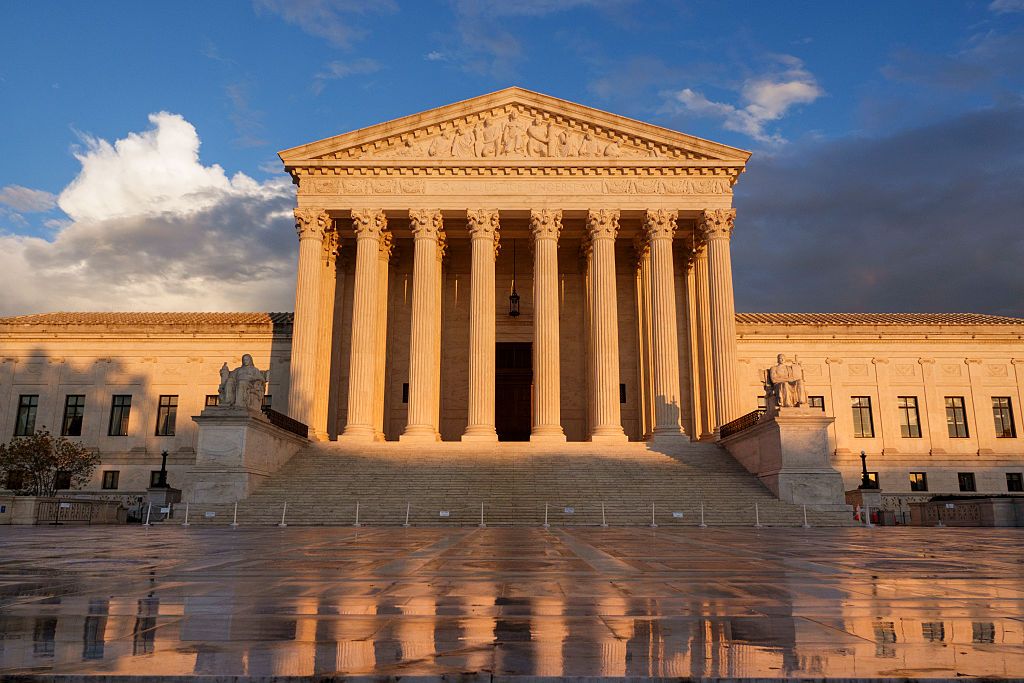
The Supreme Court has until mid-January to grant cases for oral argument in its current term, which runs through April 19. During this window, the justices will consider petitions addressing major issues including a Trump administration ban on transgender servicemembers, state laws requiring Ten Commandments displays in public school classrooms, and regulation of prediction markets.
A case must be granted by mid-January to allow time for briefing under the court's standard schedule, which requires at least three months. The court considers petitions at private conferences held at least twice monthly. At least four justices must vote to grant review, and successful petitions are almost always relisted for reconsideration at a second conference before the court announces approval.
In United States v. Talbott, the Trump administration appeals a D.C. Circuit ruling that prevents enforcement of the military service ban against 28 current transgender servicemembers while litigation continues. U.S. Solicitor General D. John Sauer filed the petition in late August, calling the lower court decision "gravely erroneous" and asserting that military personnel decisions are "a matter of exceptional importance." Challengers filed their opposition brief on November 2, urging denial. The petition was scheduled for the justices' December 4 conference. If relisted, it could be granted on December 11.
A second pending issue involves Ten Commandments displays in public schools. In Nathan v. Alamo Heights Independent School District, families challenge a Texas law requiring such displays. The 5th Circuit upheld the law, contradicting Stone v. Graham, a 1980 Supreme Court decision striking down a similar Kentucky statute under the First Amendment's establishment clause. Texas filed a brief in opposition last week, noting that the state's incoming Democratic attorney general has stated he will not defend the law.