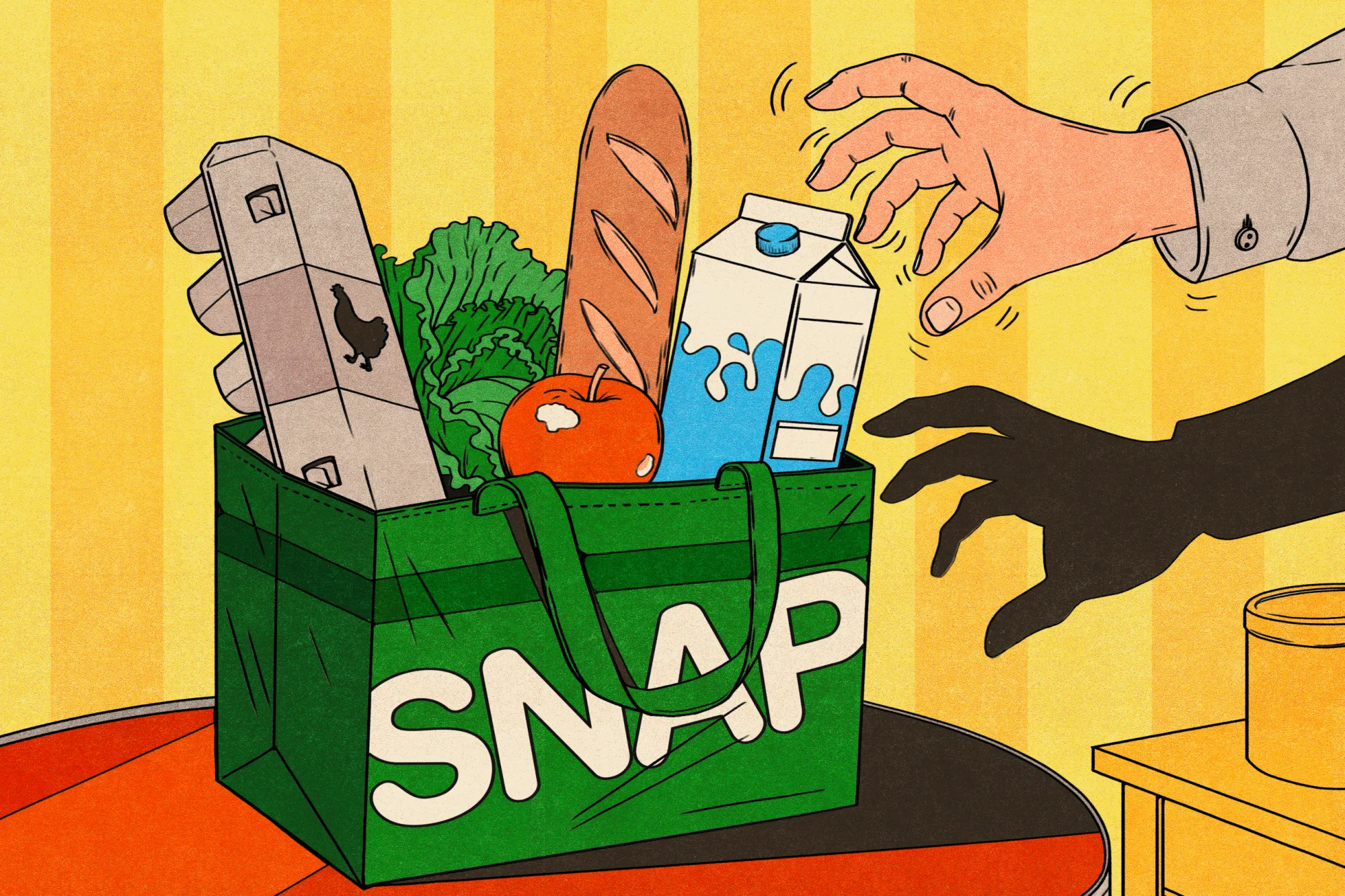
Kelly Joly swiped her EBT card at a Kroger in Beaumont, Texas, in August to buy groceries with her monthly $530 in SNAP benefits. The card was declined. When she called Texas Health and Human Services, a representative told her the funds were gone, likely stolen by fraudsters. Her account showed transactions from the previous day at stores in Illinois, Minnesota and California. The agency said there was nothing they could do to replace the funds.
Last year, more than $470 million was stolen from SNAP recipients by card scammers, affecting about 990,000 households.
Much of this crime involves low-level operatives for transnational criminal organizations who install "skimming" devices on card readers at grocery stores and bodegas. These devices capture data off the magnetic strip on the back of cards and PINs. The data is picked up later or transmitted via Bluetooth to thieves nearby. Skimming is largely preventable through microchips and tap-to-pay technology, which have reduced fraud in credit and debit card transactions for over a decade. But efforts to install these chips in EBT cards have moved much more slowly.
Criminals also use random number generators, phishing calls and spam texts to steal card information. Some corner store owners ring up fake grocery purchases in exchange for cash. In at least one case, a federal SNAP employee gave sensitive data to criminals.
If your SNAP benefits are stolen, you can report the theft to your state or local social services office, the EBT card customer service line, local law enforcement, or your state's SNAP fraud investigation agency. The main benefit of reporting is that it keeps the issue on the radar of SNAP officials.
In all but two states, California and Maryland, stolen benefits will not be reimbursed. The federal government had been reinstating stolen SNAP funds in all 50 states starting in late 2022. However, at the end of 2024, an effort to extend that reimbursement system was quashed after Elon Musk posted more than a hundred social media messages opposing legislation that included it.
Phone apps like ebtEdge and Propel allow recipients to monitor their balance, check transaction history and lock their card when not in use. The Secret Service has suggested spotting evidence of tampering by looking for gaps between the keypad and the rest of a card reader device, or objects blocking light from under the keys.