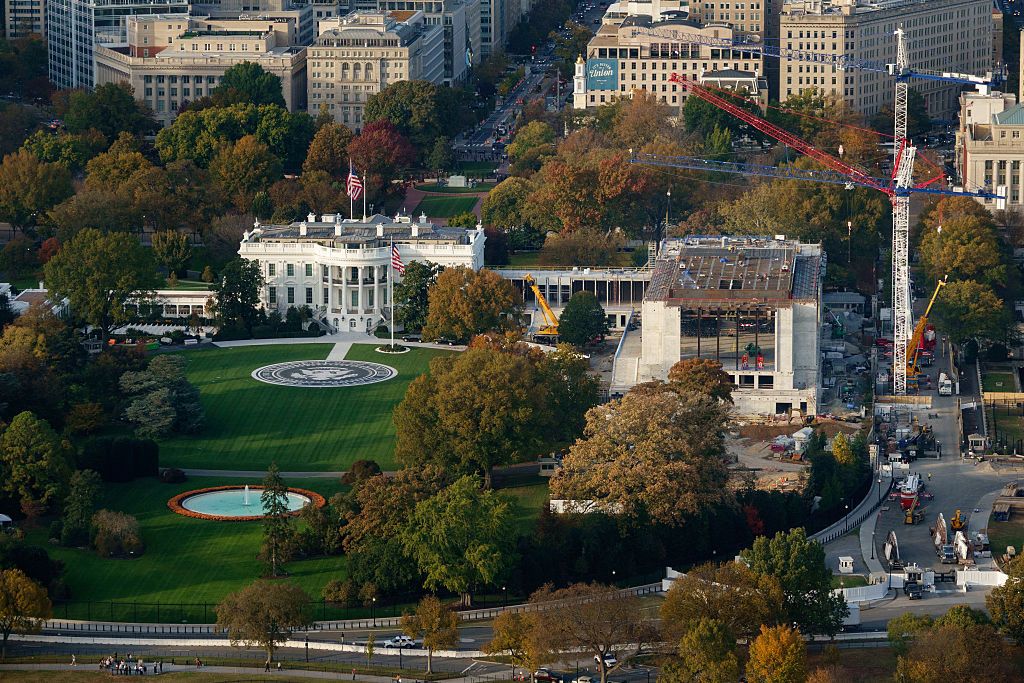
The Trump administration asked the Supreme Court on Nov. 5 to reverse or hear a lower court ruling that blocked above-ground construction on a new White House ballroom. U.S. Solicitor General D. John Sauer told the justices that their Aug. 31 interim decision "has all but answered the question presented" and that the project "should be permitted to move forward outside the shadow of judicial superintendence."
The National Trust for Historic Preservation filed a federal lawsuit in December seeking to halt construction until the National Capital Planning Commission, the Commission of Fine Arts, and Congress reviewed and approved the plans. The trust submitted a declaration from member Alison Hoagland, a Washington, D.C. resident who visits the White House area monthly and claims the project causes injuries to her aesthetic, cultural, and historical interests because she dislikes the design's scale, height, and massing.
Senior U.S. District Judge Leon issued an order in late March barring above-ground construction but allowing underground work to continue. The U.S. Court of Appeals for the District of Columbia Circuit upheld Leon's ruling in August. A divided three-judge panel wrote that Congress alone has power to regulate White House construction and has not approved ballroom funding. Judge Neomi Rao dissented, arguing the trust lacked standing to sue.
The Supreme Court voted 5-4 on Aug. 31 to pause Leon's order. The unsigned majority opinion stressed it was not deciding the project's legality but that the trust likely lacks standing. The harms alleged are not sufficiently concrete and specific, the majority said. Chief Justice John Roberts dissented with Justices Sonia Sotomayor, Elena Kagan, and Ketanji Brown Jackson, arguing construction is likely unlawful and that preservationists can sustain concrete aesthetic injuries.
Sauer urged the court to summarily reverse Leon's decision or grant review and hear oral arguments. The National Trust's response is due Dec. 7.