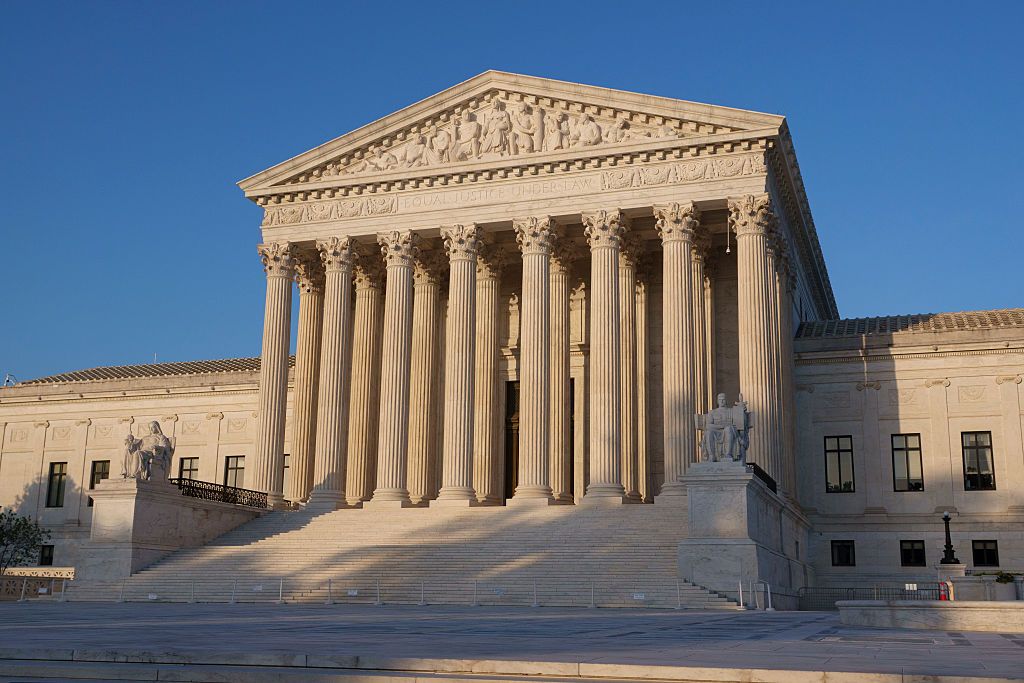
The Supreme Court will hear oral arguments next week in Hoffmann v. WBI Energy Transmission, Inc. to resolve whether state or federal law governs compensation in eminent domain cases involving interstate natural gas pipelines.
The Natural Gas Act grants the Federal Energy Regulatory Commission authority to approve construction of interstate pipelines and grants certificate holders the right to exercise federal eminent domain power to acquire rights-of-way. When landowners refuse to sell, courts must award "just compensation" as required by the Fifth Amendment. The dispute centers on whether this compensation should follow state law, which may require additional payments like attorney's fees, or federal standards alone.
The Hoffmanns own land in North Dakota through which WBI Energy Transmission seeks to build a pipeline. They argue that when the federal government delegates condemnation power to a private party, state law applies by default, citing United States v. Kimbell Foods. Under North Dakota law, the Hoffmanns contend they may be entitled to reasonable attorney's fees beyond the land's market value.
WBI and the federal government argue that federal "just compensation" standards must apply because Congress delegated federal condemnation power. They point to the General Bridge Act of 1946, which explicitly referenced state law compensation, while the Natural Gas Act contains no such language. They also cite United States v. Miller, decided before the Natural Gas Act's adoption, holding that federal standards apply in condemnation cases under similar federal statutes.
The Hoffmanns respond that Miller is inapplicable because it involved direct condemnation by the United States rather than by a private party exercising delegated federal power.
A threshold issue involves attorney's fees specifically. Courts have adopted a clear statement rule requiring explicit congressional authorization before awarding attorney's fees under federal statutes.