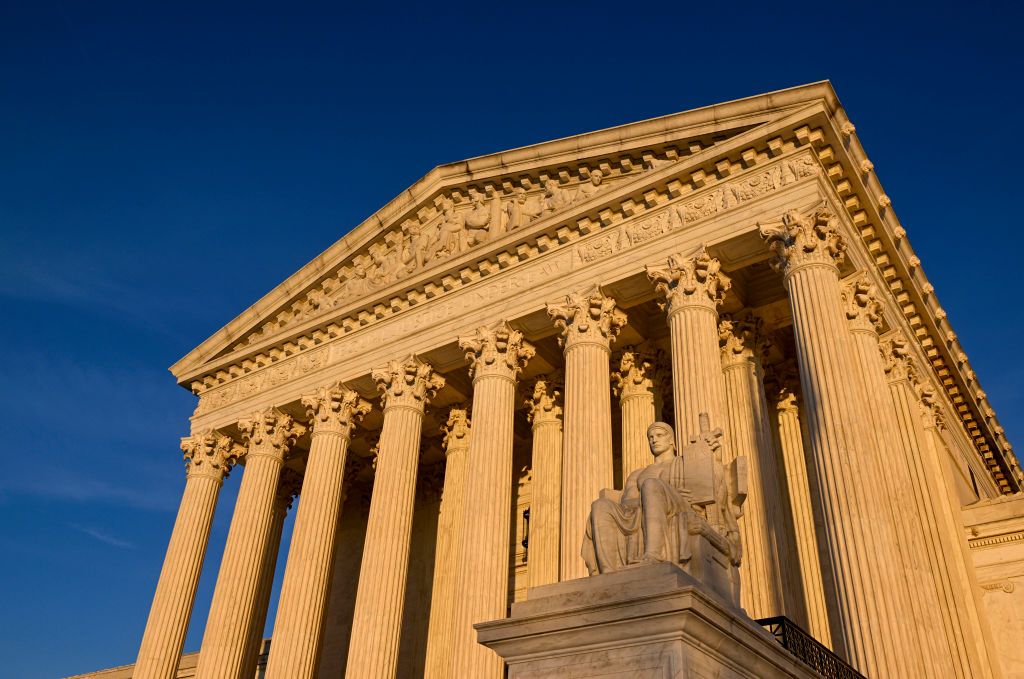
The Supreme Court will decide in Nielsen v. Watanabe, argued November 9, whether to preserve the ability to sue federal officers for money damages when they violate constitutional rights. The case poses a direct threat to Bivens v. Six Unknown Named Agents of the Federal Bureau of Narcotics, the 1971 decision that created this civil remedy.
Federal officers cannot be sued under 42 U.S.C. Section 1983, which applies to state and local officers. Bivens filled that gap by inferring a cause of action for Fourth Amendment damages directly from the Constitution itself. Justice William Brennan's majority opinion held that individuals whose rights are violated should not rely solely on state law remedies, which might be inadequate or hostile to federal constitutional interests.
The court has drastically narrowed Bivens over four decades. Since 1980, the court has rejected every Bivens claim brought before it, declining to extend the doctrine 11 times. In Egbert v. Boule (2022), the court called recognizing Bivens claims "a disfavored judicial activity" and established a two-step test that presumes against such claims.
Nielsen v. Watanabe involves Kekai Watanabe, a prisoner who claims a federal staff nurse denied him medical care after other prisoners broke his tailbone, causing excruciating pain. He asserts an Eighth Amendment violation identical to the claim allowed in Carlson v. Green (1980). The U.S. Court of Appeals for the 9th Circuit recognized the Bivens claim.
Watanabe argues the case is governed by Carlson and seeks no expansion of Bivens. However, Nielsen argues for "significant factual differences" and expressly calls for Bivens to be overruled, contending that Congress, not courts, should create causes of action.
The court could affirm the 9th Circuit, distinguish Carlson to narrow Bivens further, overrule Carlson while preserving Bivens nominally, or eliminate Bivens entirely.