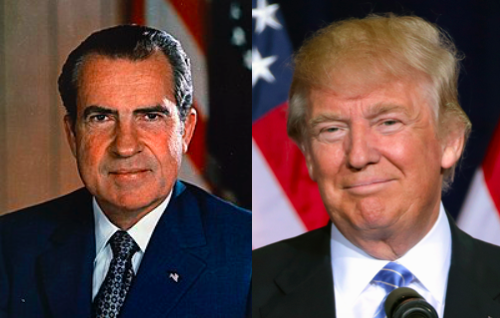
The Trump Department of Justice is exploring the possibility of formally exonerating former President Richard Nixon decades after his resignation in the wake of the Watergate scandal, according to reporting from Above the Law.
The initiative reflects a broader Republican effort to rehabilitate Nixon's historical legacy. This potential action would represent an extraordinary intervention into settled history. Nixon resigned in August 1974 after facing near-certain impeachment over his role in the Watergate break-in, the subsequent cover-up, and abuse of presidential power. He received a presidential pardon from Gerald Ford in 1975.
A formal exoneration from the sitting Justice Department would constitute an unusual use of prosecutorial discretion and federal authority. The DOJ does not typically issue blanket exonerations for historical figures whose conduct remains documented in the congressional record and established through multiple investigations. Such an action would lack any clear legal mechanism and would represent a departure from standard prosecutorial practice.
The Watergate investigation, conducted by independent counsel Archibald Cox and later by Leon Jaworski, produced extensive evidence of presidential misconduct. The House Judiciary Committee voted articles of impeachment against Nixon in July 1974, finding that he had obstructed justice, abused presidential power, and defied congressional subpoenas. These findings remain in the official record.
A DOJ exoneration effort would face substantial practical and legal obstacles. No statute authorizes the Justice Department to formally exonerate deceased individuals or to overturn settled historical judgments about presidential misconduct. Any such action would likely prompt legal challenges and constitutional questions about the separation of powers. Congress investigated Watergate through its own constitutional authority. Any executive branch attempt to rewrite that history could be challenged as exceeding executive authority.
The push to rehabilitate Nixon occurs alongside Republican efforts to reframe other controversial episodes in American political history. These efforts typically frame historical figures through the lens of partisan grievance or perceived unfair treatment by the opposing party.
Legal scholars have expressed skepticism about the enterprise. Attempting to overturn the historical record of Watergate through prosecutorial action would represent a troubling politicization of the Justice Department. The independence of federal law enforcement depends on officials applying law impartially rather than vindicating partisan historical narratives.
If pursued, such an initiative would likely draw intense scrutiny from Congress, the courts, and legal ethics bodies. Bar associations have previously expressed concerns about DOJ leadership using the department's authority for partisan purposes.
The proposal highlights ongoing tensions around how the federal government should address its own historical record and accountability. While presidents possess broad power to pardon individuals, formally exonerating a president for constitutional violations documented by Congress would cross into novel legal and political territory. The Justice Department traditionally maintains that its role is to enforce existing law neutrally, not to rewrite historical judgments about presidential conduct.