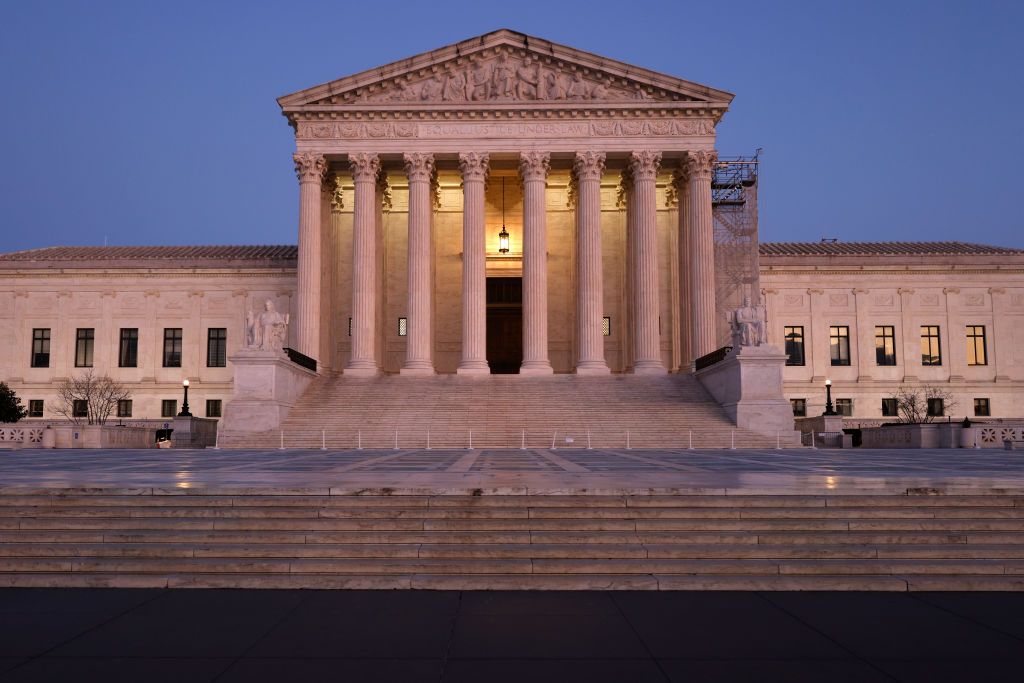
# Supreme Court Reinforces Separation of Powers in Lawmaking Framework
The Supreme Court reaffirmed the constitutional boundaries separating legislative, executive, and judicial authority in a recent decision emphasizing that each branch must respect its proper constitutional role in creating law. The ruling addresses longstanding tensions about how power flows through America's three-branch system.
The decision reflects growing judicial concern about executive overreach and the erosion of Congress's primary legislative function. The Court stressed that statutes enacted through the formal legislative process—passage by both chambers and presidential signature—carry distinct legal weight that agencies and courts cannot replicate through regulatory action or judicial interpretation alone.
This principle targets a specific problem. Federal agencies have expanded their regulatory authority significantly over recent decades, often by interpreting ambiguous statutes broadly without explicit congressional authorization. The Supreme Court has repeatedly pushed back against this trend, most notably in cases requiring clear legislative language before agencies can claim sweeping regulatory power. The doctrine operates under the premise that major questions demand explicit congressional direction, not bureaucratic inference.
The separation of powers framework also protects individual liberty. When power concentrates in one branch, constitutional safeguards weaken. Citizens face different protections depending on whether a rule comes from legislation, regulation, or executive order. Legislation requires compromise among diverse constituencies and party factions. Regulations emerge from agency officials accountable primarily to one president. Executive orders depend entirely on a single official's discretion. Constitutional design mandates that substantive legal rules governing private conduct originate through the legislative process.
The ruling carries practical implications for regulatory agencies. Departments and agencies cannot simply reinterpret ambiguous statutes to expand their jurisdiction. They must defer to Congress when statutes genuinely leave unclear whether an agency possesses authority. This reverses decades of jurisprudence under Chevron deference, which gave agencies substantial latitude to interpret regulatory statutes. Courts now conduct independent review rather than rubber-stamping agency interpretations.
For businesses, the decision creates both opportunities and uncertainties. Companies can challenge regulations that lack clear statutory foundation. They might succeed in court by arguing that Congress never explicitly granted an agency specific powers. However, businesses also lose the predictability that administrative expertise once provided. Regulations previously blessed by deference now face heightened judicial scrutiny.
Congress faces pressure to legislate more explicitly. If agencies cannot fill statutory gaps through interpretation, Congress must address those gaps directly through new legislation. This increases legislative workload at a time when Congress passes fewer bills overall. Gridlock may intensify as deliberative bodies must resolve issues previously delegated to expert agencies.
The decision reflects judicial philosophy prioritizing constitutional text and structure over practical governance concerns. It assumes that detailed legislation serves constitutional values better than flexible regulation. Critics argue this approach makes modern governance unnecessarily rigid. Supporters contend that it restores congressional accountability and limits executive power.
The ruling likely generates cascading litigation as businesses and advocacy groups challenge regulations across government. Environmental, labor, and financial regulators face particular exposure. Cases challenging Clean Water Act, Clean Air Act, and Occupational Safety and Health Administration rules will test how far courts push this doctrine. The next decade will determine whether separation of powers principles fundamentally reshape the administrative state.