# Missouri Redistricting Case Returns to Supreme Court for Third Round
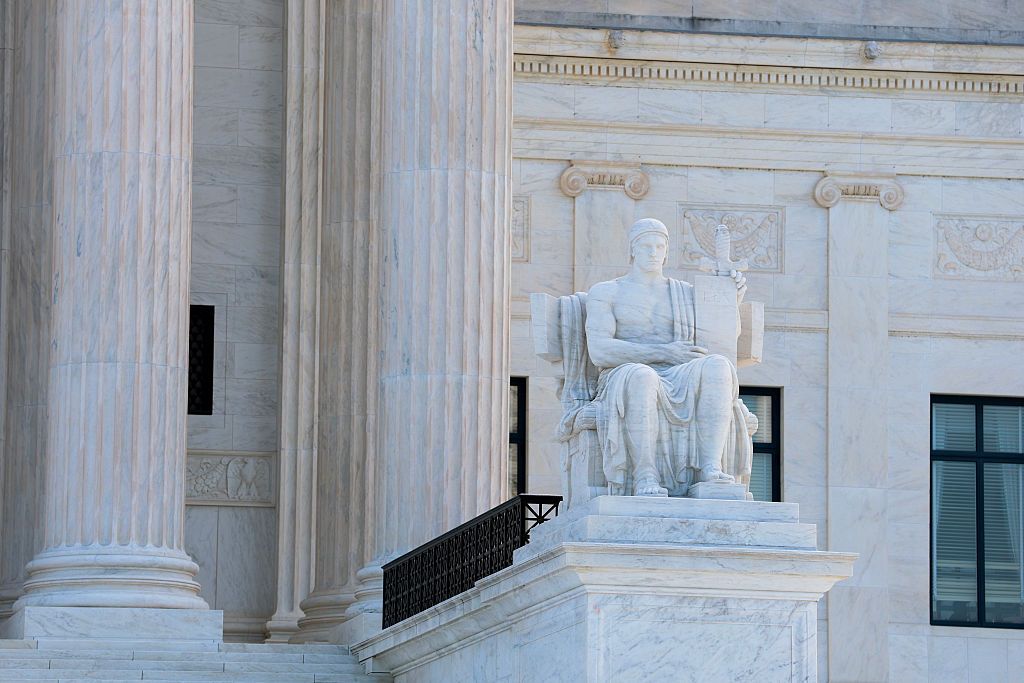
The Supreme Court accepted a new redistricting challenge from Missouri on Monday, marking the third time the justices have intervened in the state's congressional map disputes in less than a decade. The case centers on whether the state legislature's latest district boundaries violate the Voting Rights Act or constitutional equal protection guarantees.
The Missouri legislature redrew congressional districts in 2021 following the decennial census. Civil rights groups and Democratic lawmakers immediately challenged the map, arguing that the new boundaries diluted Black voting power in violation of Section 2 of the Voting Rights Act, which prohibits voting practices that discriminate on the basis of race or color.
A three-judge federal panel in Kansas City initially blocked the map and ordered the state to draw new districts before the 2022 midterm elections. The lower court found that the legislature packed Black voters into certain districts while cracking their voting strength elsewhere, particularly affecting Missouri's Second Congressional District centered on St. Louis.
Missouri asked the Supreme Court to stay the lower court's order and block the map challenge from proceeding. The justices granted the state's request in 2022, allowing the challenged map to remain in place for that election cycle. The Court did not rule on the merits of the redistricting dispute itself.
Now, with the case back before the justices, they face the core question: whether Missouri's 2021 districts intentionally minimized Black voting strength in violation of the Voting Rights Act. This dispute carries national implications as Republicans control many state legislatures that drew maps after the 2020 census.
The redistricting battles stem from fundamental disagreements about how courts should interpret voting rights protections. Civil rights advocates argue that legislatures cannot eliminate or reduce districts where minority voters hold a realistic opportunity to elect candidates of their choice. Republican-controlled legislatures counter that creating majority-minority districts itself represents constitutionally problematic racial gerrymandering.
Missouri's repeated returns to the Supreme Court reflect broader instability in redistricting law. The Court's 2013 decision in Shelby County v. Holder gutted key enforcement provisions of the Voting Rights Act, eliminating the federal preclearance requirement that previously required certain jurisdictions to obtain federal approval before changing voting laws or district maps. Without preclearance, states face fewer obstacles to implementing controversial maps before courts can block them.
The case number has not been assigned yet, but the Court's docket indicates oral arguments may occur during the 2024-2025 term. A decision could reshape how federal courts balance voting rights protections against state legislative authority over redistricting.
The outcome carries consequences for Missouri's congressional delegations in the 2026 midterm elections and potentially for redistricting disputes nationwide. If the Supreme Court sides with civil rights groups, states may face stricter limits on how they can draw district lines. If the Court backs Missouri, it could further weaken voting rights protections outside the preclearance context.