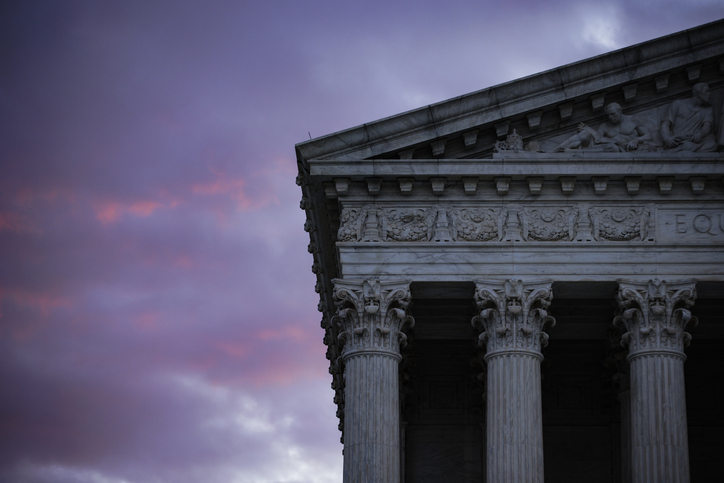
The Supreme Court's emergency docket, colloquially known as the "shadow docket," has grown to exceed the size of the Court's merits docket, the formal track where cases receive full briefing, oral argument, and published opinions. This structural inversion reflects a fundamental shift in how the nation's highest court conducts business.
The shadow docket encompasses emergency applications, stay requests, and orders issued without full briefing or public argument. Historically, this emergency track handled a small fraction of the Court's work. In recent terms, however, the volume of shadow docket orders has surged dramatically. These decisions often carry enormous legal weight, affecting voting rights, abortion access, immigration enforcement, religious liberty, and pandemic-related policies, yet they arrive with minimal explanation and no formal opinion.
The formal merits docket follows established procedures. Cases are selected through the certiorari process, parties submit written briefs on both sides, the Court hears oral argument, justices deliberate, and opinions issue with reasoned explanations and dissents. This transparency allows the legal community, lower courts, and the public to understand the Court's reasoning. Precedent emerges through published opinions. The process itself legitimates outcomes.
The shadow docket operates differently. A single justice, often the Circuit Justice assigned to a geographic region, may act alone on emergency applications. The applicant submits papers, and the respondent may have limited time to respond or no time at all. The Court issues orders with no opinion, no dissent, and minimal explanation. Lower courts and future litigants receive no guidance about the Court's reasoning. Over recent years, this path has become the Court's primary means of intervening in consequential legal disputes.
The practical consequences run deep. Litigants now strategically file emergency applications knowing they may receive faster resolution than traditional merits review. Federal judges cannot predict how the Supreme Court views unsettled legal questions because the shadow docket reveals no reasoning. Lower courts proceed on fractured precedent. The legal profession struggles to advise clients about the state of the law.
The growth reflects institutional choices. The Court controls its merits docket through the certiorari petition process, selecting roughly 70 cases annually from thousands seeking review. Emergency applications, by contrast, have no formal limit. The Court can act as often as it chooses. Recent administrations have encouraged emergency filings on politically charged issues. The composition of the Court has shifted to a 6-3 conservative majority, and emergency applications have become a vehicle for swift ideological outcomes without the procedural safeguards of merits review.
Critics argue the shadow docket undermines judicial legitimacy. Decisions affecting millions lack reasoned explanation. Dissenting justices cannot publish opinions explaining their disagreement. The public cannot assess whether decisions reflect law or preference. Lower courts operate in darkness. The doctrine becomes unprincipled.
Defenders contend emergency powers serve essential functions. Irreparable harm demands swift action. Not every application warrants full briefing. The Court historically relied on this flexibility.
The inversion tells a story. When the Court's emergency powers eclipse its formal processes, the system has tilted toward speed and secrecy over explanation and accountability. The above-the-law commentator's suggestion to "highlight the transparent docket instead" carries sardonic weight. The irony is sharp. The Court's formal, public-facing docket now represents the exception rather than the rule.