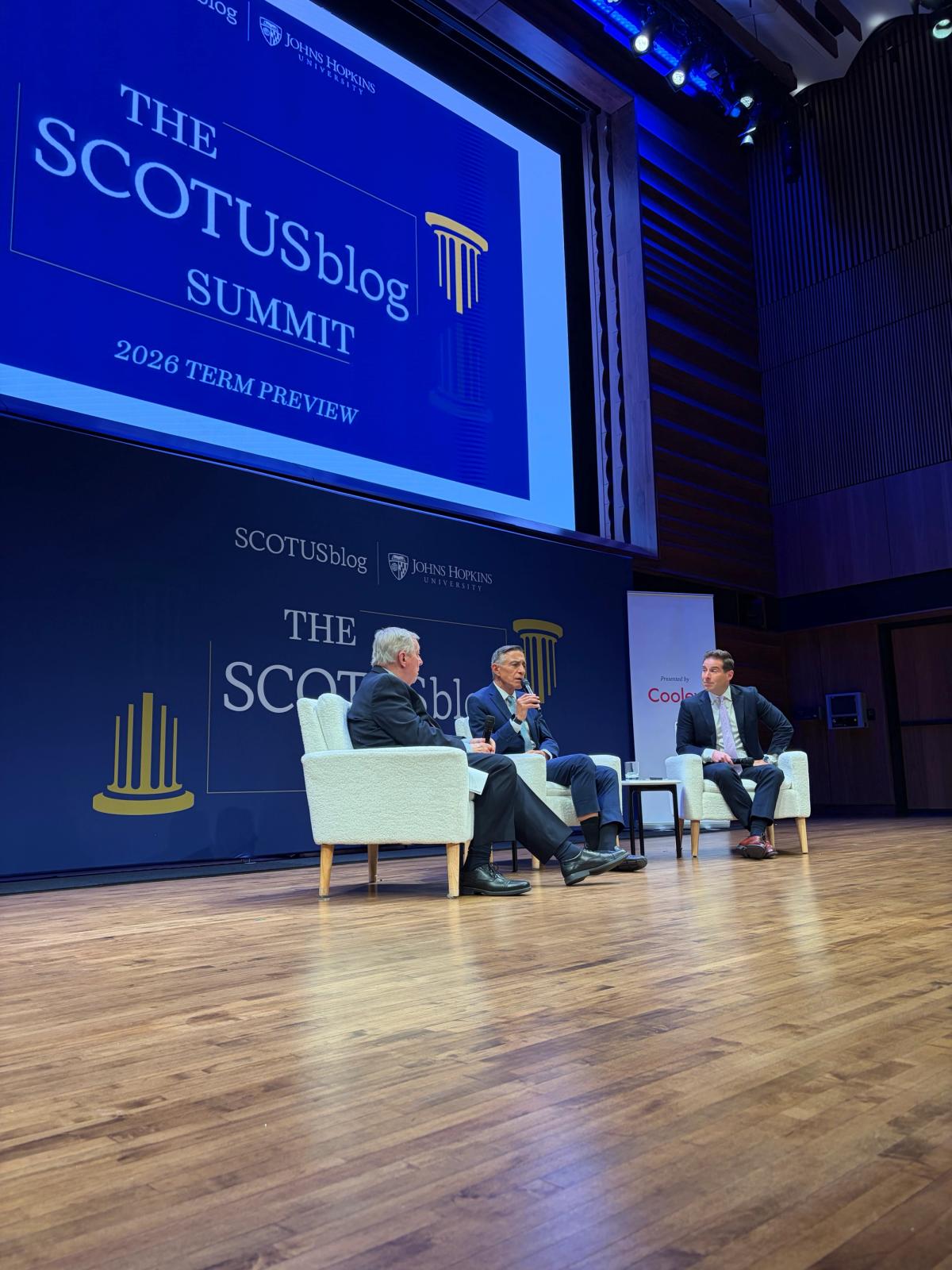
# Supreme Court Authority Debate Emerges at SCOTUSblog Summit
Senate Judiciary Committee Chairman Dick Durbin and House Oversight Committee Chairman Darrell Issa clashed over judicial authority at the SCOTUSblog Summit, revealing partisan divisions on the proper scope of Supreme Court power.
Durbin, an Illinois Democrat, expressed concerns about judicial overreach. He highlighted recent decisions that shifted power away from federal agencies and restricted executive branch discretion. Durbin pointed to cases dismantling the Chevron deference doctrine, which historically required courts to defer to agency interpretations of ambiguous statutes. He argued that removing this deference standard undermines regulatory capacity and shifts institutional power imbalances toward the judiciary.
Issa, a California Republican, defended the Court's recent trajectory. He contended that the Supreme Court properly reasserted constitutional limits on executive authority that had expanded unchecked for decades. Issa framed judicial review as essential to maintaining separation of powers and preventing administrative overreach. He argued that judges should interpret statutes according to their text rather than deferring to agency judgment.
The disagreement reflects broader constitutional philosophy conflicts. Durbin's position aligns with executive deference frameworks that grant agencies expertise-based latitude in regulatory interpretation. Issa's approach favors textualist statutory construction and limited executive power, consistent with recent conservative jurisprudence.
Both lawmakers acknowledged the Supreme Court's institutional role. However, they diverged sharply on whether recent decisions properly calibrated judicial restraint or constituted activism that destabilized the administrative state.
The debate carries practical implications. Businesses depending on regulatory predictability face uncertainty as courts increasingly scrutinize agency decision-making. Environmental and labor regulations face heightened vulnerability to legal challenges under the new judicial stance. Conversely, entities opposing expansive agency authority gain stronger ground in litigation.
The SCO