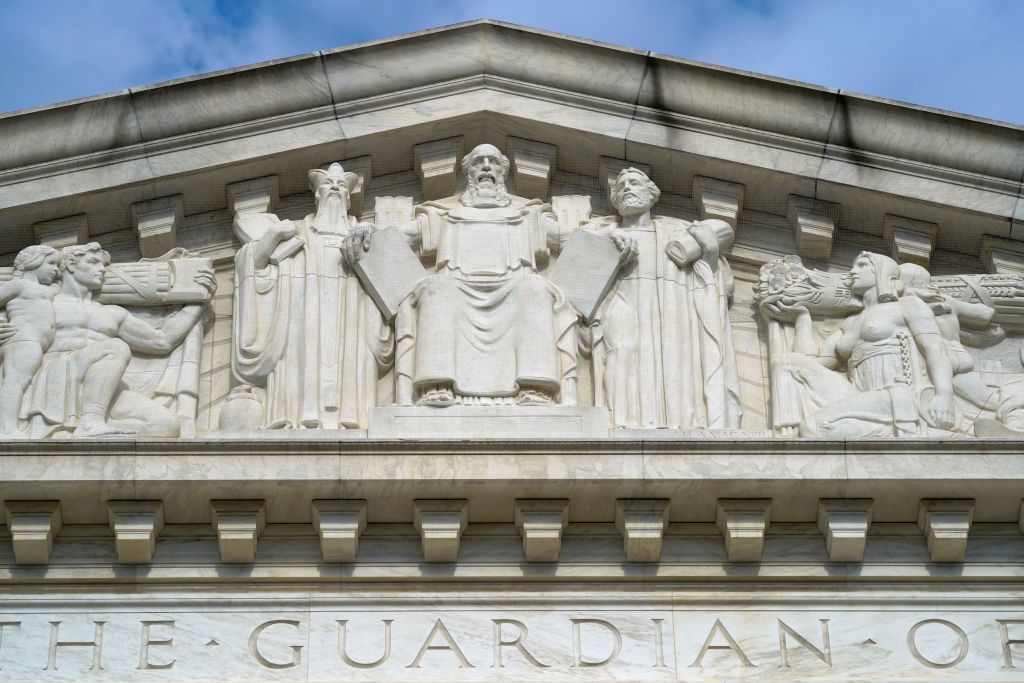
Missouri's Democratic redistricting organizer has asked the U.S. Supreme Court to reject Republican efforts to overturn a lower court ruling that blocks implementation of a new congressional map. The organizer argues that the map violates the Fair Districts Amendment, a voter-approved state constitutional provision.
A Missouri state court previously invalidated the congressional map after finding it violated state redistricting requirements. Republicans sought to appeal to the Supreme Court, claiming the state court improperly applied state law and that federal courts lack jurisdiction to review redistricting decisions based solely on state constitutional grounds.
The Democratic organizer's legal position rests on the Missouri Constitution's Fair Districts Amendment, which voters approved in 2018. That amendment requires that congressional districts not provide disproportionate advantage to any political party and mandates consideration of partisan fairness in redistricting.
The lower court's ruling reflects a broader legal trend recognizing state constitutional provisions as independent bases for redistricting challenges. Unlike federal constitutional claims, which require proof of intentional discrimination, state constitutional fair-districts provisions create specific criteria that courts can evaluate objectively.
The Republican challenge to the Supreme Court raises federalism questions. Republicans argue that allowing state courts to invalidate maps based on state constitutional partisan-fairness provisions effectively gives state judiciaries veto power over redistricting. They contend this exceeds traditional state authority and potentially conflicts with federal redistricting standards.
The organizer counters that state constitutions can impose stricter requirements than the U.S. Constitution permits. The Supreme Court's precedent in cases like Rucho v. Common Cause established that partisan gerrymandering claims typically fail under the federal constitution. However, that ruling expressly left open the possibility that state constitutions could provide independent grounds for challenging maps.
The case reflects tension between respecting state constitutional law and concerns about judicial intervention in redistricting. Missouri voters explicitly chose to impose partisan