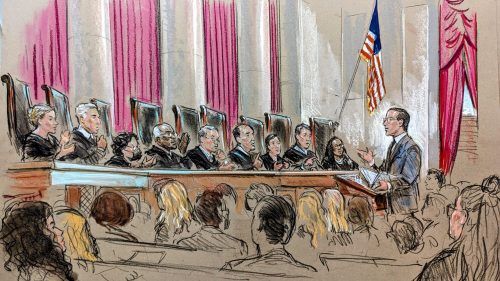
# How Predictable is the Supreme Court from Oral Arguments?
The Supreme Court's decisions remain surprisingly difficult to predict based on oral argument performance alone, according to research examining the relationship between courtroom questioning and final opinions.
Justices' pointed questions during oral arguments do signal areas of concern or skepticism. A justice who peppers one attorney with tough inquiries often votes against that side. Yet this pattern breaks down across the full bench. Individual justices reach different conclusions despite hearing identical arguments. Some justices ask aggressive questions about legal positions they ultimately adopt. Others pose softball questions to sides they eventually reject.
The unpredictability stems from the disconnect between oral argument and opinion writing. Questions probed during argument may reflect preliminary thinking rather than final reasoning. Justices adjust positions during private deliberations. Drafted opinions evolve through circulation and response to colleague concerns. A justice's vote can shift after reading draft opinions from other chambers.
Statistical analysis of Supreme Court cases shows modest correlation between questioning intensity at oral argument and voting patterns. This finding challenges the conventional wisdom among appellate advocates that oral argument performance drives outcomes. While a justice's demeanor toward counsel matters tactically, the actual vote remains contingent on factors beyond the courtroom.
The research has practical implications for litigators preparing Supreme Court briefs and arguments. Advocates cannot rely solely on oral argument reactions to gauge case prospects. The written briefs, which justices study before arguments, often carry greater weight in final decisions. Post-argument deliberations allow justices to reconsider preliminary positions informed by colleague input.
This analysis also reflects broader institutional dynamics. The Supreme Court operates through a collaborative process where votes emerge from legal reasoning, precedent analysis, and institutional concerns rather than from spontaneous reactions during argument. Justices' questions serve multiple purposes: testing arguments, signaling concerns to colleagues, and shaping the record.
For parties monitoring Supreme Court cases, reading