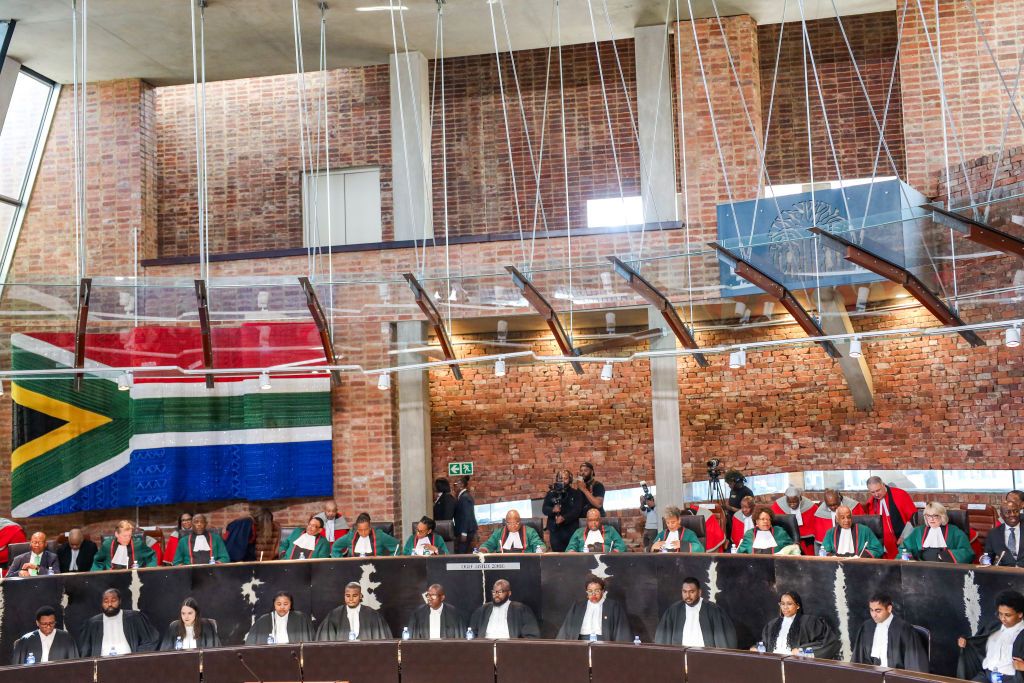
# Constitutional Court of South Africa
The Constitutional Court of South Africa functions as the nation's apex tribunal for constitutional matters, establishing binding precedent on the interpretation and application of South Africa's 1996 Constitution. Established in 1994 following the end of apartheid, the court sits in Johannesburg and comprises 11 justices appointed through a process involving the President, the Judicial Service Commission, and parliamentary oversight.
The court's jurisdiction extends to all matters concerning constitutional rights, the constitutionality of legislation, and disputes between governmental branches. Unlike many apex courts, the Constitutional Court of South Africa has transformed post-apartheid jurisprudence by aggressively protecting fundamental rights, including socioeconomic rights explicitly enumerated in the Constitution. The court has issued landmark decisions on housing, education, healthcare, and human dignity that extend constitutional obligations beyond traditional negative rights.
The court's docket reflects the distinctive legal landscape of a transitional democracy. Cases frequently address reconciliation between the apartheid past and democratic future, land reform constitutionality, labor rights, and the scope of executive power. The court has developed sophisticated doctrine on deference to Parliament while maintaining independence in enforcing constitutional limits.
Procedural rules permit direct access to the Constitutional Court for matters of national public interest, circumventing lower court litigation. This mechanism accelerates resolution of high-stakes constitutional questions affecting broad populations. The court has used this power to intervene in electoral disputes, parliamentary procedure challenges, and structural governance questions.
The court's published opinions on SCOTUSblog reflect international interest in comparative constitutional law, particularly regarding how democracies protect rights during institutional transitions. South African constitutional jurisprudence increasingly influences courts in other developing democracies confronting similar tensions between democratic accountability and rights protection.
The court operates within constraints familiar to any constitutional tribunal. Enforcement of its rulings depends partly on political acceptance. Parliament ret