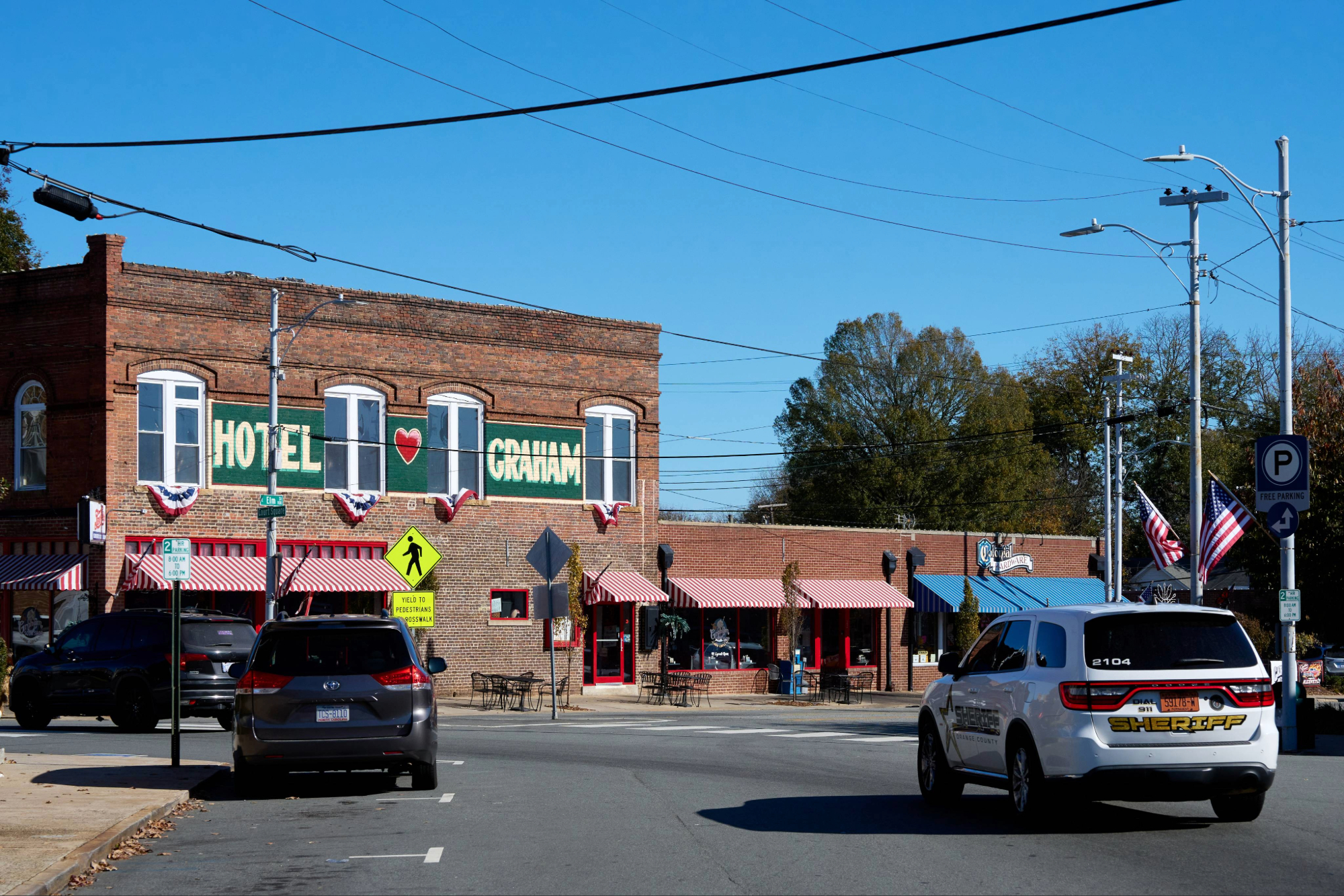
Voters in several states have defeated sheriffs who signed agreements with U.S. Immigration and Customs Enforcement to enforce federal immigration laws. The defeats include Terry Johnson, who lost his reelection bid as Republican sheriff in Alamance County, North Carolina, to Democrat Shannon Long, an independent candidate and pastor who ran against the county's participation in the 287(g) program.
Johnson had been among the first sheriffs to authorize deputies to enforce federal immigration laws under the 287(g) agreement with ICE. Long, who will become the county's first Black sheriff, pledged to curtail cooperation with ICE. He said the Latino community in Alamance County had lived in fear and felt suppressed due to the sheriff's office policies.
Alamance County has experienced significant demographic change. The number of residents identifying as Hispanic grew from 750 in the 1990 census to nearly 25,000 in 2020. The county acquired the nickname "No Chance Alamance" because of perceived unjust policing and lack of political representation among Black and Latino residents, according to school board member Seneca Rogers.
Similar defeats occurred elsewhere. In Frederick County, Maryland, Republican Sheriff Chuck Jenkins, who had detained and turned over 1,884 people to ICE since 2008, lost reelection to Democrat Karl Bickel, who pledged not to cooperate with ICE. In Wisconsin's Winnebago County, Democrat Jason Rippl won a sheriff's race partly by promising to end the county's 287(g) agreement after ICE arrested a schoolteacher weeks before Election Day.
The AP reviewed about 250 sheriff elections this month in offices with 287(g) agreements, identifying races in Indiana, Maryland, North Carolina, Wisconsin and elsewhere where ICE pacts played a role in a candidate's defeat.
The 287(g) program has expanded significantly under the Trump administration. The government has more than 2,700 such pacts with state and local agencies, up from 135 when Trump began his second term. These agreements have deputized over 29,000 local law officers and resulted in more than 6,600 arrests in July, representing about 15% of all ICE arrests, according to data obtained by the Deportation Data Project and analyzed by the advocacy group fwd.us.