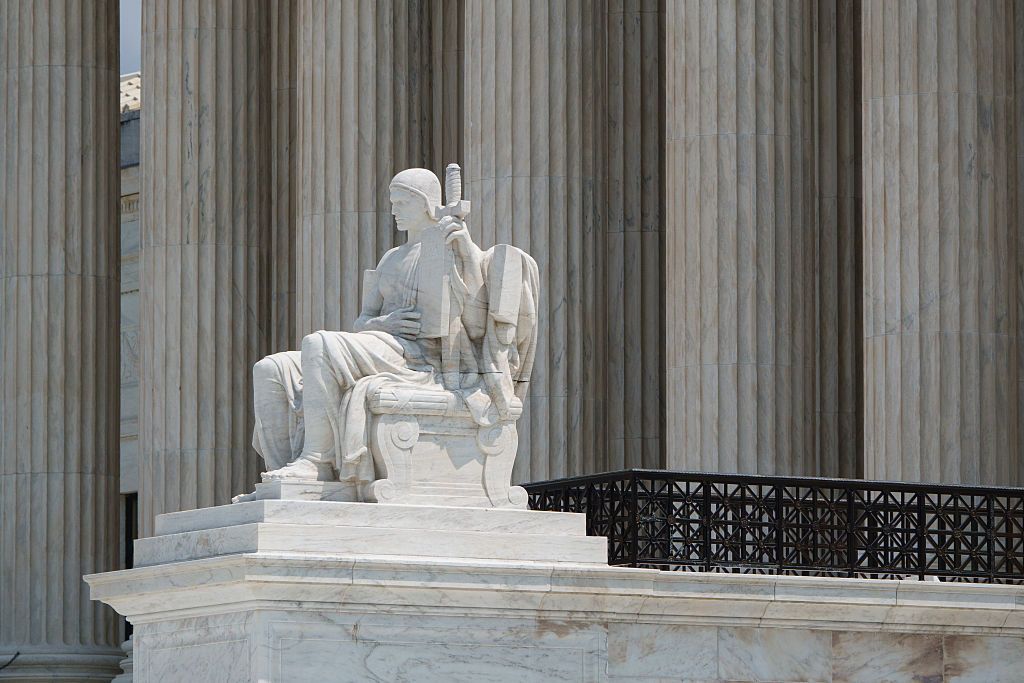
The Supreme Court heard arguments this week in Younge v. Fulton Judicial Circuit District Attorney's Office, Georgia on whether a defendant must formally amend its pleadings before moving for summary judgment on an affirmative defense that was never asserted in the original answer.
Jasmine Younge worked in the Fulton County District Attorney's Office for approximately two months before her firing in July 2019 by District Attorney Paul Howard. She claims she was terminated about two weeks after disclosing her pregnancy. She sued for civil rights violations under Title VII of the Civil Rights Act of 1964, alleging pregnancy discrimination.
The DA's office answered the complaint but did not plead the personal-staff exemption defense, which would exclude certain officials from Title VII's employee protections. The office later moved for summary judgment based on this unpled defense. The district court granted the motion. Younge objected on procedural grounds, citing Federal Rule of Civil Procedure 16(b)(4), which restricts amendments to pleadings after a pretrial scheduling order is issued, and Rule 15(a)(2), which governs amendment standards established in Foman v. Davis.
The U.S. Court of Appeals for the 11th Circuit affirmed, finding no prejudice to Younge and concluding she was indeed a member of the district attorney's personal staff.
Eric Schnapper argued for Younge that the case should be reversed and remanded with instructions requiring the DA's office to file a motion to amend if it wished to raise the affirmative defense. Justice Amy Coney Barrett stated that the procedural violation was separate from whether Younge suffered prejudice. Justice Neil Gorsuch questioned why the office could assert a defense motivated by bad faith without following amendment procedures.
Justice Elena Kagan appeared to suggest the court would likely reverse and remand for the lower court to apply the amendment standards under Rule 15(a)(2) and Foman factors.