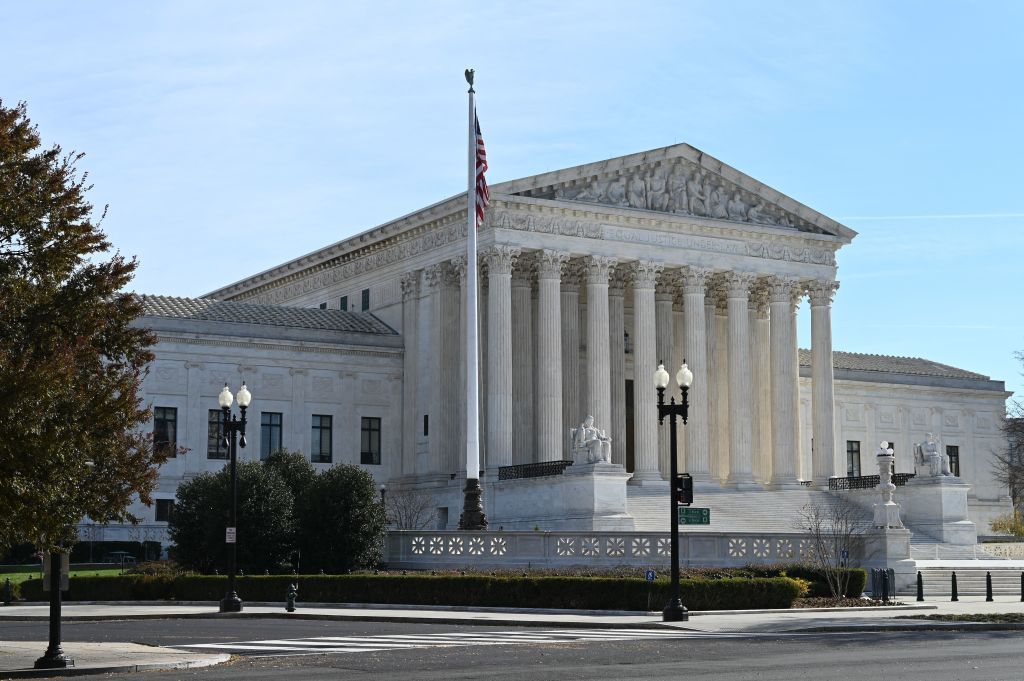
SCOTUSblog and Good Judgment Inc. launched a Supreme Court forecasting contest for the 2026-27 term. Participants predict how the Court will decide major cases and compete against artificial intelligence models. In July, SCOTUSblog will name the three most accurate human forecasters and award them swag while comparing their predictions to AI results.
Three cases argued in the October session are included in the contest. Suncor Energy Inc. v. County Commissioners of Boulder County (argued October 5) asks whether Boulder's state-law tort claims are preempted by federal law. Johnson v. United States Congress (argued October 5) asks whether a district court has jurisdiction over disability benefits claims brought by Floyd Johnson. Beaird v. United States (argued October 13) asks whether Stinson v. United States correctly states the rule for deference to Federal Sentencing Guidelines Commentary.
Two cases scheduled for the current argument session are also open for forecasts. St. Mary Catholic Parish v. Roy (November 3) asks whether the Universal Preschool Program is subject to strict scrutiny under the Free Exercise Clause. Nielsen v. Watanabe (November 9) asks whether the 9th Circuit erred in recognizing a cause of action under Bivens v. Six Unknown Named Agents of the Federal Bureau of Narcotics.
Forecasters can sign up at gjopen.com using an email address, Google account, or Facebook account. Participants assign probability estimates to each possible outcome and may update forecasts until the case is decided. SCOTUSblog will add additional cases to the contest page as they are granted.