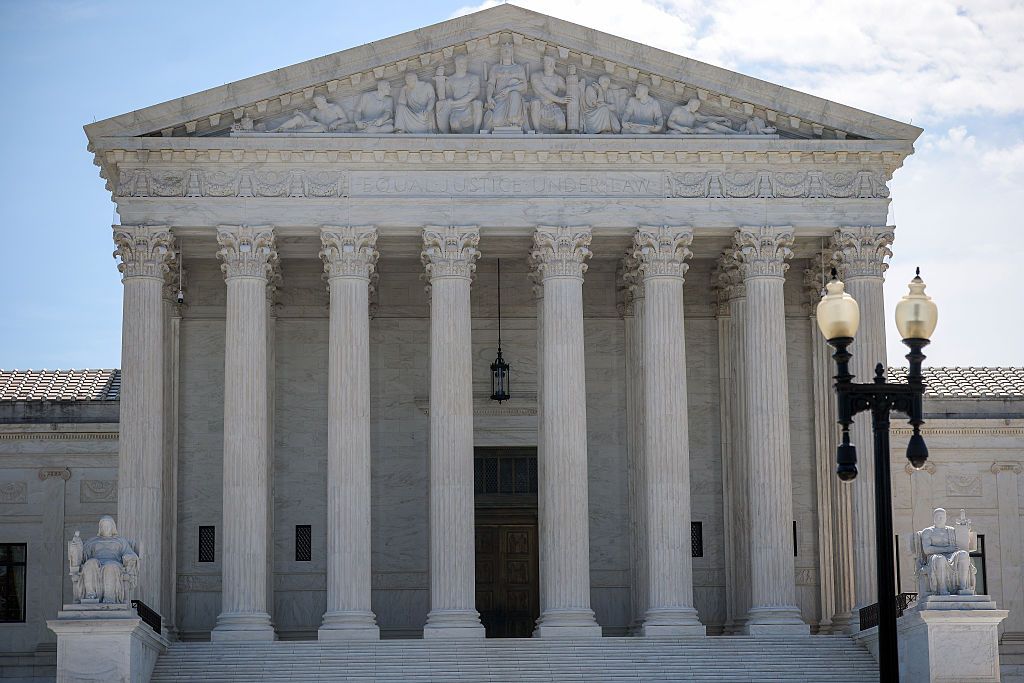
When the Supreme Court hears Maxwell v. Dinis on Nov. 2, it will grapple with a deceptively simple question that has profound implications for federal prisoners: Can an inmate use a habeas petition under 28 U.S.C. § 2241 to challenge the Federal Bureau of Prisons' refusal to accelerate his transfer to a halfway house or home confinement? The case of William Maxwell, who was sentenced to 20 years in prison in 2015 for his role in a La Costa Nostra-affiliated scheme to drain FirstPlus Financial Group, Inc. of more than $14 million, illustrates why the Court must reject the lower courts' restrictive approaches and establish a workable standard.
The 5th Circuit's bright-line rule—that habeas relief is unavailable unless an inmate's claim would automatically entitle him to accelerated release—is both arbitrary and harmful. Maxwell, who has no infractions and has participated in programs under the First Step Act of 2018, argues he is owed between 42 and 48 months of time credit that the BOP failed to count. Yet under this circuit court rule, his effort to challenge what he characterizes as an unlawful denial of eligible time credits cannot proceed via habeas. This approach ignores the Supreme Court's own precedent. In Jones v. Hendrix (2023), the Court held that habeas remains available for federal prisoners to 'challenge the legality of his detention' without attacking the validity of the sentence itself.
Notably, even the government agrees that the 5th Circuit's rule is too broad. The government proposes instead that an inmate may seek habeas relief when arguing that his imprisonment has been unlawfully prolonged—a standard that does not require an automatic entitlement to sentence reduction. This position is more defensible than the circuit court's approach, though the government ultimately argues Maxwell should lose because Congress has barred courts from reviewing BOP classification decisions regarding where an inmate 'is placed during his term of imprisonment.'
The amicus appointed by the Court, however, raises legitimate concerns about line-drawing problems with both Maxwell's and the government's positions. The amicus proposes limiting habeas relief to three circumstances: claims implying the inmate's physical detention must be shortened or terminated, entitlement to earlier release on bail or parole, or sentencing court jurisdictional errors. While this framework has merit, the Court should be cautious about adopting overly restrictive standards that would leave federal prisoners with no meaningful remedy.
The Court must recognize that Maxwell faces a genuine procedural predicament. As he notes, alternatives to habeas are unavailable: Bivens suits are severely limited, Section 1983 claims are inapplicable to federal officials, and the Administrative Procedures Act likely does not apply due to statutory limitations on reviewing BOP decisions. A workable standard should acknowledge this reality and permit habeas challenges to BOP decisions that arguably prolong an inmate's confinement beyond what law and regulation authorize—including disputes over time credits earned through First Step Act programs. The justices should resist both the circuit's bright-line rule and pressures toward excessive judicial deference to the BOP.