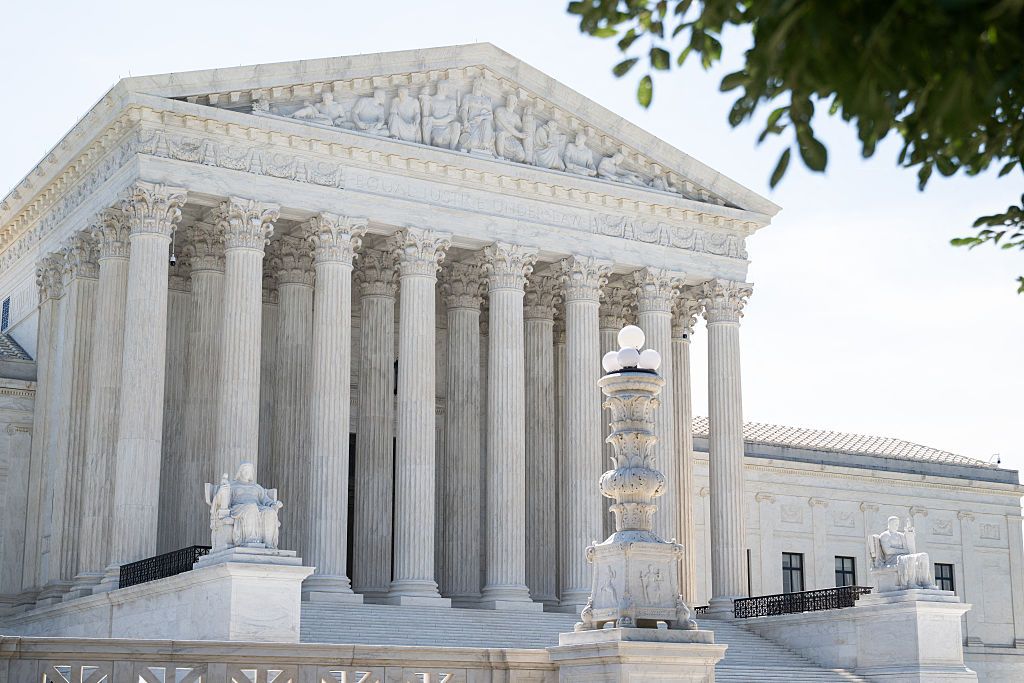
# Trump Administration Seeks Supreme Court Green Light for Border Wall Construction
The Trump administration has petitioned the Supreme Court of the United States to allow continued construction of the southern border wall, according to filings with SCOTUSblog. The request comes as the administration seeks to overcome legal obstacles that have blocked or delayed wall construction in recent months.
The petition raises constitutional and statutory questions about executive authority to redirect federal funds for border security projects. At its core, the case tests the boundaries of presidential power under the Constitution and Congress's control over appropriations, a foundational principle of separation of powers doctrine.
The administration argues that existing statutes grant the president broad authority to reallocate military construction funds and other federal resources for national defense purposes. Legal briefs filed with the Court assert that border security constitutes a valid national defense objective, allowing the executive branch to bypass normal congressional appropriations restrictions.
Opposing parties, likely including environmental groups and property owners affected by wall construction, contest this interpretation. They argue that the president cannot circumvent Congress's power of the purse and that the Appropriations Clause of Article I, Section 9 of the Constitution explicitly reserves spending authority to the legislative branch. Prior lower court decisions blocked sections of wall construction based on these separation of powers concerns.
The legal dispute centers on whether the Military Construction Codification Act (MILCON) and other statutory provisions permit the Department of Defense to transfer funds designated for military projects to border wall construction. Courts have repeatedly grappled with whether such transfers violate the Antideficiency Act and related federal budgeting statutes.
This represents the latest round in years of litigation surrounding the border wall project. Multiple federal courts have issued preliminary injunctions halting construction, finding that plaintiffs demonstrated a likelihood of success on their claims that the administration lacked legal authority to redirect appropriated funds. The Ninth Circuit Court of Appeals previously blocked construction in certain areas, and other circuit courts have split on the statutory interpretation questions involved.
The Supreme Court's decision whether to grant review will determine whether the justices view this as a case worthy of their limited docket. If the Court accepts the case, it will likely produce a ruling with substantial implications for executive power during national emergencies and the president's ability to deploy military resources for domestic purposes.
The outcome affects not only the immediate border wall project but also sets precedent for future administrations' authority to redirect federal funding to projects deemed national priorities. Environmental impact assessments, property rights protections, and congressional oversight mechanisms all hang in the balance.
Lower courts have emphasized that mere disagreement with Congress over spending priorities does not authorize the president to commandeer military construction funds. The administration counters that the statutes explicitly authorize such transfers when the president determines national defense requires it.
The justices typically receive thousands of petitions annually but grant review to only a small fraction. Whether this petition receives oral argument remains uncertain, but the separation of powers questions presented ensure serious consideration from the Court's chambers.