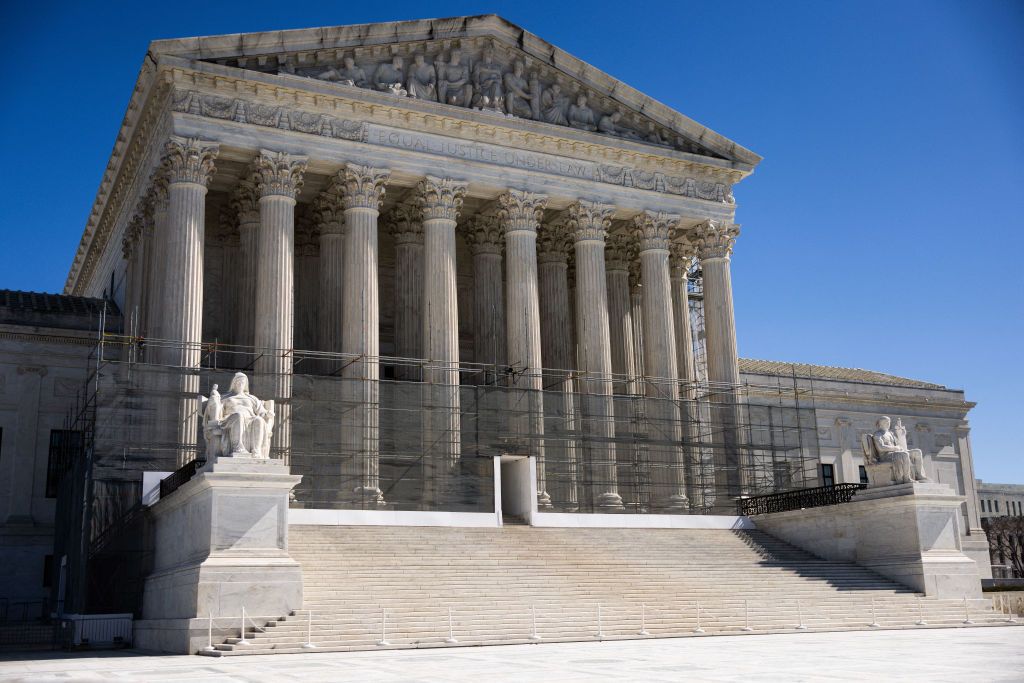
# Supreme Court Allows New Hampshire to Restrict Student ID Use in Voting
The U.S. Supreme Court rejected a challenge to New Hampshire's voter identification law, clearing the way for the state to enforce restrictions on which forms of student identification voters may present at the polls. The decision leaves intact a lower court ruling that upheld New Hampshire's requirement that student IDs include an expiration date or other proof of residency to count as valid voting identification.
The challengers, a group of student voters and civil rights organizations, argued that New Hampshire's restrictions placed an unconstitutional burden on young voters and violated the Voting Rights Act. They claimed the state's rules effectively disenfranchised college students who possessed valid student IDs but lacked the specific documentation New Hampshire demanded.
New Hampshire's law requires that any student ID used for voting must display an expiration date and the voter's current address or some other proof of residency. Many colleges and universities issue student IDs without expiration dates, and some do not include residential addresses. This creates a two-tiered system where out-of-state students attending New Hampshire colleges face barriers that in-state voters do not encounter.
The Supreme Court's decision not to hear the case means the First Circuit Court of Appeals' earlier ruling stands. That court had found that New Hampshire's requirements do not impose an undue burden on voters because alternative identification forms remain available. The First Circuit reasoned that students can bring a combination of documents, such as a utility bill or lease agreement paired with their student ID, to satisfy the state's identification requirements.
Voter ID laws remain among the most contested election regulations in American politics. Supporters argue they prevent fraud and protect election integrity. Critics contend they suppress turnout, particularly among younger voters, minorities, and those with lower incomes who may lack driver's licenses or documents containing current addresses. The Supreme Court has previously upheld voter ID requirements as constitutional, most notably in Crawford v. Marion County Election Board in 2008, though that decision did not settle all questions about specific ID restrictions.
New Hampshire's approach differs from states with blanket student ID bans. States like Wisconsin and Tennessee previously restricted student IDs entirely before courts struck down those laws as discriminatory. New Hampshire allows student IDs but conditions their acceptance on documentary proof of residency, positioning itself in a middle ground that courts have found permissible.
The practical effect of the Supreme Court's inaction becomes clear during election cycles. Students voting in New Hampshire must plan ahead to gather supplemental documentation if their college-issued ID lacks an expiration date or current address. Colleges and universities operating in New Hampshire may face pressure to modify their ID issuance practices to align with state voting requirements.
The decision also sends a signal about judicial deference to state election administration. The Supreme Court's decision to deny certiorari indicates the Court sees no pressing federal constitutional question requiring its attention, despite arguments that student voter suppression warrants heightened scrutiny. Election law experts note this reflects a broader pattern where the Court has permitted states considerable latitude in crafting voter ID requirements, provided alternatives exist.