# AI Exposes Systemic Failures in Legal Practice Rather Than Creating New Ones
Artificial intelligence tools have not introduced novel ethical problems to the legal profession. Instead, they have exposed existing weaknesses and bad practices that preceded their adoption. This distinction matters for how courts, bar associations, and law firms now respond to AI-related malpractice claims and disciplinary matters.
The legal community faces a reckoning driven by AI's scale and speed of operation. When lawyers used AI to draft briefs, conduct legal research, or generate documents without proper oversight, they committed the same errors that manual legal work enabled for decades. The difference lies in volume and velocity. A junior associate working without supervision might miss case law. An AI system trained on inadequate prompts can miss case law across hundreds of documents in seconds. The underlying failure—insufficient attorney review—remained constant. AI merely amplified it.
Consider the ChatGPT-generated brief scandal that emerged in 2023. Lawyers submitted briefs containing wholly fabricated case citations to federal courts. Media coverage framed this as an "AI problem." The actual problem was older: lawyers failing to verify their work product before filing. Courts have disciplined attorneys for citation errors and factual inaccuracy since the profession's inception. AI made the negligence visible, fast, and impossible to ignore.
Bar associations across the United States have begun implementing rules addressing lawyer competence in emerging technology. Rule 1.1 of the Model Rules of Professional Conduct requires lawyers to maintain competence in legal matters. Most jurisdictions have now issued ethics opinions explicitly stating that competence extends to understanding the limitations and risks of AI tools lawyers deploy. The New York State Bar Association, the American Bar Association, and state bars in California, Florida, and Massachusetts have all published guidance. None of these opinions created new ethical duties. They clarified existing ones.
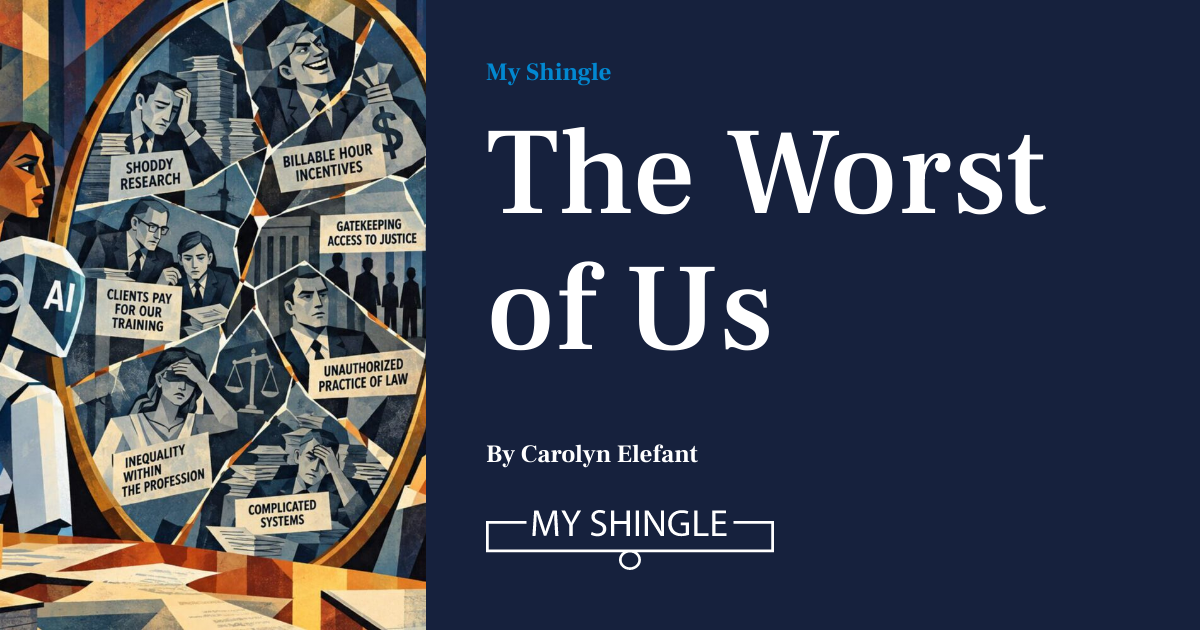
The structural vulnerabilities AI exposed include inadequate associate training, weak quality control systems, insufficient attorney-client communication, and billing pressure that incentivizes cutting corners. Law firms operated with these problems for years. Technology allowed them to continue undetected. When algorithms make mistakes, they create discoverable records. When a human makes the same mistake while rushing through work, it often vanishes into institutional memory as routine error.
Disciplinary bodies now confront harder questions. Should courts impose different sanctions on lawyers who misuse AI versus lawyers who commit identical negligence through traditional methods? The honest answer is no. A forged case citation is a forged case citation. The tool used to generate it is secondary. Yet AI's novelty creates psychological distance. Judges and bar counsel may view AI-generated errors as aberrations rather than symptoms of systemic practice failures they tolerated before.
Law firms face a choice. They can treat AI governance as a technical compliance exercise, adopting policies that permit tools while avoiding genuine accountability. Or they can use AI adoption as an opportunity to reform underlying quality systems, supervision practices, and billing models that enabled negligence before algorithms arrived.
The profession built its reputation on careful judgment and precision. Those values predate computers. The worst practices emerging in AI adoption are not new. They are simply the worst of established practices, made obvious by technology's unforgiving nature.