# Pentagon Advances Space-Based Solar Power with Overview Contract Award
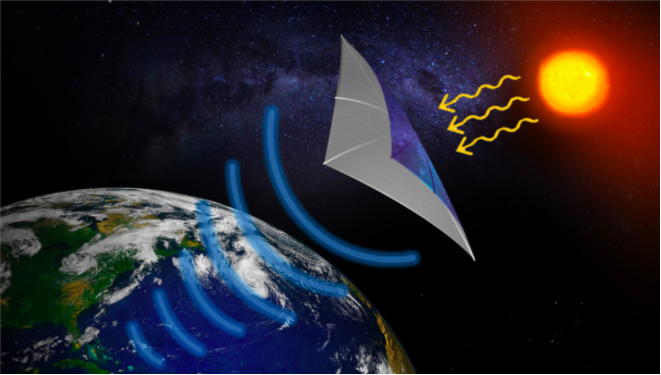
The Department of Defense has awarded a demonstration contract to Overview, marking the second major space-based solar power initiative announced by the Pentagon's Operational Energy Capability Improvement Fund in recent weeks. The contract represents a concrete step toward developing technology that would capture solar energy in orbit and transmit it to Earth-based receivers, potentially revolutionizing military and civilian power infrastructure.
The award demonstrates DoD's accelerating commitment to space-based energy solutions as a strategic priority. The Operational Energy Capability Improvement Fund, the entity managing these contracts, has shifted from theoretical research into practical demonstration phases. This acceleration reflects Pentagon confidence that the technology can transition from laboratory concepts to deployable systems within reasonable timeframes.
Overview's contract joins at least one other recent space-based solar power award, indicating DoD is pursuing multiple technical approaches and contractors simultaneously. This portfolio strategy reduces risk by not betting entirely on a single solution or company. The redundancy also encourages competition and faster innovation across the industry.
Space-based solar power addresses a fundamental military vulnerability. Forward operating bases and tactical units depend on energy supply chains vulnerable to disruption. Ground-based power generation requires extensive logistics infrastructure, fuel transport, and protection. A space-based system would beam power directly to receiving stations, eliminating many of these vulnerabilities. The technology also produces zero emissions and operates continuously, unlike terrestrial solar installations dependent on weather and daylight hours.
The technical challenges remain substantial. Capturing sunlight in space, converting it to microwave or laser energy, and beaming it across distances of hundreds of miles to precision receiver stations requires breakthroughs in materials science, power transmission efficiency, and orbital mechanics. Beam steering and targeting must function reliably despite weather, atmospheric interference, and potential system drift. Safety protocols must prevent the beam from deviating toward populated areas.
Regulatory approval presents another hurdle. The Federal Communications Commission must allocate radio frequency spectrum for space-to-ground power transmission. International treaties govern orbital operations and radioactive sources in space. Environmental reviews will examine potential effects on atmospheric conditions and terrestrial ecosystems. DoD will navigate these approvals as demonstration systems mature.
Cost remains uncertain. Launching satellites into orbit, maintaining orbital infrastructure, and building ground receiving stations represent capital-intensive undertakings. Early estimates suggest costs per kilowatt-hour could eventually compete with conventional generation, but achieving cost parity requires achieving significant scale. Defense applications may justify higher costs than commercial markets would accept.
Timeline expectations matter for military planning. Demonstration contracts typically precede operational deployment by five to ten years. Overview's award suggests Pentagon planners anticipate deployment possibilities in the early-to-mid 2030s, though this remains preliminary.
The strategic implications extend beyond energy generation. Demonstrated space-based power systems would establish DoD presence in commercial space infrastructure markets and create new military capabilities competitors lack. The technology would position the United States as the leader in space-based energy systems, potentially setting global standards and regulatory frameworks.
Overview's contract strengthens broader Pentagon investment in space dominance. Combined with satellite communications networks, space-based sensing systems, and other orbital capabilities, space-based solar power completes a picture of comprehensive military operations conducted from and through space infrastructure.