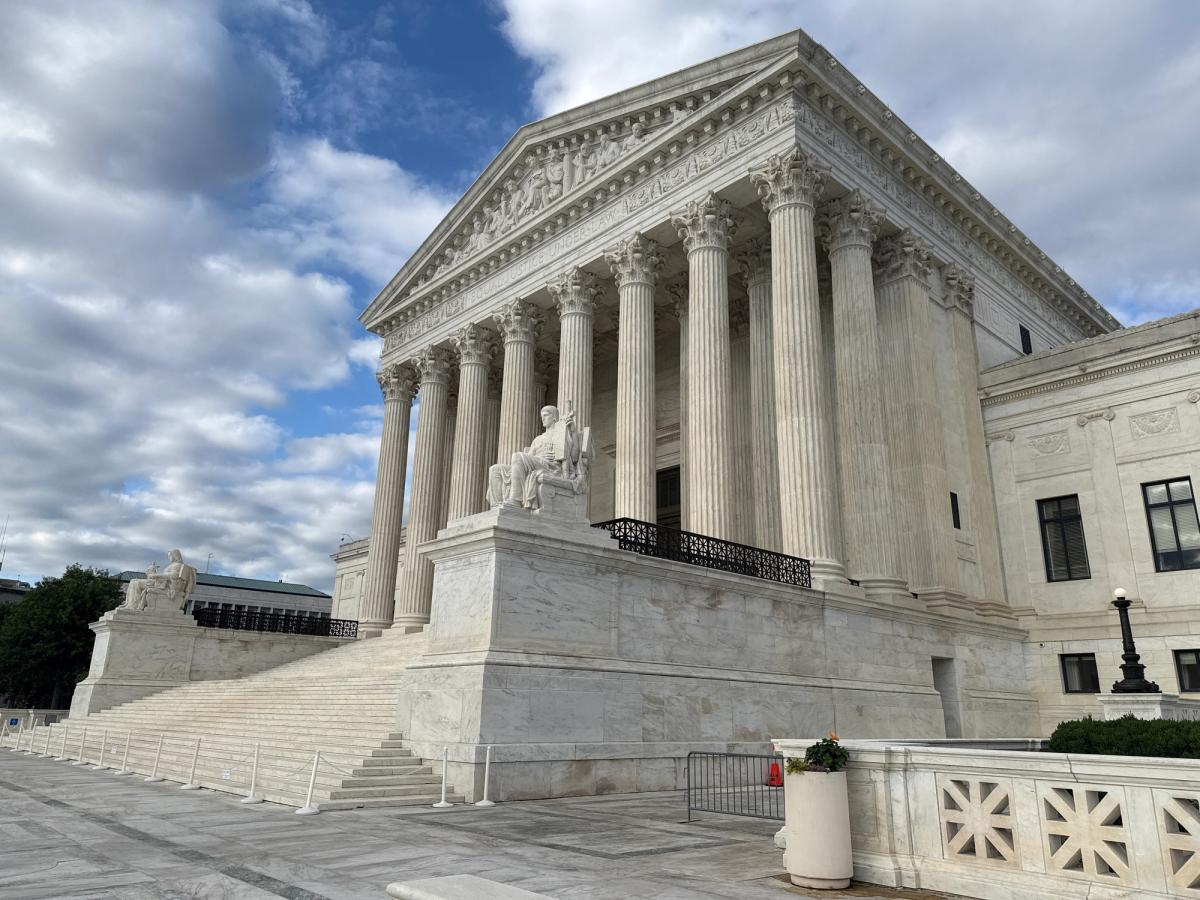
# Supreme Court Forecasting Contest Launches with High Stakes for Legal Prediction
SCOTUSblog announced its inaugural Supreme Court forecasting contest, inviting legal professionals, academics, and court watchers to predict outcomes in cases pending before the U.S. Supreme Court. The competition represents a novel approach to understanding how expert consensus forms around judicial decision-making and provides empirical data on predictive accuracy across different case categories.
The contest operates through a structured platform where participants submit predictions on case outcomes, voting alignments, and potential opinion assignments. Entries come from sitting judges, law professors, practicing attorneys, and court observers with varying levels of expertise. SCOTUSblog aggregates these predictions to create a composite forecast that reflects aggregated professional judgment on how individual justices will vote and which justices will author majority, concurring, and dissenting opinions.
This methodological approach taps into the "wisdom of crowds" concept, a principle holding that aggregated predictions from diverse groups often outperform individual expert forecasts. The platform tracks prediction accuracy in real time, comparing submitted forecasts against actual Supreme Court decisions. Winners receive recognition within the legal community and potential publication opportunities on SCOTUSblog's influential platform, which reaches tens of thousands of legal professionals daily.
The contest captures predictions across multiple dimensions. Participants forecast which party will prevail in each case, predict vote tallies and individual justice positions, and estimate authorship of majority and dissenting opinions. This granular approach generates data on which aspects of Supreme Court behavior prove most predictable. Voting blocs typically show stronger predictability than opinion assignments, for instance, given the Court's relatively stable ideological alignments on many issues.
Legal scholars have long recognized the predictive power of aggregated forecasts in Supreme Court litigation. The crowdsourcing methodology formalizes this insight and creates a transparent record comparing expert predictions to outcomes. This serves multiple constituencies. For law firms and business clients, accurate forecasts inform litigation strategy and settlement calculations. For academics, the data illuminates how judicial voting patterns change across opinion types and ideological domains. For the broader public, forecasting contests demystify Supreme Court decision-making and highlight which justices vote predictably versus those who surprise observers with swing votes or unexpected coalitions.
The timing proves significant as the Supreme Court faces heightened public scrutiny over institutional legitimacy and politicization. Transparent forecasting contests demonstrate that judicial behavior follows identifiable patterns rather than appearing wholly arbitrary or politically driven. When predictions align with outcomes, the data supports arguments that justices follow jurisprudential principles. When predictions diverge from outcomes, the contest spotlights which cases or justices defy expectations and warrant closer analysis.
SCOTUSblog's contest also addresses a practical gap in legal practice. Supreme Court practitioners need reliable outcome estimates for client counseling and settlement negotiations. While firms employ prediction specialists internally, a public forecasting mechanism allows smaller practitioners and non-specialist lawyers to access aggregated expert judgment at low cost. The platform thus democratizes access to sophisticated Supreme Court analysis.
The contest includes provisions for tracking evolving predictions as cases move through briefing and oral argument. This temporal dimension reveals how additional information and advocacy influence expert expectations. Cases often see significant prediction shifts following oral arguments, when justice questioning patterns emerge. The contest captures these dynamics and creates a public record of how judicial signaling influences professional predictions.
SCOTUSblog plans to expand the contest annually and potentially add other federal courts in future iterations. The initial competition establishes baseline forecasting accuracy metrics and identifies which case features prove most predictive of outcomes across the Supreme Court's docket.