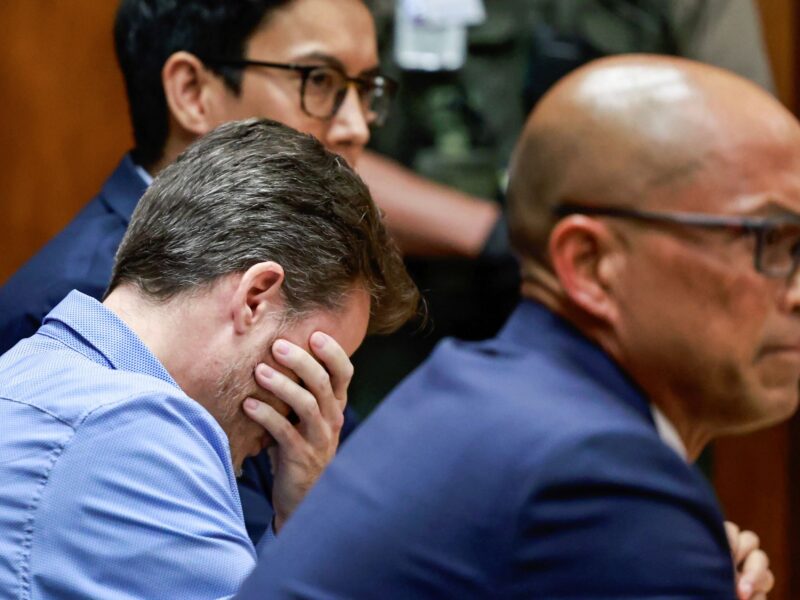
Gerhardt Konig, a Maui physician, failed to overturn his attempted manslaughter conviction after the Hawaii appellate court rejected his motion for a new trial. Konig argued two grounds for relief: that jurors admitted to not reaching unanimity on the guilty verdict, and that jury members improperly communicated with an outside party during deliberations.
The defendant presented evidence that jurors had engaged in communications outside the jury room with individuals not party to the case. This conduct violates fundamental jury trial protections codified in Hawaii law and the Sixth Amendment. Jurors have a duty to base verdicts exclusively on evidence presented in court and jury instructions provided by the judge.
Konig also challenged the jury verdict itself on unanimity grounds. Hawaii law requires jury unanimity in criminal convictions, a rule that applies to both felonies and misdemeanors. The U.S. Supreme Court affirmed this requirement in Ramos v. Louisiana (2020), holding that non-unanimous verdicts violate the Sixth Amendment's jury trial guarantee. If jurors demonstrated they did not unanimously agree on guilt, Konig had a colorable claim for reversal.
The appellate court's rejection of both arguments suggests the evidence did not satisfy the burden required to warrant a new trial. Courts typically scrutinize jury misconduct claims closely because they implicate juror credibility and the finality of verdicts. However, if post-conviction investigation revealed concrete proof of outside communications or non-unanimity, courts have granted new trials.
The ruling stands as a loss for Konig, whose conviction remains final. The decision reflects Hawaii's appellate deference to jury verdicts absent overwhelming evidence of prejudicial misconduct. For practitioners, the case underscores the importance of thorough jury examination during voir dire and careful jury instructions limiting communications. Trial judges must also implement safeguards preventing