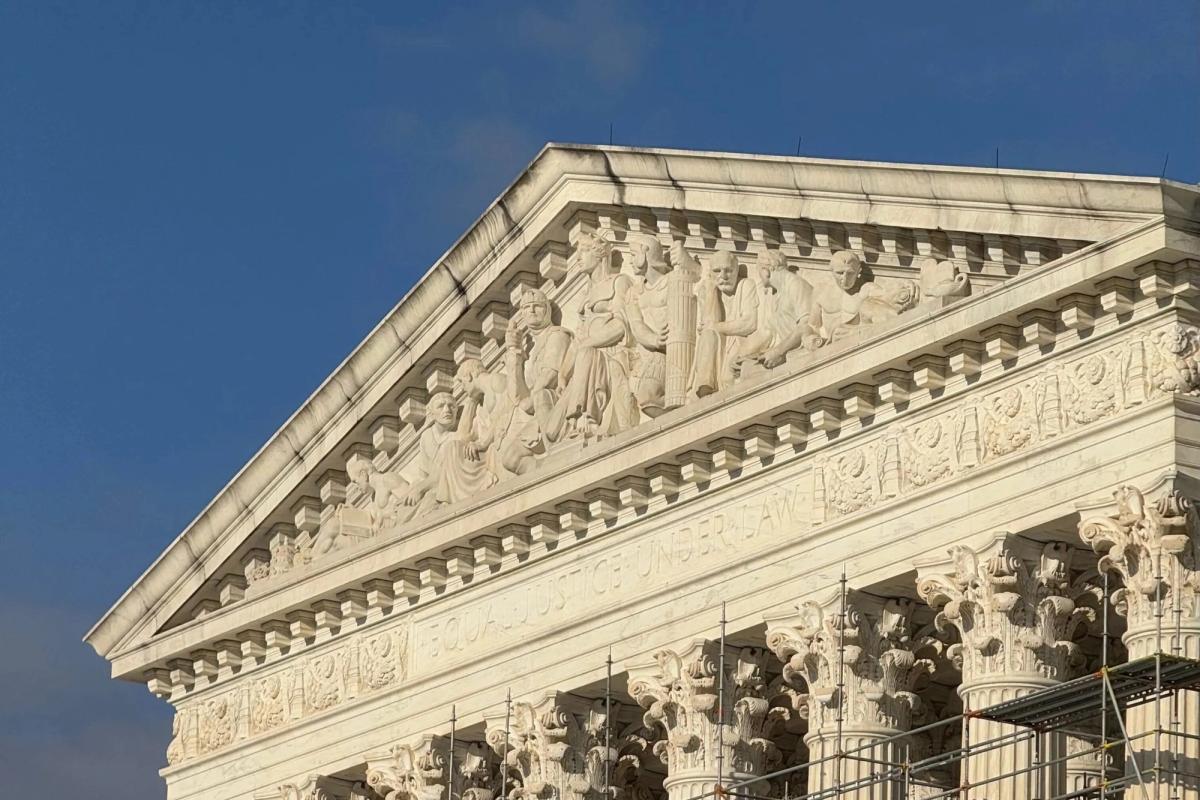
President Trump publicly criticized the Supreme Court on social media, escalating tensions between the executive branch and the judiciary. The attack follows Court decisions that diverged from administration priorities, though the specific ruling triggering the president's response remains unclear from available reporting.
Attorney General Todd Blanche outlined the Justice Department's litigation strategy regarding mail-in voting restrictions. The administration plans to pursue additional legal challenges to voting access policies, signaling an aggressive posture toward election administration rules in the courts.
Trump's social media attack represents a continuation of his pattern of publicly pressuring the judiciary. Presidents traditionally refrain from direct criticism of sitting justices, especially on pending or controversial matters. Such statements can constitute an attempt to influence judicial decision-making and undermine public confidence in courts' independence.
The Justice Department's mail-in voting strategy carries substantial practical implications. Blanche's comments suggest DOJ will file briefs in state and federal litigation challenging mail-in voting expansion, potentially affecting how states administer elections. Mail-in voting access has become a partisan flashpoint, with Republicans generally favoring stricter voter ID requirements and in-person voting, while Democrats champion expanded mail-in access.
This dual-track approach—public presidential criticism combined with legal action—places pressure on the Court from multiple angles. Justices must decide cases on their merits while the sitting president attacks them publicly. The approach tests institutional norms governing separation of powers and judicial independence.
Lower courts and election officials will watch closely for signals about how aggressively the Supreme Court intends to review voting regulations. If the Court accepts cases challenging mail-in voting access, it could reshape election administration nationwide. States currently operating robust mail-in programs may face federal litigation risks.
The Supreme Court's composition following Trump's three appointees may influence how receptive the Court appears to DOJ voting arguments. However, the Court's recent voting rights decisions have shown unpredictable patterns,