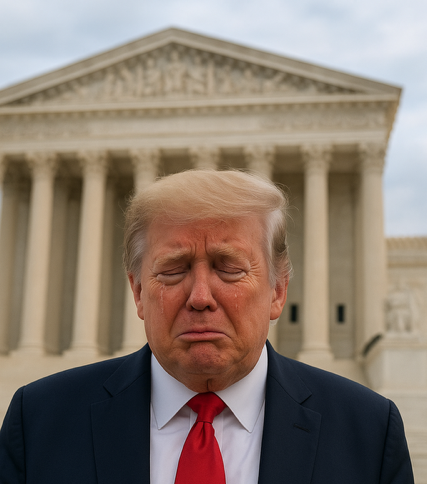
# Supreme Court Rejects Trump Administration's Mail-In Ballot Restrictions
The Supreme Court declined to hear Trump administration arguments seeking to restrict mail-in voting, marking a decisive defeat for the executive branch on voting access. The Court offered no explanation for the rejection, signaling the case lacked merit even before a full bench review.
Trump administration officials pursued the matter through multiple legal channels, attempting to impose stricter controls on mail-in balloting procedures. The repeated filings suggested the government viewed voting access restrictions as a priority issue. Each attempt faced judicial resistance, culminating in SCOTUS' refusal to grant certiorari.
The outcome reflects a doctrine courts have consistently applied: voting access rules fall within states' constitutional authority under the Elections Clause and the Fifteenth Amendment. Federal executive action that restricts voting pathways faces heightened scrutiny. The Trump administration's theory apparently failed to overcome this established framework, even before justices with Republican appointees.
Legal observers note the irony of the result. A Supreme Court majority appointed by Republican presidents has moved rightward on most administrative law questions. Yet voting access restrictions triggered institutional skepticism about executive power. This suggests the bench retains commitments to federalism principles that limit unilateral executive authority over electoral procedures, regardless of partisan composition.
The rejection signals lower courts that voting access challenges warranting appellate review require stronger constitutional theory. Blanket restrictions on mail-in procedures lack the specificity and tailoring required under established precedent. States retain discretion to design mail procedures, but federal actors cannot simply prohibit or heavily restrict access methods.
For voters, the outcome preserves mail-in ballot access at current levels. For the Trump administration, the defeat illustrated that even commanding Supreme Court support has limits when constitutional text and precedent point clearly against the government's position. Election administration remains fundamentally a state function, with federal actors constrained to narrow, well-