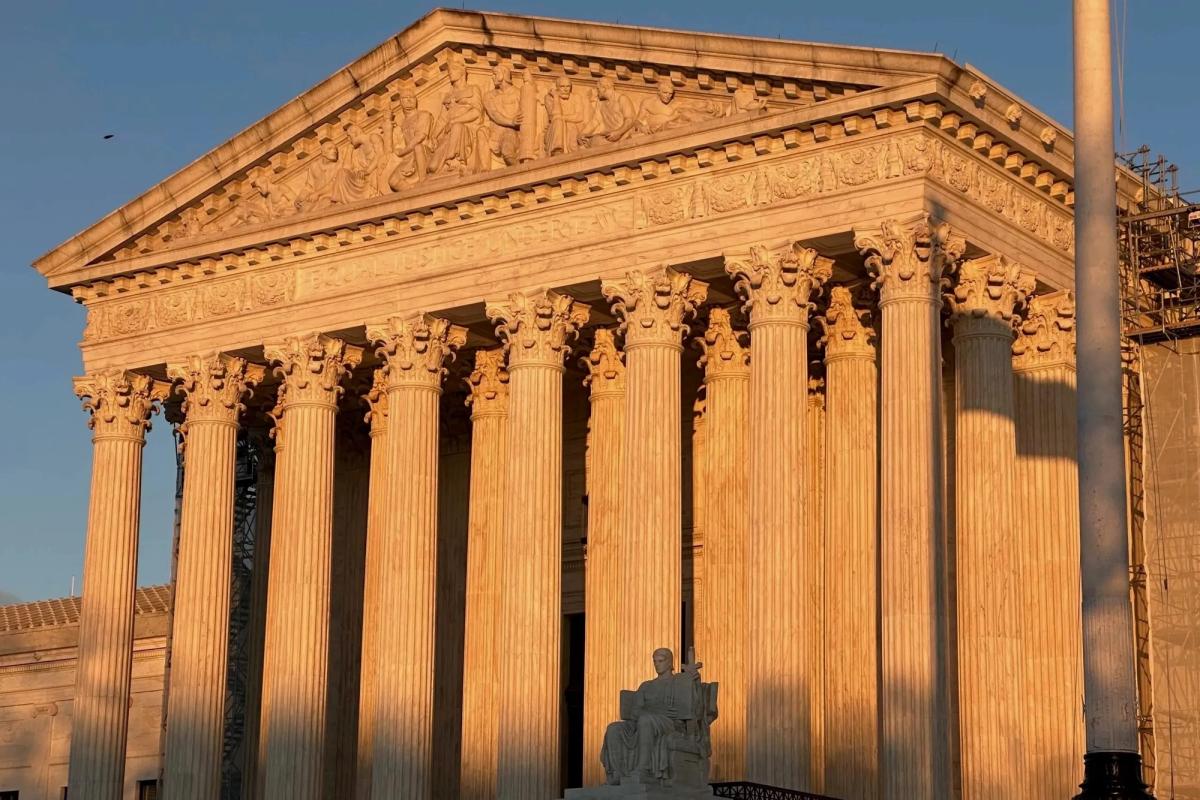
# The Minoritarian Difficulty
The Supreme Court faces a structural tension between its role as final arbiter of constitutional law and the reality that justices often disagree sharply about fundamental principles. SCOTUSblog examines how the Court's minoritarian difficulty emerges when dissenters reject the majority's constitutional interpretation, creating fragmentation that undermines the legitimacy of judicial decisions.
When the Court divides 5-4 or 6-3 on contested constitutional questions, the narrow majority's interpretation becomes binding law nationwide despite substantial judicial disagreement about its soundness. This arrangement privileges the constitutional vision of five or six justices over the objections of their colleagues who possess equal institutional authority and expertise.
The minoritarian problem intensifies when justices characterize majority opinions as departures from established precedent or constitutional text. Powerful dissents signal to lower courts, legal academics, and the public that the Court's interpretation lacks consensus among its own members. This judicial discord invites questions about whether the majority truly represents the Constitution's meaning or merely exercises raw power through numerical advantage.
The difficulty becomes acute in cases touching fundamental rights, structural powers, or federalism principles. When closely divided courts invalidate federal statutes under the Second Amendment, strike down voting rights legislation, or restrict abortion access, dissenters argue the majority rewrites constitutional meaning for ideological ends. The narrow margin amplifies skepticism about the decision's legitimacy.
Some scholars propose solutions: supermajority requirements for constitutional invalidation, sunset provisions on controversial rulings, or procedural reforms requiring broader consensus. Others argue the difficulty reflects democracy itself. Courts necessarily make final decisions; those decisions inevitably disappoint substantial constituencies; disagreement among justices reflects genuine constitutional ambiguity.
The Court cannot eliminate minoritarian tension without abandoning its constitutional role. Yet acknowledging the difficulty matters. When majorities dismiss dissenting justices' concerns, the Court